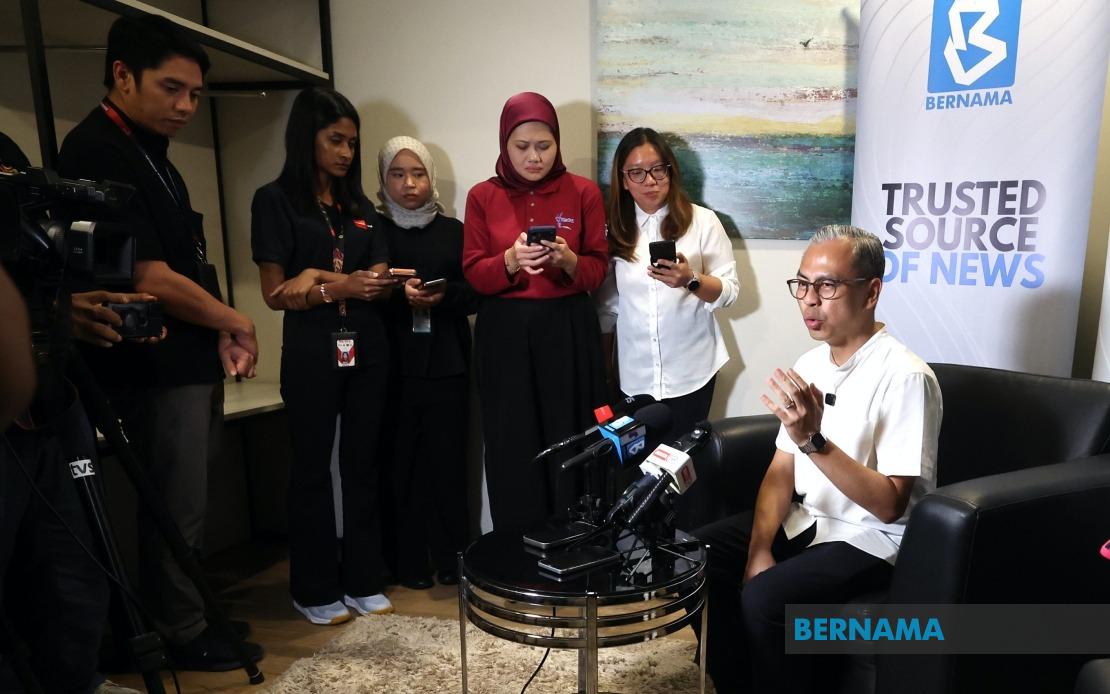
Communications Minister Datuk Fahmi Fadzil has made a forceful case for bolstering the Malaysian Media Council as the cornerstone of industry self-regulation, warning that without broader participation from digital platforms, the country risks allowing unfiltered content to proliferate unchecked. Speaking during a visit to the Malaysian National News Agency's operations centre in Johor Bahru on July 7, Fahmi outlined an ambitious vision for the nascent regulatory body, emphasising that government backing will be crucial during its formative years as it establishes itself as the primary mechanism for addressing media-related complaints and grievances.
The backdrop to these remarks is a significant policy shift announced by Prime Minister Datuk Seri Anwar Ibrahim, who declared that complaints against journalists working for recognised news organisations will no longer trigger automatic government action. Instead, such grievances must first be referred to the Malaysian Media Council, a move designed to insulate journalists from potentially arbitrary investigations or prosecutions. This procedural change represents a philosophical commitment to allowing the media industry to police itself rather than relying on governmental enforcement, a principle that underpins modern media freedom frameworks across democratic societies.
Fahmi's remarks reveal the government's recognition that traditional journalism organisations alone cannot address the contemporary challenge of information dissemination. While mainstream newsrooms generally adhere to established ethical codes and editorial standards, the minister highlighted the troubling reality that social media platforms operate largely outside such constraints. He pointed to the absence of mechanisms ensuring that global content policies adequately account for local sensitivities, cultural contexts, and legal frameworks specific to Malaysia. This disconnect has created a regulatory vacuum where damaging or inappropriate content can spread rapidly without any oversight mechanism comparable to those governing established news operations.
The Communications Minister illustrated this concern with a concrete recent example from Banting, where a violent incident involving a teenager stabbing another student resulted in the victim's identity and investigative details being widely shared across social platforms. Such cases demonstrate how digital platforms can inadvertently or deliberately circumvent privacy protections, defame individuals, and compromise active police investigations by disseminating unverified information to mass audiences. Unlike traditional journalists, who typically exercise restraint in reporting sensitive criminal matters, social media users operate without professional editorial guidance or accountability structures.
Central to Fahmi's vision is the proposition that major social media platforms should voluntarily join the Malaysian Media Council, thereby subjecting themselves to the same self-regulatory framework that governs conventional media organisations. By doing so, these platforms would agree to apply Malaysian-specific ethical guidelines to content moderation decisions, ensuring that global policies are adapted to local requirements. The minister suggested that such participation would enable more effective management of platform-related content issues through industry mechanisms rather than heavy-handed government regulation, a pragmatic approach that balances platform autonomy with community protection.
The expansion of the Media Council's membership base represents an implicit acknowledgment that self-regulation works best when it commands broad industry buy-in and legitimacy. Fahmi indicated the government would actively encourage media organisations to join the council, recognising that the body's effectiveness depends directly on the comprehensiveness of its membership. A fragmented approach, where some outlets participate while others remain outside the framework, would undermine the council's authority and create inconsistent ethical standards across the information landscape. Greater participation would also enhance the council's capacity to develop nuanced guidance on emerging issues like artificial intelligence-generated content, deepfakes, and coordinated misinformation campaigns.
The government's commitment to supporting the Malaysian Media Council during its establishment phase signals that authorities view industry self-regulation as preferable to state-imposed restrictions. This approach carries practical advantages: industry bodies tend to enjoy greater credibility with practitioners, can respond more flexibly to evolving ethical challenges, and avoid the perception of government censorship that accompanies direct regulatory oversight. By providing initial institutional support and encouraging participation, the government positions itself as a facilitator rather than an enforcer, a subtle but significant distinction that may enhance the council's independence and public perception.
Fahmi linked the strengthening of media self-regulation directly to Malaysia's standing in international press freedom indices. The Media Freedom Index, maintained by Reporters Without Borders, assesses countries based on multiple factors including the presence of independent self-regulatory bodies and the ability of journalists to work without state intimidation. By demonstrating commitment to industry-led governance structures and reducing direct government interference in media matters, Malaysia can potentially improve its international ranking, an outcome with tangible benefits for the country's reputation and soft power. Improved press freedom rankings also signal to foreign investors and international partners that Malaysia maintains an environment conducive to open discourse and transparent governance.
The invitation to social media platforms raises complex questions about how global corporations will respond to localised regulatory requests. Most major platforms have developed global content policies designed for consistency across jurisdictions, and adapting these policies to accommodate Malaysian requirements could create administrative burdens. Nevertheless, platforms increasingly recognise that working collaboratively with local regulators and industry bodies enhances their legitimacy and reduces the likelihood of more stringent government intervention. Platforms that proactively join self-regulatory frameworks demonstrate corporate responsibility and commitment to community welfare, positioning themselves more favourably than competitors that resist engagement.
The Malaysian Media Council initiative reflects broader regional trends toward establishing independent media oversight mechanisms. Similar councils operate in other Southeast Asian democracies, though their effectiveness varies depending on membership participation and enforcement capacity. Malaysia's effort to include digital platforms represents a more forward-thinking approach than many regional counterparts, acknowledging that media regulation must encompass the full ecosystem rather than traditional outlets alone. Success will depend on whether platforms view participation as a genuine partnership opportunity or merely a compliance burden.
For Malaysian journalists and news organisations, the establishment of a self-regulatory council with government backing offers both opportunities and risks. On one hand, it provides protection against arbitrary state action and creates an independent body to address complaints. On the other hand, the council's effectiveness depends on its composition and the extent to which its decisions command respect across the industry and public sphere. News organisations will need to ensure that council membership includes diverse voices and maintains genuine independence from both government and commercial pressures that could compromise editorial integrity.
The question of social platform participation remains unresolved, as major technology companies have shown mixed enthusiasm for joining local regulatory bodies. Yet Fahmi's call reflects Malaysia's determination to shape its information environment proactively rather than passively accepting the status quo. Whether platforms respond positively will depend on demonstrating that participation serves their interests and those of Malaysian society. The minister's framing positions media self-regulation not as an obstacle to innovation or platform operations, but as a mechanism for ensuring that digital information flows remain trustworthy and socially responsible, a perspective that increasingly resonates with platform leadership globally.

