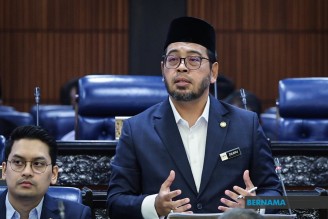
The Malaysian government has set its sights on transforming Tabung Haji into a financially resilient institution through a comprehensive overhaul of governance structures and investment practices, moving decisively to prevent a recurrence of the crisis that nearly devastated the country's hajj savings scheme. During a specially convened session of the Dewan Rakyat in August, government officials outlined extensive reforms that will reshape how the pilgrimage fund operates, drawing directly from recommendations contained in a Royal Commission of Inquiry report that exposed systemic vulnerabilities accumulated over six years.
At the heart of the proposed remedies lies a fundamental restructuring of regulatory authority, with the Securities Commission set to assume primary responsibility for overseeing Tabung Haji's investment portfolio while religious and pilgrimage matters remain within the purview of the Ministry in the Prime Minister's Department. A dedicated task force, chaired by Tabung Haji's leadership and including representatives from Bank Negara Malaysia and the Securities Commission, has been tasked with translating these recommendations into actionable policy frameworks for cabinet consideration. This division of oversight responsibilities represents a marked departure from previous arrangements and reflects a recognition that a single governing body lacked sufficient specialisation to manage both the complex financial dimensions and the religious service obligations inherent to the institution.
The severity of Tabung Haji's predicament became starkly apparent during parliamentary proceedings, with officials confirming that the institution had accumulated losses approaching RM13 billion before intervention became necessary. Had panic withdrawals intensified without government assistance at that critical juncture, the nation faced an estimated contingent liability of approximately RM74.5 billion, a figure that underscores just how perilously close the system had come to catastrophic failure. Among the 14 troubled investments that triggered the crisis, seven had deteriorated completely, erasing investor value entirely, whilst a particularly problematic allocation to Putrajaya Perdana Bhd had inadvertently ensnared Tabung Haji in the complex web of 1Malaysia Development Bhd entanglements, demonstrating how inadequate due diligence and governance had exposed the institution to risks far beyond its mandate or capacity.
The government's proposed legislative amendments to the Tabung Haji Act 1955 represent far more than cosmetic adjustments to regulatory nomenclature; they constitute a wholesale recalibration of institutional safeguards designed to eliminate the conditions that permitted such deterioration. Amongst these changes, a legal prohibition preventing active politicians from serving on the board of directors stands as particularly significant given the political dimensions that arguably contributed to earlier misadventures. The reinstatement of profit distributions on the basis of independently audited accounts rather than optimistic projections addresses a critical transparency deficit that had previously allowed distributable reserves to be overstated, thereby masking mounting problems from depositors until intervention became urgent.
For the broader Malaysian financial system, the Tabung Haji crisis has catalysed discussion regarding the institutional architecture governing non-bank financial institutions generally. Several members of parliament have advocated establishing a unified regulatory body to provide consistent supervisory oversight across major institutions including the Employees Provident Fund, Permodalan Nasional Bhd, and the Retirement Fund Incorporated. Such a consolidation would eliminate regulatory gaps and create standardised governance benchmarks across institutions managing hundreds of billions of ringgit in national savings. The current fragmented approach, critics contend, permits inconsistencies in prudential supervision and systemic risk assessment that leave the financial system unnecessarily vulnerable.
Particular concern has also been raised regarding Tabung Haji's structural overdependence on income derived from UJSB sukuk holdings, which according to the Royal Commission report supplied nearly a quarter of the institution's annual revenue. This concentration of income sources represents a structural vulnerability that limits operational flexibility and increases exposure to market fluctuations affecting that specific asset class. Parliamentarians have urged the government to detail concrete strategies for diversifying revenue streams, thereby reducing the institution's reliance on any single financial instrument or counterparty.
The Royal Commission of Inquiry itself, formally established in 2021 with members appointed the following January, delivered a comprehensive 211-page report made public in late July after its findings were formally presented to the Yang di-Pertuan Agong some months earlier. The inquiry examined management and operational weaknesses spanning the 2014 to 2020 period, a critical window during which accumulated mismanagement and risky investment decisions threatened the retirement security of millions of Muslim Malaysians. The commission formulated 25 distinct recommendations for institutional improvement, of which three-quarters had been implemented by the institution even before formal parliamentary presentation, demonstrating a degree of responsiveness from Tabung Haji's reformed management.
Government officials have been emphatic that accountability mechanisms will operate without favouritism, with comprehensive investigations continuing against those determined to bear responsibility for the institution's near-collapse. Finance Minister II Datuk Seri Amir Hamzah Azizan stressed that the administration would not shy away from the painful realities revealed by the inquiry, signalling that political considerations would not deflect enforcement of consequences against culpable parties. This commitment carries particular weight given Malaysia's historical struggles with financial accountability and the political sensitivity surrounding institutions managing religiously significant functions and substantial community deposits.
The proposed reforms reflect a fundamental philosophical reorientation at Tabung Haji, reframing institutional decisions through a lens focused exclusively on beneficiary interests rather than accommodating broader political or commercial agendas. By anchoring governance to measurable financial performance standards and submitting investment portfolios to independent professional scrutiny, the restructured institution should prove more resistant to the political pressures and inadequate oversight that previously enabled questionable investment decisions. For Malaysian depositors, particularly the millions of Muslim workers and retirees who depend on these savings for their hajj aspirations and retirement security, the transformation represents overdue accountability and a necessary recalibration toward genuine fiduciary responsibility.

