Malaysia's higher education system is undergoing a fundamental strategic shift in how it approaches research and innovation. The Ministry of Higher Education announced on June 22 that it is actively deepening collaboration between public universities and the private sector to accelerate the translation of research findings into commercially viable products and services. This represents a marked departure from the country's traditional emphasis on academic publishing, signalling a recognition that Malaysia's innovation ecosystem must deliver tangible economic benefits to remain competitive in the region.
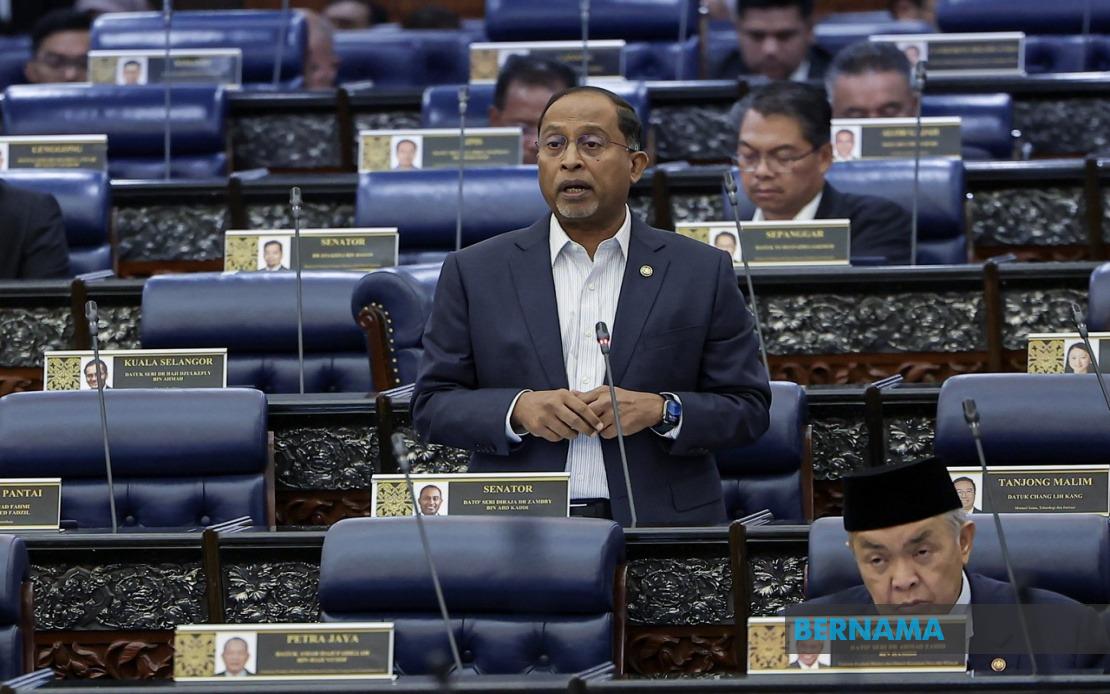
Higher Education Minister Datuk Seri Dr Zambry Abd Kadir articulated the ministry's new direction during parliamentary question-and-answer proceedings, emphasising that research initiatives are now evaluated based on their real-world impact rather than their contribution to academic literature. This recalibration acknowledges a persistent weakness in Malaysia's innovation landscape: the gap between laboratory breakthroughs and marketplace adoption. While Malaysian universities conduct substantial research across multiple disciplines, converting these discoveries into products that generate revenue and employment has historically lagged behind comparable achievements in other Southeast Asian nations and global innovation leaders.
The strategic reorientation involves a comprehensive restructuring of how public universities pursue research priorities. Instead of allowing academic departments to pursue investigative interests with limited connection to industry needs, the ministry now directs institutional resources towards research addressing concrete challenges in critical sectors including food security, environmental sustainability through green technology, artificial intelligence applications, and advanced manufacturing. This targeted approach ensures that expensive research infrastructure and highly trained academic talent focus on areas where commercial and social demand already exists, thereby reducing the time required to move innovations from academic conception to market deployment.
Quantifiable progress over the past three years demonstrates the viability of this approach. Between 2022 and 2024, more than 200 products developed within Malaysia's public universities successfully reached commercialisation stages, generating new revenue streams for both the institutions and their industry partners. Additionally, public universities licensed 286 distinct technologies and knowledge assets to industrial enterprises during this period, creating ongoing royalty income and establishing ongoing partnerships that extend research outcomes beyond their initial development phase. These figures suggest that the ministry's policy adjustments are yielding measurable results, though whether these numbers represent a sufficient acceleration remains an open question.
Implementing this transformation required creating institutional mechanisms to bridge the traditional divide between academic and commercial worlds. The ministry introduced several targeted programmes designed to facilitate productive partnerships. The Malaysian Laboratories for Academia-Business Collaboration—branded as MyLAB—provides physical and organisational infrastructure where university researchers and corporate technical teams can work alongside each other on joint projects. The Industry Matching Grant programme supplies financial incentives for research teams whose work aligns with industry requirements, while the Public-Private Research Network encourages sustained partnerships through formal structures. Collectively, these initiatives aim to reduce the financial burden on government budgets while simultaneously ensuring that research agendas remain responsive to market signals and business priorities.
Performance measurement mechanisms have evolved accordingly. The Malaysian Research Assessment framework now evaluates institutional research performance not solely through publication metrics—the traditional currency of academic excellence—but through indicators capturing innovation impact, technology adoption rates, and commercialisation success. This shift in evaluation criteria sends powerful institutional signals that align university reward systems with the ministry's strategic priorities. Faculty members and research teams competing for grants and advancement opportunities now understand that demonstrable commercial impact enhances their standing, creating bottom-up incentives that reinforce top-down policy directions.
The emphasis on collaboration with industry addresses a structural challenge that Southeast Asian economies face more broadly. While universities across the region conduct capable research, the mechanisms linking academic knowledge generation to entrepreneurial application often remain underdeveloped compared to systems in North America, Europe, or East Asia. Malaysia's approach of institutionalising these linkages through dedicated programmes and revised evaluation frameworks offers a template with potential relevance for peer nations in Southeast Asia seeking to enhance their innovation ecosystems' commercial productivity.
Looking forward, the ministry plans to convene the University Research, Innovation and Investment Summit in September, gathering corporate executives, venture investors, and senior academics to showcase commercialisation-ready research and facilitate direct funding relationships. This summit concept reflects recognition that research commercialisation depends not only on technical capability but on enabling access to capital and business acumen. By creating dedicated forums where investors encounter investment-ready innovations, the ministry seeks to accelerate the commercialisation pipeline beyond what government programmes alone can achieve.
The sustainability of this approach depends on several reinforcing conditions. Universities must develop internal capacity for technology transfer, including skilled personnel who understand both academic research processes and commercial development requirements. Industry partners must perceive genuine value in university partnerships rather than viewing them as sources of subsidised labour. Government funding must remain sufficient to support research infrastructure while institutions develop alternative revenue streams through licensing and commercialisation. The policy articulated by the Higher Education Ministry represents genuine strategic reorientation, but its ultimate success requires sustained commitment and iterative refinement across multiple institutional actors within Malaysia's innovation ecosystem.

