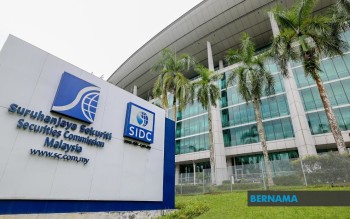
Malaysia is positioning itself as a gateway for Russian capital into Islamic finance markets, unveiling an ambitious strategy to deepen bilateral economic ties through the development of a comprehensive shariah-compliant financial ecosystem. The effort, coordinated between the Securities Commission Malaysia and the Ministry of Finance, reflects Kuala Lumpur's recognition that Russia represents an untapped opportunity within the global Islamic finance landscape. The government's renewed focus on Moscow comes as Malaysia seeks to diversify its investor base beyond traditional Gulf Cooperation Council markets and establish itself as an indispensable intermediary between Eastern European and Asian financial systems.
The cornerstone of this initiative involves planned exploratory missions to Central Asia scheduled for 2026 or 2027, part of a broader internationalisation strategy aimed at assessing market conditions and identifying opportunities for Malaysian financial institutions. These reconnaissance visits will serve multiple purposes: they will evaluate demand for Islamic financial products in less-developed markets, establish relationships with key regulatory bodies and financial infrastructure operators, and create platforms for knowledge-sharing among stakeholders across borders. By positioning Malaysia as a knowledgeable intermediary in regions where Islamic finance infrastructure remains nascent, the country can establish first-mover advantages and secure long-term partnerships with emerging financial institutions.
A significant catalyst for this push emerged in May 2025 when the Head of the Republic of Tatarstan expressed interest in adopting Malaysia's Islamic finance development model. This high-level endorsement opens avenues for Malaysia to export its accumulated expertise in shariah-compliant banking, capital markets, and financial regulation—expertise built over decades of pioneering work in Islamic finance. Rather than merely selling financial products, Malaysia can generate revenue streams through advisory services, institutional training programmes, and capacity-building initiatives tailored to Russian and Central Asian regulators seeking to establish Islamic finance sectors within their own jurisdictions. This knowledge-export model reduces dependence on volatile capital flows while establishing Malaysia as a global thought leader in Islamic financial architecture.
The Securities Commission has already initiated groundwork through bilateral meetings with the Central Bank of Russia and the Saint Petersburg International Mercantile Exchange in 2023 and 2025. These formal channels indicate that preliminary discussions have confirmed sufficient institutional interest to justify deeper engagement. The repeated high-level dialogues suggest that Russian authorities view Islamic finance not merely as a niche financial sector but as a legitimate mechanism for capital mobilisation and international economic cooperation. For Malaysia, these channels provide direct access to Russian policymakers and market participants, circumventing traditional diplomatic obstacles that might otherwise hinder economic engagement.
The appeal of Islamic finance to Russian investors and institutions merits examination. Islamic finance principles emphasise asset-backed transactions, profit-sharing arrangements, and restrictions on speculative instruments—characteristics that align with conservative investment philosophies and reduce systemic financial risk. For Russian entities facing international sanctions and limited access to Western financial infrastructure, shariah-compliant markets offer alternative pathways for capital deployment and investment diversification. Furthermore, Malaysia's positioning as a neutral, non-aligned nation with deep expertise in Islamic finance makes it an attractive jurisdiction for Russian capital seeking to avoid political complications associated with other financial centres.
Malaysia's Capital Market Masterplan 2026-2030 provides the regulatory and strategic framework supporting these ambitions. The document emphasises regulatory modernisation, financial product innovation, and strategic international partnerships—all essential preconditions for attracting and accommodating large-scale foreign investment. By aligning Russia-focused initiatives with this broader masterplan, Malaysia signals institutional commitment to sustainable, long-term engagement rather than opportunistic capital-chasing. The masterplan's emphasis on transparency and inclusive financial ecosystems also addresses potential concerns among Russian investors regarding regulatory predictability and operational consistency.
The Malaysian government has explicitly stated that it welcomes legitimate and productive Russian investment subject to domestic laws and international standards. This carefully calibrated language acknowledges geopolitical sensitivities while maintaining clear parameters for legitimate economic cooperation. Malaysia's diplomatic balancing act—maintaining productive engagement with Russia while adhering to international obligations—requires careful navigation. By framing Russian investment through the lens of Islamic finance principles and sustainable economic development, Malaysia provides a framework that emphasises mutual benefit and long-term partnership over short-term political considerations.
The strategic importance of this initiative extends beyond immediate financial gains. Successfully establishing Malaysia as a bridge connecting Russian capital with Islamic finance markets strengthens Southeast Asia's financial integration and reduces regional dependence on Western-dominated financial infrastructure. As geopolitical tensions persist between Western nations and Russia, Malaysia's role as a neutral facilitator positions the country to capture a disproportionate share of economic opportunities arising from financial system fragmentation. The initiative also demonstrates Malaysia's ambition to transcend regional boundaries and establish itself as a truly global financial power, capable of managing complex cross-cultural and cross-geopolitical financial relationships.
However, realising this vision requires overcoming substantial challenges. Russian financial institutions operate within distinct regulatory frameworks, and harmonising these with Malaysia's shariah-based standards will demand technical expertise and sustained negotiation. The Central Asian region encompasses diverse political systems and institutional capacities, complicating efforts to establish uniform Islamic finance standards. Furthermore, international sanctions regimes restrict certain categories of Russian entities from participating in global financial markets, necessitating careful legal and compliance analysis for each potential transaction. Malaysian regulators must balance the desire to attract Russian capital with obligations to maintain international financial system integrity.
The success of Malaysia's Russian outreach will likely depend on demonstrating tangible benefits to early adopters. If Tatarstan successfully implements Malaysia's Islamic finance model and generates measurable economic results, neighbouring regions and other Russian entities will follow. Conversely, failed initiatives or regulatory complications could discourage further engagement and damage Malaysia's credibility as a reliable partner. The coming years will prove critical in determining whether this initiative becomes a flagship component of Malaysia's financial internationalisation strategy or remains a marginal experiment.
Malaysia's pursuit of Russian investment through Islamic finance expansion represents a sophisticated recognition that emerging economic opportunities lie in connecting distinct markets previously separated by geopolitical divisions. By leveraging its unique position as a global Islamic finance hub and a geopolitically neutral nation, Malaysia can capture value by facilitating financial flows and knowledge transfer across regions. The initiative aligns with Malaysia's stated ambition to serve as a bridge connecting diverse stakeholders within a transparent, sustainable, and shariah-compliant financial ecosystem. If executed effectively, this strategy could generate substantial economic benefits while simultaneously positioning Malaysia as an indispensable participant in reshaping global financial architecture.

