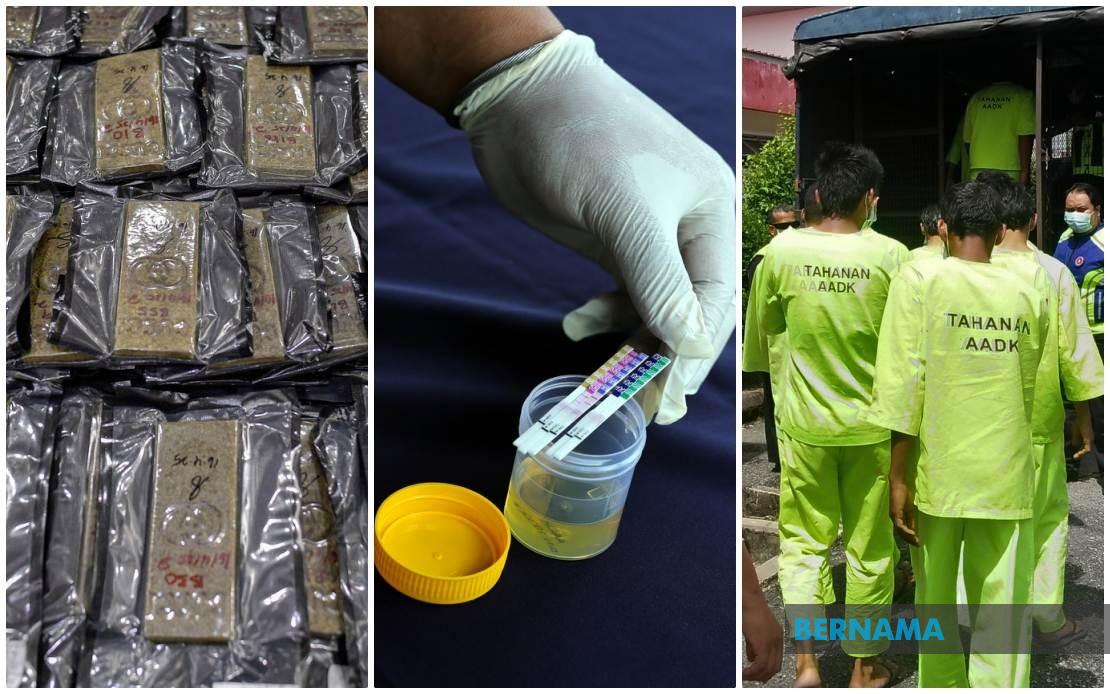
Synthetic drug abuse continues to pose a substantial challenge to Malaysia's public health and security landscape, with Home Minister Datuk Seri Saifuddin Nasution Ismail revealing that 141,817 cases were documented in the previous year. The figure represents a troubling escalation in the nation's drug problem, building on 145,526 cases recorded in 2023 and surging to 192,852 cases by 2024. During parliamentary proceedings, the minister underscored that synthetic substances now account for approximately 70 per cent of all drug abuse incidents across the country, fundamentally reshaping the nature of Malaysia's narcotics crisis from traditional drugs to laboratory-manufactured stimulants.
Amphetamine-type stimulants, commonly known as ATS, have become the predominant drugs of abuse, with methamphetamine—locally referred to as syabu—leading the trend among users throughout the nation. This shift represents a significant departure from Malaysia's historical drug patterns, where cannabis, heroin, and kratom dominated abuse statistics. The transition to synthetic substances reflects broader regional trends and the evolving sophistication of drug manufacturing and distribution networks that serve Malaysia's market. The home minister's disclosure came during parliamentary question time, when he responded to concerns raised by Khoo Poay Tiong (PH-Kota Melaka) regarding the trajectory of synthetic drug cases and the government's response strategy.
Geographical analysis of drug abuse patterns reveals stark regional disparities, with the east coast corridor emerging as the nation's most severely affected zone. Data consolidation from the Ministry of Health, the National Anti-Drugs Agency (AADK), Narcotic Addiction Rehabilitation Centres (Puspen), and the Royal Malaysia Police (PDRM) identified specific districts as critical hotspots. Pendang district recorded the highest concentration of cases, followed by Kuala Krai, while Bachok, Besut, and Mersing also ranked among the most impacted areas. This geographical concentration suggests localised supply chains, vulnerable populations, and potentially inadequate rehabilitation infrastructure in these specific regions, presenting opportunities for targeted intervention strategies.
A particularly alarming development concerns the detection of fentanyl, a synthetic opioid exponentially more potent than morphine, within Malaysia's drug supply. Although fentanyl's prevalence has not yet reached critical levels compared with other synthetic drugs, its presence has begun surfacing in enforcement operations, particularly when authorities discovered it in adulterated vaping products. Fentanyl's lethality—being dozens of times more powerful than morphine—represents an unprecedented danger to users and public health authorities alike. The Malaysian government has responded by amending the Drug Dependants (Treatment and Rehabilitation) Act and the Dangerous Drugs Act 1952 to formally classify fentanyl as a scheduled substance, enabling law enforcement agencies to pursue prosecutions and regulatory actions against its distribution and possession.
Demographic analysis of synthetic drug abuse reveals that young people bear disproportionate burden of addiction, with nearly 75 per cent of cases involving individuals aged between 15 and 39 years. The scale of the problem becomes apparent when statistics are normalised to population rates: approximately 560 drug abuse cases are recorded per 100,000 Malaysians annually. This prevalence suggests that drug dependency is not a fringe social problem but rather a mainstream public health crisis affecting significant segments of the population, particularly those in early adulthood when neurological vulnerability and social pressures intersect. The concentration among younger demographics raises critical questions about prevention education, community engagement, and early intervention programmes in schools and families.
The connection between drug abuse and incarceration reveals the systemic nature of the problem. Within Malaysia's prison system, approximately 70 out of every 100 inmates are connected to drug-related cases, either as convicted offenders or individuals remanded pending trial. In certain facilities such as Machang prison, nearly all inmates are linked to drug cases, indicating that corrections systems have become primary repositories for individuals struggling with addiction rather than treatment facilities focused on rehabilitation. This reality underscores how criminalisation of drug dependency perpetuates cycles of incarceration without addressing underlying addiction, trauma, or social factors driving substance abuse. The prison statistics illuminate a fundamental policy challenge: whether enforcement-focused approaches adequately address the root causes of widespread drug abuse.
The emergence of online platforms for drug distribution represents a novel enforcement challenge that authorities have identified as increasingly significant. Technological advancement has enabled prospective buyers to purchase illicit substances through internet-based marketplaces that operate without regulatory oversight or goods verification mechanisms. These digital channels circumvent traditional law enforcement checkpoints and create enforcement gaps, as platforms provide anonymity, geographic distance, and transactional opacity that frustrate conventional policing methods. The unregulated nature of such online markets amplifies risks for consumers, who may receive adulterated products, unknown substances, or dangerous synthetics like fentanyl without awareness of contents or potency.
The AADK's comprehensive strategy encompasses multiple intervention levels, reflecting recognition that drug abuse requires multi-faceted responses extending beyond enforcement. Community-based prevention initiatives aim to build protective factors within families and neighbourhoods. Educational programmes in schools target formative years when substance abuse risks initially emerge. Workplace intervention initiatives address populations during productive adult years. Collaborative operations involving the PDRM and Customs Department focus on supply-side enforcement and border interdiction. This integrated approach acknowledges that sustainable reduction in synthetic drug abuse requires simultaneous attention to demand reduction through education and treatment, supply reduction through enforcement, and community resilience building through prevention programmes.
The east coast concentration of synthetic drug cases warrants particular attention from policymakers and public health planners. The dominance of ATS in these regions, rather than traditional drugs, suggests that local supply networks have evolved to serve sophisticated market demand for stimulants rather than depressants. Economic factors, employment opportunities, and population demographics in east coast states may create unique vulnerability profiles that differ from other Malaysian regions. Targeted research examining why Pendang, Kuala Krai, and surrounding districts experience disproportionate synthetic drug abuse could reveal prevention insights applicable more broadly. Understanding whether the phenomenon reflects local production capabilities, strategic distribution hub locations, or concentrated user populations would inform appropriately calibrated interventions.
The integration of health and law enforcement data—drawing information from the Ministry of Health, AADK, Puspen, and PDRM—demonstrates enhanced coordination in understanding the synthetic drug landscape. This data consolidation enables more sophisticated analysis than enforcement statistics alone could provide, incorporating health surveillance, rehabilitation caseloads, and police operational data. However, the 2024 figure of 192,852 cases suggests that despite these information-sharing arrangements, the actual scope of drug abuse may substantially exceed recorded cases, as many users avoid detection or treatment facilities. The gap between recorded cases and suspected total prevalence remains poorly understood, potentially masking the true scale of the public health emergency and suggesting that visible statistics represent only partially captured reality.
For Malaysian readers and regional observers, the synthetic drug crisis carries implications extending beyond domestic public health. Malaysia's geographic position within Southeast Asian trade routes, combined with its manufacturing and pharmaceutical industries, potentially positions the country as a transit hub or regional distribution centre for illicit synthetics. Although Saifuddin Nasution declined to explicitly characterise Malaysia in such terms during parliamentary questioning, the acknowledgement that online platforms facilitate drug purchasing without geographical restriction suggests vulnerability to international trafficking patterns. Regional cooperation through organisations like ASEAN on synthetic drug interdiction, intelligence sharing, and coordinated enforcement would address transnational dimensions that individual nation responses cannot manage unilaterally. The emergence of fentanyl in Malaysia signals that advanced synthetic drugs manufactured in external locations are successfully entering Malaysian markets, highlighting vulnerability to global illicit pharmaceutical networks that represent an escalating regional security challenge requiring multinational strategic response.

