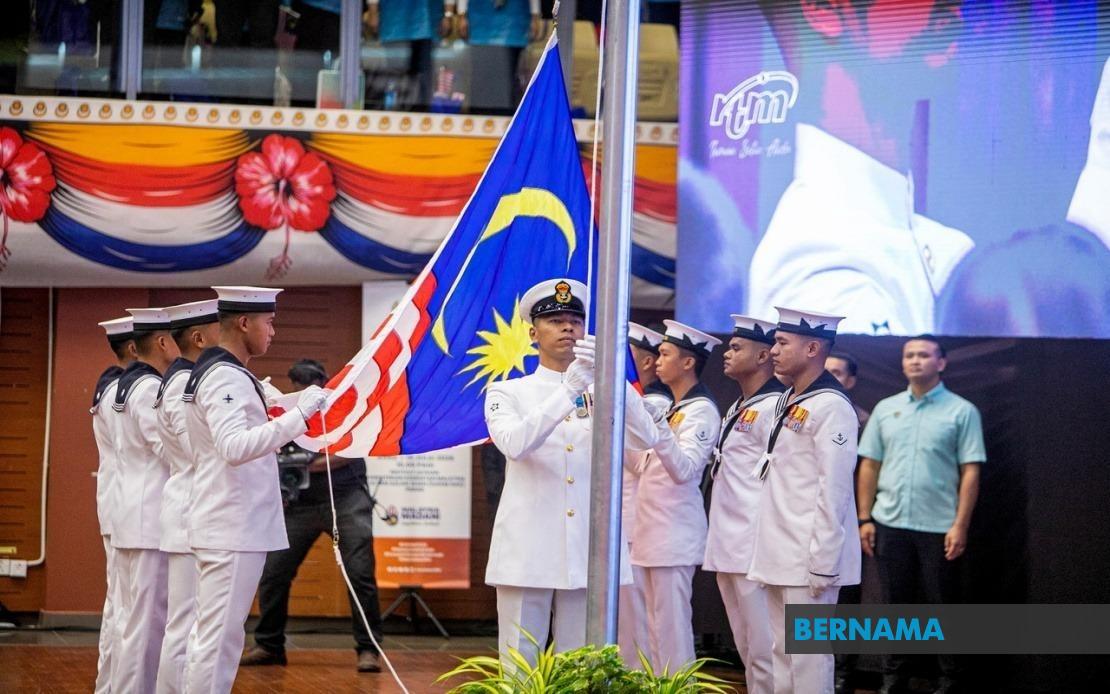
The patriotic tradition of hoisting the Jalur Gemilang has returned to centre stage in Malaysia's calendar of national observances. Prime Minister Datuk Seri Anwar Ibrahim presided over the ceremony at the Sultan Azlan Shah Ministry of Health Training Institute in Tanjung Rambutan, Ipoh, on July 19, breathing new life into a cherished national ritual that had been absent for two years. The revival comes as the government gears up for the 2026 National Month celebrations and the broader Fly the Jalur Gemilang campaign, signalling a renewed commitment to fostering patriotic sentiment across the nation.
The ceremonial centrepiece involved the formal raising of a specially prepared Jalur Gemilang measuring 1.82 metres by 3.65 metres, hoisted by a nine-member contingent drawn from the Royal Malaysian Navy's Lumut Base. Led by Chief Petty Officer Mohamad Razif Aliff Md Yusof, the naval team carried symbolic weight in their role, representing the institutional backbone of Malaysia's defence and maritime heritage. This institutional participation underscores how the flag-raising ceremony extends beyond mere symbolism, embedding national pride within the structures that protect the country's sovereignty and territorial integrity.
The event unfolded with traditional elements that have long characterised Malaysia's most solemn patriotic observances. As the flag reached its full height, attendees stood in unified reverence while singing Negaraku, the national anthem that encapsulates the nation's founding aspirations. The moment carried particular resonance given Malaysia's multicultural composition and the deliberate emphasis on national unity that the government has positioned as central to contemporary nation-building efforts. Following the anthem, ILKKM SAS trainee Muhammad Ammar Mohd Asri led guests in reciting the Rukun Negara pledge, embedding constitutional principles alongside the symbolic gestures.
The National Month and Fly the Jalur Gemilang campaign represents more than ceremonial theatre. As an annual fixture, it embodies a deliberate strategy to encourage Malaysians across all demographics and regions to actively display the national flag as a tangible expression of patriotic commitment and national cohesion. The campaign's emphasis on individual participation, with citizens flying flags from homes and businesses, transforms abstract notions of patriotism into visible community expressions. This grassroots approach proves particularly valuable in contemporary Malaysia, where building consensus around shared national identity remains an ongoing negotiation across diverse communities.
Integral to the 2026 campaign is the unveiling of its official theme song, "Aku Berjanji," composed and performed by acclaimed Malaysian artist Faizal Tahir. The selection of a popular contemporary musician rather than relying solely on traditional patriotic compositions signals an intentional effort to connect national celebrations with younger demographics and modern cultural sensibilities. The song's immediate availability through the Merdeka360 portal from midday onwards removes barriers to public access, democratising engagement with the campaign's cultural components. Such integration of contemporary music into patriotic observances reflects how nations continuously adapt their symbolic infrastructure to remain relevant across generational divides.
The timing of this revival carries additional significance within Malaysia's political calendar. The 2026 National Month celebrations will build momentum through August and September, culminating in National Day on August 31 and Malaysia Day on September 16. These dual observances bookend the patriotic season, marking the anniversary of independence and the formation of the Malaysian federation respectively. By orchestrating a high-profile ceremony featuring the Prime Minister and military representation, the government establishes these forthcoming months as a period demanding elevated national reflection and unity-building.
The two-year hiatus in the flag-raising ceremony appears to have been a pandemic-related interruption to standard practice. The reinstatement carries implicit messaging that Malaysia is returning to normalcy and resuming traditional observances that were temporarily suspended. For many Malaysians, particularly younger citizens who may have little memory of pre-pandemic patriotic rituals, the revival represents an introduction to ceremonies that previous generations took for granted. This demographic dimension suggests the ceremony serves dual purposes: reaffirming continuity for established citizens while establishing baseline patriotic practices for younger cohorts.
The choice of venue in Ipoh, within Perak, distributes the patriotic message geographically beyond the federal capital. By conducting the launch in a major state capital, the government signals that National Month observances constitute a genuinely nationwide endeavour rather than a Kuala Lumpur-centred phenomenon. This geographical dispersal of ceremonial moments ensures regional populations feel invested in and included within national celebrations. The Sultan Azlan Shah Ministry of Health Training Institute provides an additional institutional anchoring point, linking the patriotic ceremony to civil service capacity-building and the broader machinery of governance.
The participation of naval personnel connects the flag-raising to Malaysia's strategic positioning as a maritime nation. The Lumut Base represents institutional custodianship of the Straits of Malacca and broader Southeast Asian waters, areas of immense geopolitical and economic significance. By selecting naval personnel as the primary actors in hoisting the flag, the ceremony implicitly reinforces Malaysia's maritime identity and the role of defence institutions in protecting national interests. This institutional symbolism extends beyond ceremony into the realm of national strategic consciousness.
The Rukun Negara recitation during the ceremony serves as a constitutional touchstone, reminding Malaysians of the foundational principles upon which the nation was established. The five pillars of belief in God, loyalty to King and country, upholding the Constitution, the rule of law, and good morality provide philosophical ballast to patriotic sentiment. When embedded within ceremonial moments alongside flag-hoisting, these principles gain concrete expression beyond their textual existence in constitutional documents. Citizens participating in or witnessing these rituals engage not merely with symbols but with codified national values.
The broader context of Malaysia's contemporary challenges adds weight to the revival of these patriotic observances. In a period marked by economic pressures, social divisions, and political scrutiny, the government's investment in symbolic unity-building exercises reflects confidence in ritual's power to generate consensus. The National Month campaign explicitly positions flag-flying as a democratic act available to all Malaysians regardless of socioeconomic status or geographical location. This accessibility dimension democratises patriotism, preventing it from becoming the exclusive province of elite or institutional actors.
Looking toward the 2026 celebrations, the trajectory is set for an extended campaign that will saturate the national landscape with patriotic messaging and visual symbols. The official theme song, government-orchestrated ceremonies, and grassroots encouragement for private flag displays will combine to create an environment where national pride becomes culturally and aesthetically normalised. For Malaysian business owners, civic leaders, and households, the coming months will present both expectation and opportunity to participate visibly in national observances.

