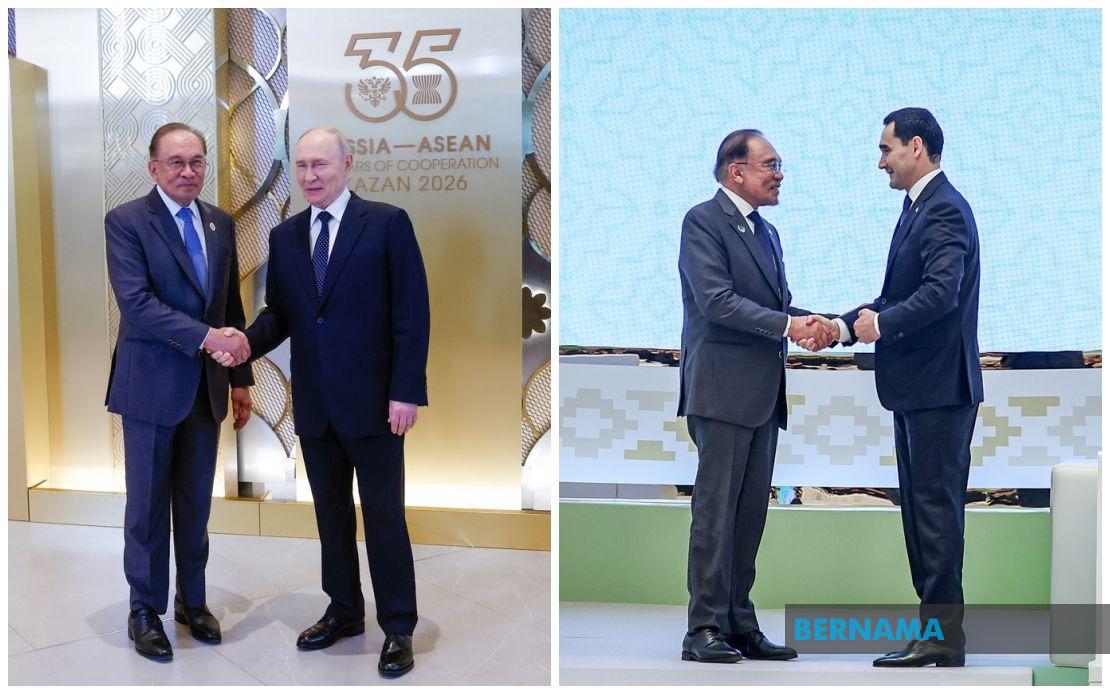
Prime Minister Datuk Seri Anwar Ibrahim's recent diplomatic missions to Russia and Turkmenistan have been characterised by Malaysian ministers as watershed moments that will reshape the country's energy independence and elevate its standing in global energy markets. The visits, which encompassed a two-day working stay in Kazan and subsequent engagements in Turkmenistan, culminated in agreements that senior government figures believe address Malaysia's longstanding vulnerabilities in energy supply chains while opening lucrative opportunities for national champions.
Central to the diplomatic achievements is Russia's undertaking to supply Malaysia with petroleum products over two decades, a commitment that government officials contend provides unprecedented stability for the nation's energy sector. Housing and Local Government Minister Nga Kor Ming described this arrangement as foundational to the government's broader energy diversification strategy, which seeks to reduce reliance on traditional supply corridors. The long-term nature of the agreement distinguishes it from conventional annual or seasonal procurement arrangements that leave economies exposed to price volatility and supply disruptions. For Malaysia, which imports substantial portions of its energy requirements, securing guaranteed supplies from a major producer represents a tangible hedge against future market shocks that could undermine industrial competitiveness and fiscal stability.
The energy security dimension extends beyond mere procurement assurances into the realm of domestic consumer welfare. The government has pegged the petrol price support programme, which maintains RON95 petrol at RM1.99 per litre, as dependent partly on securing reliable long-term supplies at manageable costs. Ministers have emphasised that the Russian supply commitment enables continuation of the BUDI MADANI RON95 programme, which insulates Malaysian consumers from international oil price fluctuations. This social welfare component carries particular weight in a country where transportation fuel costs ripple through the broader economy, affecting everything from logistics expenses to food prices. By locking in supply arrangements with Russia, the government has theoretically acquired greater predictability in subsidy expenditure, a consideration of mounting importance as fiscal pressures intensify across Southeast Asia.
Equally significant is Petronas's appointment as operator of a major Turkmenistan gas field, an outcome that government ministers view as validation of Malaysian corporate competence on the global stage. Human Resources Minister Datuk Seri R. Ramanan characterised the development as emblematic of Malaysian companies' capacity to lead in international markets, positioning the country as a consequential player in energy geopolitics. For Petronas specifically, currently ranked 139th among Fortune Global 500 companies, the opportunity to develop and manage one of the world's largest gas fields could substantially elevate its global footprint and financial performance. The Turkmenistan assignment represents not merely a commercial contract but a credential in international energy circles, signalling that major resource-holding nations have confidence in Malaysian stewardship of critical assets.
Turkmenistan's decision to entrust Petronas with operational responsibility carries particular strategic weight given the country's position as custodian of some of the world's most substantial natural gas reserves. The gas field in question exists within a highly competitive global marketplace where Chinese, Russian, and Western energy majors routinely vie for development rights. Petronas's selection suggests that the company has established itself as technically proficient, financially reliable, and geopolitically acceptable to Turkmen authorities—qualities that transcend simple commercial bidding. This appointment positions Malaysia as a trusted intermediary capable of managing sensitive energy resources, a status that could unlock additional opportunities across Central Asia and the broader Eurasian energy complex.
The broader implications extend into workforce development and technology collaboration, dimensions that ministers highlighted as intrinsic to the Turkmenistan agreement. The Sungai Buloh MP noted that the gas field project is expected to catalyse skills transfer and high-skilled workforce training initiatives, creating pathways for Malaysian engineers, geoscientists, and technical specialists to develop expertise in large-scale gas field operations. Such human capital accumulation holds multiplicative benefits, as expertise acquired through international projects diffuses through the broader Malaysian energy sector, enhancing domestic technical capabilities. Over time, this knowledge transfer can position Malaysia as a preferred source of energy sector professionals in regional and global markets, creating secondary economic benefits beyond the immediate gas field project.
Anwar's characterisation of the Turkmenistan outcome as reflecting international confidence in Malaysia's political stability carries significance that extends beyond energy diplomacy. In an era when geopolitical risk considerations increasingly influence investment decisions, the Prime Minister's framing emphasises that Malaysia has successfully signalled institutional predictability and professional governance standards to foreign partners. This messaging matters particularly in Central Asian contexts, where political volatility and governance uncertainties traditionally deter risk-averse international capital. By securing such a prominent assignment under these conditions, Malaysia has effectively distinguished itself as a jurisdiction where professional institutions, legal frameworks, and political systems provide adequate reassurance to global energy actors contemplating major capital deployments.
The Russia-Kazakhstan component of the diplomatic mission likewise reflects Malaysia's effort to cultivate relationships with non-traditional energy partners. Kazakhstan and Russia represent alternative supply sources that diversify Malaysia's historical dependence on Middle Eastern oil and Southeast Asian gas. Building direct government-to-government energy relationships with these actors reduces intermediary costs and enhances Malaysian policymakers' direct access to supply decisions, a capacity that proves invaluable during supply disruptions or price crises. The twenty-year supply horizon, in particular, suggests that both parties anticipate a durable commercial relationship extending across political cycles and market fluctuations, embedding energy cooperation into bilateral frameworks that transcend transactional arrangements.
For Southeast Asian observers, Malaysia's diplomatic successes underscore the competitive dynamics reshaping regional energy diplomacy. Vietnam, Thailand, and Indonesia pursue comparable strategies of diversifying energy sources and positioning national energy companies for international opportunities. Malaysia's ability to secure both long-term supply commitments and major operational assignments suggests that the country's diplomatic and corporate positioning remains competitive despite regional competition for similar resources and opportunities. The outcomes also illustrate how energy security, traditionally understood as a technical commodity concern, has become entwined with broader diplomatic statecraft, requiring governments to cultivate relationships across multiple continents and political systems simultaneously.
Looking forward, the success of these missions may establish templates for Malaysian engagement in other energy-rich regions, including the Caucasus and Central Asia more broadly. The government's apparent strategy involves positioning Petronas as a globally-capable operator willing to undertake challenging international projects while simultaneously securing long-term supply contracts that insulate the domestic economy from external shocks. This dual approach—both commercial and strategic—reflects sophisticated understanding that energy security in the twenty-first century requires simultaneous pursuit of supply reliability and corporate competitiveness. Whether these arrangements achieve their stated objectives regarding energy stability, consumer welfare, and corporate advancement will become evident through implementation, but the diplomatic architecture constructed through Anwar's visits represents substantial groundwork for Malaysia's energy future.

