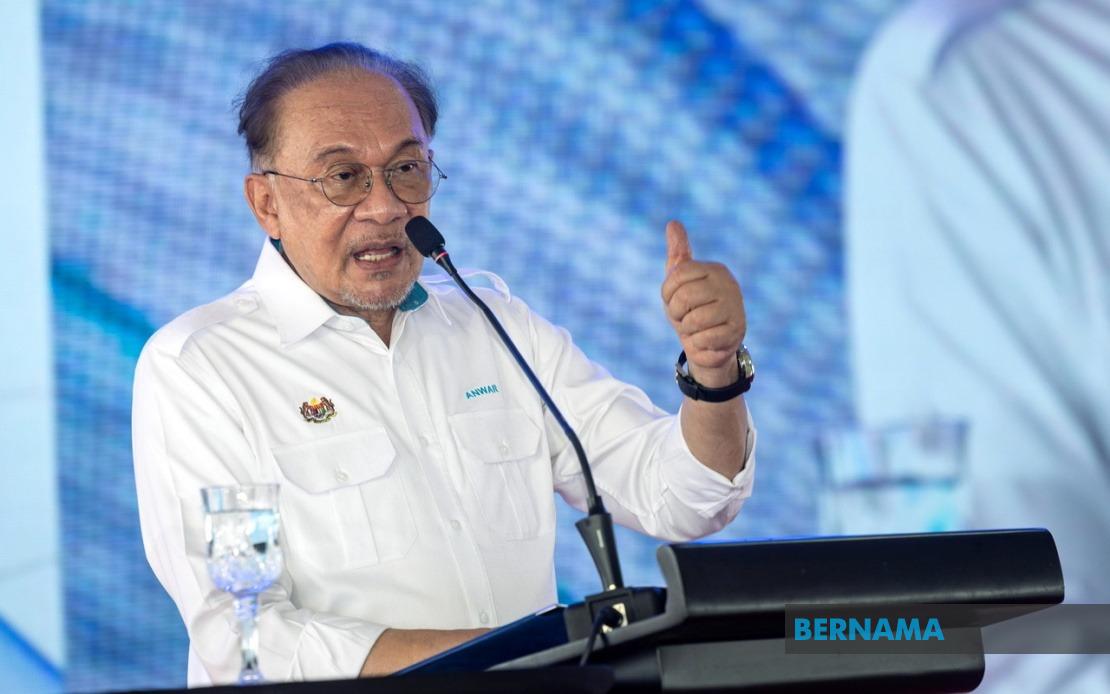
Malaysia has moved to fortify its long-term energy security through major partnerships with Russia and Turkmenistan, according to announcements by Prime Minister Datuk Seri Anwar Ibrahim. During remarks at a groundbreaking ceremony for the Setia Fontaines Industrial Park in Kepala Batas, the Prime Minister revealed that Russian President Vladimir Putin has committed to supplying Malaysia with oil, gas, and diesel under a two-decade agreement. The arrangement represents a significant diplomatic victory for Kuala Lumpur, reflecting deepening bilateral relations that Anwar characterised as rooted in mutual respect and shared strategic interests.
The assurances came during Anwar's recent official visit to Kazan, where discussions with the Russian leadership yielded concrete commitments on energy cooperation. This engagement underscores Malaysia's pragmatic approach to diversifying its energy sources and building relationships with major hydrocarbon-producing nations. For a resource-importing country like Malaysia, such long-term supply guarantees reduce vulnerability to market volatility and geopolitical disruptions that could otherwise constrain economic growth.
Equally significant is the breakthrough achieved with Turkmenistan, where Malaysia has obtained unprecedented access to the Central Asian nation's vast gas reserves. Turkmenistan possesses some of the world's most substantial proven gas deposits, and Malaysia's newly secured access represents a watershed moment for the country's energy planning horizons. The agreement emerged from sustained diplomatic engagement, building on momentum established when Turkmenistan President Serdar Berdimuhamedov visited Malaysia in December 2024. This progressive relationship has now translated into concrete commercial opportunities that extend far beyond Malaysia's domestic consumption needs.
The implications of these agreements extend throughout the regional energy landscape. Anwar emphasised that Malaysia intends to leverage its new access to Turkmenistan's reserves not merely to satisfy domestic demand, but to serve as a regional energy supplier. China, Japan, and South Korea—all major industrial economies with substantial energy appetite—represent primary export destinations for Malaysian-sourced or Malaysian-facilitated energy supplies. This intermediary role could generate significant revenue streams and strengthen Malaysia's position as a pivotal energy hub within Asia, complementing existing petrochemical and refining capabilities.
For Malaysian policymakers, the timing of these accords proves particularly strategic. The global energy transition presents both opportunities and risks for hydrocarbon-dependent economies. By securing long-term supply agreements now, Malaysia reduces the risk of supply shortages during the transition period while maintaining optionality regarding renewable and alternative energy investments. The two-decade horizon allows planners to balance immediate economic needs with medium-term sustainability objectives, avoiding the false choice between energy security and environmental responsibility.
Anwar's framing of these negotiations within a broader context of leveraging international relations for national advancement reflects a sophisticated understanding of contemporary geopolitics. He explicitly linked energy security to job creation and economic development, acknowledging that reliable energy supply underpins industrial competitiveness and investor confidence. When multinational corporations evaluate locations for manufacturing or processing facilities, energy cost and reliability rank among the most critical decision factors. By securing predictable supply at stable costs, Malaysia enhances its attractiveness as an investment destination.
The Russia component of this two-pronged strategy deserves particular attention given the current geopolitical environment. Malaysia's maintenance of pragmatic relations with Russia, despite international sanctions and diplomatic tensions, demonstrates the nation's commitment to independent foreign policy. Kuala Lumpur has consistently avoided aligning with any single power bloc, instead pursuing balanced engagement that serves Malaysian interests. This approach has yielded tangible benefits, as evidenced by Russian willingness to commit to a 20-year energy partnership at a time when Moscow faces restricted access to Western markets.
Turkmenistan's role in this framework adds a Central Asian dimension to Malaysia's energy portfolio. The country sits at the intersection of multiple geopolitical regions and pipeline networks, controlling access to energy resources that influence both Asian and global markets. Malaysia's strengthened ties with Ashgabat position Kuala Lumpur as a credible partner for energy-rich nations seeking stable, non-aligned buyers for their resources. This positioning carries broader implications for Malaysia's influence within multilateral forums and regional organisations.
From a practical standpoint, securing 20 years of energy supply eliminates a significant source of uncertainty in Malaysia's long-term economic planning. Industrial development programmes, manufacturing expansion, and infrastructure projects can proceed with greater confidence when energy costs and availability are contractually guaranteed. This certainty particularly benefits energy-intensive industries such as petrochemicals, fertilisers, and steel production—sectors where Malaysia maintains comparative advantages.
The agreements also reflect evolving patterns in global energy geopolitics. Rather than accepting energy dictates from traditional suppliers, Malaysia has actively negotiated with multiple sources, creating competitive dynamics that favour Malaysian interests. This approach mirrors strategies adopted by other Southeast Asian nations seeking to maintain energy independence and avoid over-reliance on single suppliers.
Looking forward, these partnerships create a foundation for deeper economic integration with Russia and Turkmenistan. Energy cooperation frequently catalyses broader trade relationships, technology transfer, and investment flows. Malaysian companies may gain opportunities to participate in upstream or midstream energy projects in Central Asia, while Russian and Turkmen enterprises could establish operations in Malaysia to serve regional markets.
The announcement carries particular resonance for Malaysian businesses dependent on stable, affordable energy. Manufacturing sectors grappling with rising operational costs will welcome the certainty provided by long-term supply agreements at predictable prices. Similarly, energy-intensive exports become more competitive when underlying input costs remain controlled and guaranteed.
These developments demonstrate that energy security remains a cornerstone of national strategy for Malaysian policymakers. In an increasingly multipolar world where traditional alignments no longer guarantee access to critical resources, Malaysia's proactive engagement with diverse energy suppliers positions the nation advantageously for the coming decades. The simultaneous pursuit of partnerships with both Russia and Turkmenistan exemplifies this diversification strategy, ensuring that no single geopolitical disruption threatens Malaysia's energy supply chain.

