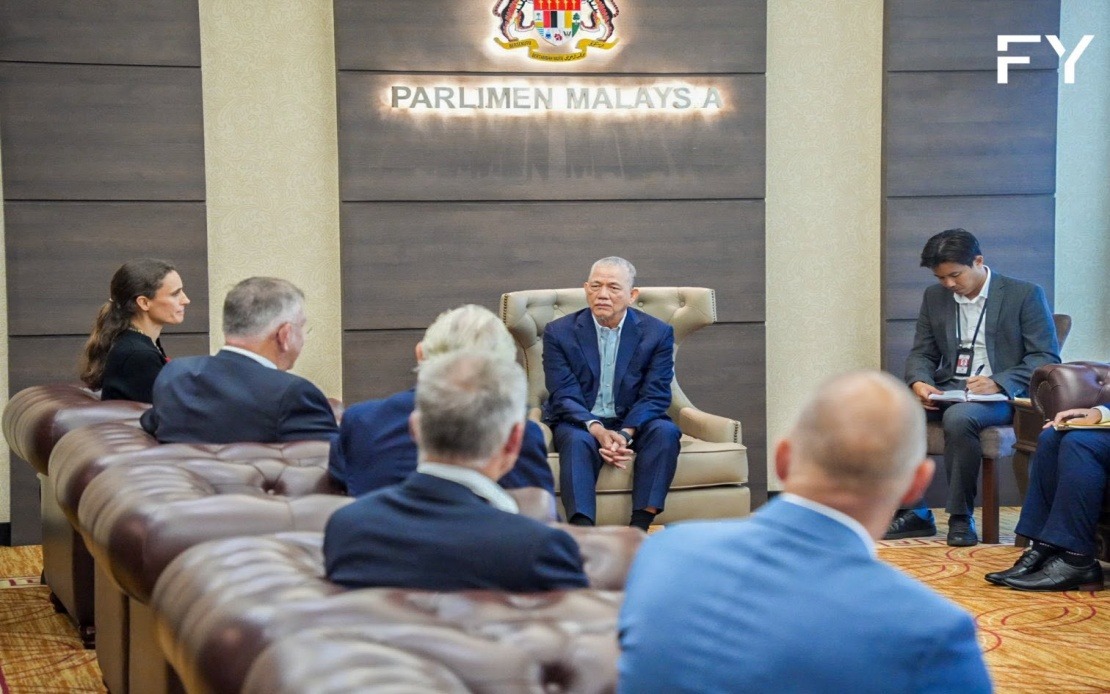
Deputy Prime Minister Datuk Seri Fadillah Yusof has signalled Malaysia's eagerness to attract greater capital flows from German small and medium enterprises, particularly those operating in green technology, renewable energy, and water management sectors. The overture came during a parliamentary meeting with Silke Riecken-Daerr, Germany's ambassador to Malaysia, who brought representatives from the German SME Business Association to explore bilateral investment opportunities. The timing reflects Malaysia's intensifying pivot towards a sustainability-focused economic model and its recognition of Germany's technological prowess in these critical areas.
The deputy prime minister emphasised that encouraging inflows from German SMEs directly aligns with Malaysia's broader sustainable development objectives. This strategic alignment signals to German investors that capital committed to these sectors will benefit from government support and policy frameworks designed to nurture green industry growth. Rather than casting a wide net across all investment categories, Malaysia is strategically narrowing its focus to sectors where it sees competitive advantage and long-term economic value creation.
The existing economic relationship between Malaysia and Germany runs considerably deeper than many regional observers might realise. Presently, more than 800 German companies maintain active operations throughout Malaysia, spanning diverse industrial segments and contributing meaningfully to the nation's manufacturing and technology ecosystems. This substantial footprint demonstrates the enduring appeal of Malaysia as a regional hub for German capital and expertise, particularly in mechanical engineering and advanced manufacturing technologies. The presence of this established investor community provides a ready-made network through which smaller enterprises can navigate market entry and operational challenges.
Germany's reputation as a global leader in technical and vocational education represents another compelling dimension of the bilateral relationship. The German TVET system has become internationally recognised for its capacity to develop highly skilled workforces capable of meeting the demands of advanced manufacturing and engineering sectors. Recognising this proven track record, Malaysian policymakers see genuine opportunity in adapting German pedagogical approaches and standards to strengthen domestic human capital development. The potential knowledge transfer could meaningfully enhance the competitiveness of Malaysia's labour force as it confronts mounting pressures from automation, artificial intelligence, and evolving global supply chain dynamics.
Fadillah articulated confidence that deepening cooperation through targeted strategic initiatives will generate mutual benefits for both nations. This diplomatic language masks a more fundamental Malaysian calculation: that German SMEs bring not merely capital but also technical expertise, management practices, and market access that can catalyse sectoral transformation. The focus on partnership rather than mere financial transactions reflects a sophisticated understanding that technology transfer and skills development carry strategic value exceeding raw investment figures.
The emphasis on green technology and renewable energy investment carries particular resonance for Malaysian policymakers confronting mounting pressure to reduce carbon emissions and transition away from hydrocarbon dependency. Germany's Energiewende—its comprehensive transition towards renewable energy sources—offers instructive lessons for a nation grappling with how to maintain economic growth whilst simultaneously meeting climate commitments. German companies operating in solar, wind, battery storage, and smart grid technologies could feasibly establish regional hubs in Malaysia, serving not only the domestic market but also the broader Southeast Asian region's accelerating energy transition.
Water management and treatment technology represents another sector where German expertise could address genuine Malaysian challenges. As a tropical nation experiencing intensifying urbanisation and climatic variability, Malaysia faces mounting pressure on freshwater resources and wastewater infrastructure. German firms specialising in water purification, treatment systems, and sustainable management practices could contribute meaningfully to addressing these infrastructure gaps whilst generating profitable business opportunities.
The diplomatic choreography surrounding this meeting underscores how Malaysia positions itself within competitive international dynamics. By actively courting specific categories of foreign investment and linking capital inflows to technology transfer and skills development, Malaysian authorities signal sophistication in investment prioritisation. Rather than pursuing growth at any cost, policymakers are attempting to steer capital towards sectors aligned with long-term development objectives and global competitiveness imperatives.
For German SMEs, the Malaysian market presents compelling advantages beyond conventional cost considerations. The established German industrial presence creates ecosystem effects, including specialised suppliers, technical expertise, and transportation infrastructure. Government receptiveness to partnership frameworks spanning education, technology, and sustainable development suggests a stable policy environment for long-term investment commitments. Access to Southeast Asian markets through a Malaysian base provides strategic leverage for firms seeking regional expansion.
The conversation between Fadillah and the German delegation also implicitly acknowledges shifting geopolitical currents. As traditional Western trading relationships face disruption and uncertainty, Malaysia and other Southeast Asian nations are actively strengthening economic ties with established democratic economies sharing commitment to rules-based international commerce. German participation in Malaysia's green technology transition represents partial hedging against overconcentration on Asian supply chains and capital sources.
Looking forward, translation of these discussions into concrete investment commitments will require sustained policy commitment and tangible incentives. Malaysian authorities will need to maintain regulatory stability, streamline licensing procedures, and potentially offer targeted tax incentives or infrastructure support for priority sectors. Building on the existing foundation of 800 German firms operating domestically, Malaysia has clear opportunity to deepen sectoral specialisation and generate multiplier effects throughout the economy.
The broader significance of this diplomatic engagement extends beyond bilateral relations between two individual nations. It reflects Malaysia's determination to position itself as Southeast Asia's preferred investment destination for advanced manufacturing, green technology, and skilled-labour-intensive industries. By successfully attracting German SMEs in these sectors, Malaysia could establish competitive advantages that generate employment, transfer knowledge, and support the nation's transition towards higher-value economic activities.

