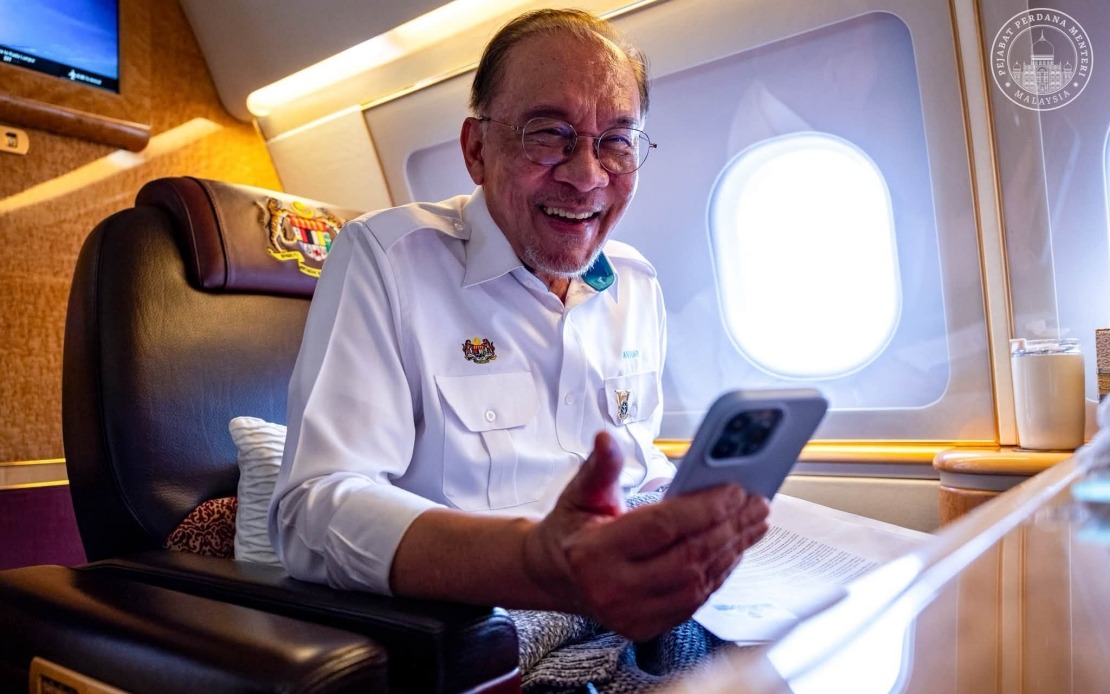
Prime Minister Datuk Seri Anwar Ibrahim has announced that Malaysia will serve as host to the Formula 1 Gulf Air Bahrain Grand Prix at the Sepang International Circuit from October 2 to 4, ending a nine-year gap since the country last hosted a major Formula 1 championship race. The decision represents a significant milestone for Malaysian motorsport and signals the nation's continued capacity to stage world-class sporting spectacles on the global stage.
The arrangement, which sees Malaysia hosting Bahrain's Grand Prix race rather than running its own, underscores a collaborative approach between the two nations. Anwar explained that the government had engaged directly with Prince Salman Hamad Al Khalifa, the Crown Prince and Prime Minister of Bahrain, as well as Stefano Domenicali, the president and chief executive officer of Formula 1, to finalise the partnership. This diplomatic engagement demonstrates the importance both governments place on the event and their commitment to regional sporting cooperation.
In his announcement, Anwar stressed that hosting the Bahrain Grand Prix transcends the mechanics of organising a sporting competition. The Malaysian leader characterised the occasion as a reflection of the enduring diplomatic relationship between Kuala Lumpur and Manama, emphasising the mutual trust and strategic partnership that underpins bilateral relations. By accepting the responsibility to stage Bahrain's titular race, Malaysia effectively positions itself as a trusted ally capable of executing major international obligations.
The decision to return Formula 1 racing to Malaysian soil carries particular significance given the country's history with the sport. The Sepang International Circuit, purpose-built to international specifications, had hosted regular Formula 1 races for many years before the Malaysian Grand Prix was discontinued following 2017. That nine-year absence created a void in the nation's motorsport calendar and represented a loss of international prestige. The return of any Formula 1 event, even under the Bahraini banner, marks a symbolic restoration of Malaysia's standing in global motorsport.
From an infrastructure perspective, the Sepang circuit remains one of Asia's most sophisticated racing venues. The facility has undergone continuous improvements and maintenance throughout its dormancy, ensuring it meets current Formula 1 technical standards and safety specifications. Malaysia's ability to host the event demonstrates that the country's facilities remain internationally competitive and capable of meeting the exacting requirements imposed by the FIA, the International Automobile Federation.
The October timing places the event in Malaysia's post-monsoon season, a period traditionally favourable for hosting major international events. The scheduling allows both Malaysian and regional audiences to attend races and experience the spectacle at a time when weather conditions are generally more predictable and stable. For Malaysian enthusiasts who had mourned the absence of Formula 1 racing from their home circuits, the October event offers a long-awaited opportunity to witness elite-level motorsport competition live.
Economically, hosting a Formula 1 Grand Prix generates substantial benefits extending beyond the racing weekend itself. The event attracts international visitors, media personnel, and teams to Malaysia, stimulating spending across hospitality, transportation, and retail sectors. The construction and operational activities required to prepare the venue create employment opportunities, while the global media coverage associated with Formula 1 provides invaluable promotional value for Malaysia as a tourism and business destination.
The arrangement also reflects the interconnected nature of modern Formula 1 scheduling and logistics. By accepting the role of hosting another nation's Grand Prix, Malaysia demonstrates flexibility and a pragmatic approach to international motorsport governance. This willingness to cooperate with the FIA and other motorsport authorities may position the country favourably for future racing opportunities and strengthens its relationships within the global motorsport community.
Anwar's emphasis on Malaysia's world-class infrastructure and operational excellence serves a dual purpose: affirming domestic capability while projecting international competence. The government's commitment to showcase warm hospitality alongside logistical proficiency aims to create a positive experience for international participants and visitors. Such positive outcomes can enhance Malaysia's reputation as a capable host nation and may encourage future international sporting organisations to select Malaysian venues for major events.
The collaboration between Malaysia and Bahrain extends beyond immediate sporting considerations into the realm of regional diplomacy and partnership building. Both nations, while geographically distant, share interests in promoting stable regional governance and economic development. Sporting partnerships like this serve as vehicles for deepening personal and institutional relationships between government officials and private sector leaders from both countries.
For Malaysian motorsport fans and the automotive industry, the return of Formula 1 to Sepang signals renewed opportunities for engagement with global motorsport. Local engineering firms, technology companies, and hospitality providers gain visibility through association with the event. The presence of Formula 1 machinery and personnel also inspires younger generations to pursue careers in motorsport engineering and related disciplines, contributing to human capital development in technologically advanced sectors.
Looking forward, the successful execution of the October 2024 Formula 1 Gulf Air Bahrain Grand Prix at Sepang could open pathways for Malaysia to host additional Formula 1 events in subsequent years, whether under the Malaysian banner or in collaboration with other nations. The event therefore carries significance not merely as a one-off occasion but as a potential catalyst for restoring Malaysia's regular presence on the Formula 1 calendar. Government and industry stakeholders will undoubtedly monitor the event's success closely, using it as a benchmark for future motorsport hosting capabilities and regional positioning within the global sporting landscape.

