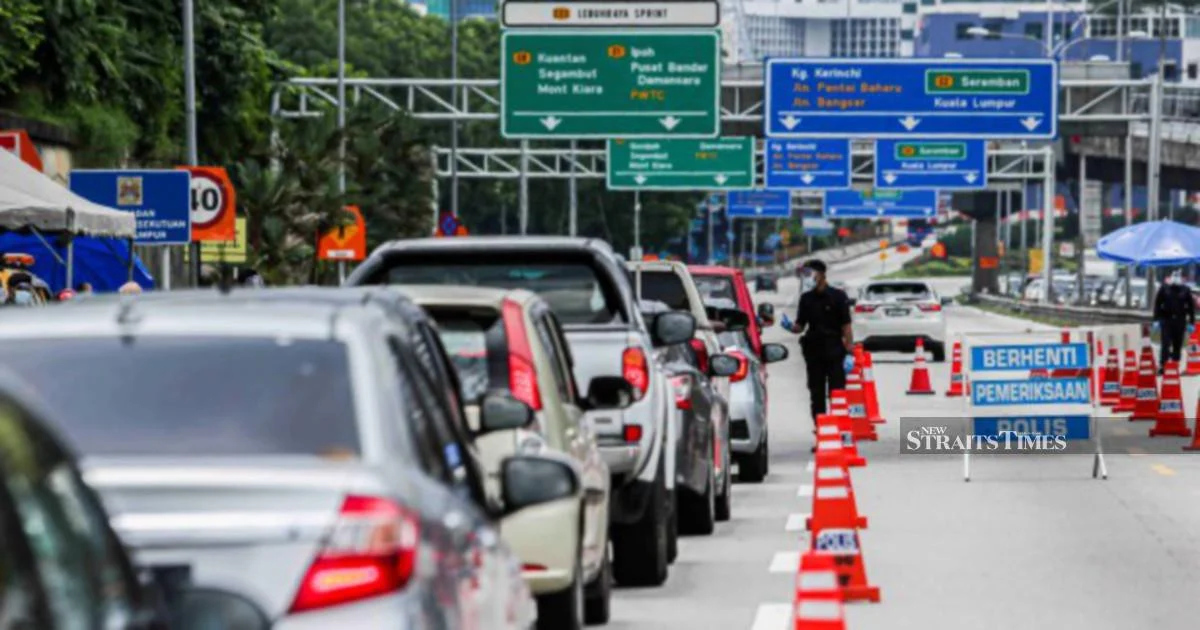
Malaysia appears poised to substantially tighten its traffic enforcement regime by substantially raising compound penalties across the board. If parliamentary approval is secured for the latest amendments to the Road Transport Act 1987, drivers and vehicle owners nationwide will face considerably higher financial penalties for violations on the nation's roads. The proposed changes would elevate the maximum compound rate for more than 700 separate traffic offences to RM500, a meaningful increase intended to enhance road safety compliance and generate greater deterrence against unsafe driving practices.
The Road Transport Act 1987, which has governed Malaysia's traffic regulations for over three and a half decades, provides the legal framework within which traffic enforcement authorities operate. This legislation establishes the powers of enforcement officers, defines various categories of traffic violations, and prescribes the penalty ranges applicable to different infractions. The anticipated amendments represent one of the most comprehensive modifications to penalty structures under this act in recent years, reflecting concerns about traffic discipline and road safety outcomes across Malaysian highways and urban streets alike.
The scale of the proposed changes underscores the breadth of Malaysia's traffic violation taxonomy. With over 700 different offences covered by these amendments, the regulatory framework touches virtually every conceivable traffic scenario, from speeding and illegal parking to more serious breaches such as dangerous driving and vehicle defect violations. By establishing a unified maximum compound rate across this extensive range of infractions, lawmakers aim to create a more consistent and predictable enforcement environment while simplifying the administration of traffic law compliance.
This increase carries significant practical implications for Malaysian motorists and fleet operators. For drivers accustomed to existing penalty structures, the jump to RM500 compounds represents a material financial consequence that may prompt behavioural adjustment. Commercial operators managing large vehicle fleets face the prospect of substantially elevated compliance costs, potentially influencing their approach to vehicle maintenance, driver training, and route planning. The change also affects the economic calculus that individual drivers employ when making split-second decisions about speed limits or traffic regulations.
The Malaysian government's rationale for this enhancement appears rooted in road safety statistics and public health considerations. Traffic fatalities and injuries represent a significant public health burden, with preventable accidents straining healthcare resources and imposing enormous costs on families and society. By raising the financial stakes associated with traffic violations, authorities hope to shift driver behaviour toward greater caution and adherence to established rules. This approach reflects a belief that economic incentives can meaningfully influence compliance patterns, particularly among drivers who may previously have viewed modest fines as an acceptable cost of certain driving practices.
Regional context illuminates the significance of Malaysia's proposed move. Neighbouring countries employ varying penalty regimes for traffic violations, and Malaysia's approach will place it within a competitive landscape of enforcement stringency. Some Southeast Asian jurisdictions employ considerably harsher penalties, including licence suspension and vehicle impoundment, while others maintain more modest fine structures. Malaysia's positioning of RM500 as a maximum compound reflects both its developmental context and a desire to balance enforcement effectiveness with proportionality concerns.
The implementation of these amendments will require coordination among multiple enforcement agencies operating in Malaysia's fragmented traffic regulation environment. The Royal Malaysian Police, local authorities, and various specialised traffic enforcement units will need to update their administrative systems, revise penalty schedules, and potentially retrain personnel to ensure consistent application across different jurisdictions. This administrative dimension often receives less attention than the legislative changes themselves, yet proves crucial to practical effectiveness.
For Malaysian motorists, particularly those who frequently accumulate traffic summonses, the financial impact could be substantial. A driver receiving multiple compounds for infractions such as illegal parking, expired road tax, or traffic light violations could face cumulative fines reaching several thousand ringgit. This reality may prove especially burdensome for lower-income drivers, raising equity considerations that policymakers must weigh against enforcement objectives. Some observers have questioned whether purely financial penalties represent the most equitable or effective approach compared to alternative enforcement mechanisms.
The approval of these amendments also signals government determination to address traffic discipline as a policy priority. In recent years, Malaysian policymakers have increasingly recognised that traffic safety and compliance issues require sustained attention comparable to that devoted to other regulatory domains. The comprehensive nature of these amendments reflects this elevated policy focus and suggests that further refinements may follow as enforcement data reveals the impacts of the new regime.
Beyond the immediate effect on individual drivers, these amendments carry implications for Malaysia's broader approach to regulatory compliance and public behaviour modification. They represent a significant instance of government choosing financial penalties as its primary enforcement tool, a strategy that assumes economic rationality among actors and sufficient regulatory capacity to implement changes effectively. Whether these amendments ultimately achieve their intended behavioural effects will depend on both their technical implementation and public acceptance of the new penalty structure.
As parliament considers these amendments, transport stakeholders including vehicle manufacturers, insurance companies, and driving schools are likely assessing implications for their respective sectors. Insurance companies, for instance, may adjust premium calculations based on anticipated changes in enforcement intensity and driver behaviour patterns. The amendments thus ripple through multiple layers of Malaysia's transport ecosystem, reshaping incentives and expectations across a broad spectrum of road users and industry participants. Their passage would represent a watershed moment in how the country approaches traffic law enforcement.

