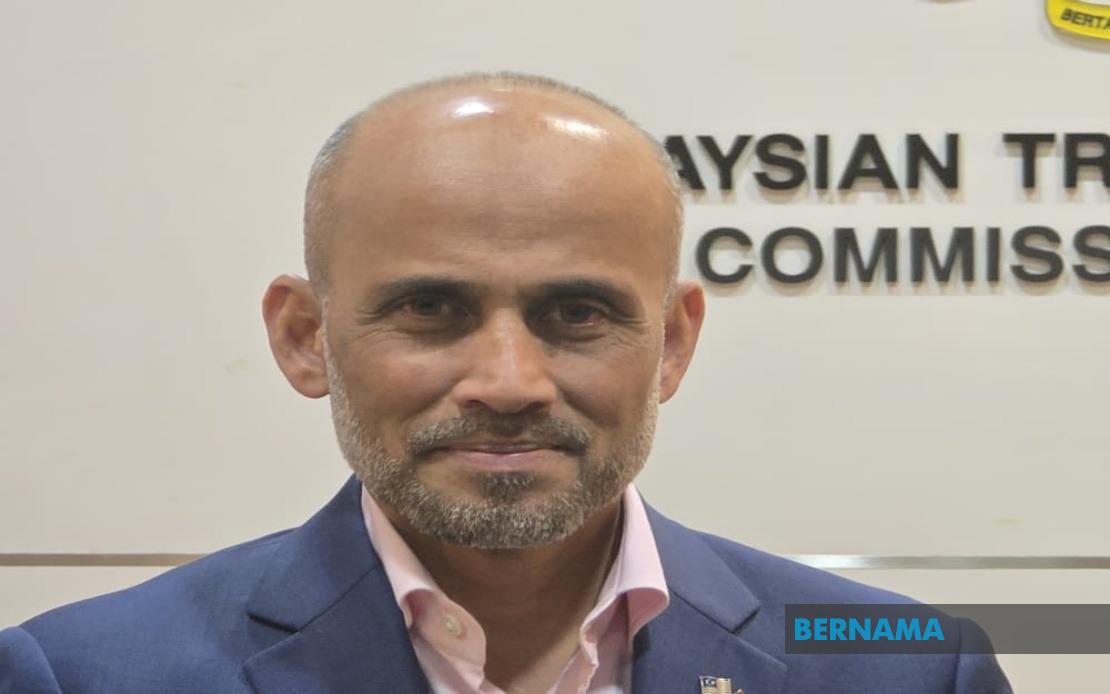
The relationship between Malaysia and Singapore has matured considerably over the past half-decade, according to Datuk Dr Azfar Mohamad Mustafar, who is stepping down from his role as Malaysia's High Commissioner to the island republic. In an interview reflecting on his tenure, Azfar credited the two countries' collaborative approach to managing successive crises as the foundation for their strengthened ties, even as global uncertainty continues to reshape the regional landscape. His successor will inherit diplomatic channels that have proven resilient through tumultuous periods, suggesting a solid platform for deepening engagement in the years ahead.
Azfar's five-year posting, which began in June 2021, coincided with one of the most testing periods in recent history. The immediate challenge upon his arrival was managing the fallout from COVID-19 restrictions, which had severely disrupted the seamless movement of Malaysians who depend on daily commuting across the Causeway and Second Link for employment and business opportunities. Tens of thousands of workers and professionals regularly traverse the border, making the pandemic's closure measures a particularly acute diplomatic and humanitarian concern. The high commissioner noted that consular operations faced unprecedented strain during lockdown periods, requiring swift coordination between both governments to address an avalanche of requests from affected citizens seeking travel clearances, work permits, and emergency assistance.
The experience underscored how deeply integrated the two economies and societies have become despite occasional political tensions. Where pandemic-induced disruptions might have widened gaps, both governments instead prioritised keeping essential channels open and facilitating the eventual restoration of cross-border mobility. This pragmatic stance, Azfar suggested, demonstrated a maturity in bilateral relations that extends beyond formal agreements to encompass a shared understanding of interdependence. The lesson proved instructive as both nations pivoted toward recovery and normalisation in subsequent years.
Economically, the recovery narrative has been particularly encouraging. Trade flows between Malaysia and Singapore have rebounded to pre-pandemic trajectories, with the city-state maintaining its position among Malaysia's most significant trading partners. More significantly, Singapore remains a leading source of foreign direct investment into Malaysia, a relationship that carries outsized importance given the city-state's role as a regional financial and investment hub. The capital that flows from Singapore into Malaysian ventures across manufacturing, services, and emerging sectors contributes meaningfully to domestic employment and technological capability.
The Johor-Singapore Special Economic Zone emerges as a pivotal development in this investment narrative. This collaborative initiative opens fresh pathways for Singaporean capital and expertise to engage with Malaysian labour and resources, particularly within Johor's expanding industrial ecosystem. Azfar specifically highlighted hopes that this special economic zone would catalyse increased Singaporean investment into the state, diversifying beyond traditional sectors and creating opportunities for Malaysian enterprises to integrate into Singapore's supply chains and trading networks. The zone represents more than mere economic mechanics; it symbolises a shared vision of deepening regional prosperity through formalised cooperation.
Looking beyond immediate bilateral interests, Malaysia has positioned itself as a committed supporter of Singapore's upcoming assumption of the ASEAN chairmanship. This backing carries strategic weight, as ASEAN consensus-building often hinges on larger member states demonstrating solidarity with smaller economies assuming leadership roles. Azfar's articulation of Malaysian support signals continuity in regional diplomacy and suggests both nations view ASEAN's institutional strengthening as a mutual priority. The commitment reflects an understanding that ASEAN's efficacy ultimately benefits all ten members, regardless of bilateral complexities that may periodically surface.
One cornerstone initiative both nations will collaborate on is the ASEAN Power Grid project, an ambitious infrastructure undertaking designed to enhance energy security and sustainability across the region. This cross-border power initiative requires unprecedented coordination on technical standards, regulatory frameworks, and financial mechanisms. For Malaysia and Singapore, partnership on this initiative extends beyond bilateral energy security to encompass their roles as responsible ASEAN members contributing to regional resilience. The project also aligns with broader commitments to energy transition and decarbonisation, issues where both nations face mounting domestic and international pressure.
Azfar's career trajectory—spanning an appointment as Administrative and Diplomatic Officer in 1996 through positions including his ambassadorship to France from 2018 to 2021—positions him well for his upcoming assignment as High Commissioner to the United Kingdom, a posting that begins July 1. His appointment comes after receiving instruments of appointment from His Majesty Sultan Ibrahim, King of Malaysia, in May. The transition from Singapore to London represents a notable elevation in diplomatic rank, reflecting the Foreign Ministry's assessment of his capabilities and achievements in managing complex bilateral relationships.
The outgoing high commissioner's measured optimism about Malaysia-Singapore ties reflects an underlying pragmatism. He acknowledged that substantial work remains ahead, a refreshingly honest assessment that avoids triumphalism while affirming progress made. This calibrated outlook matters for Malaysian policymakers and the business community, signalling that the current government takes seriously the responsibility of maintaining diplomatic momentum and investing in institutional arrangements that transcend individual political cycles or leaders.
The broader context matters too. Regional geopolitical competition has intensified, with great powers increasingly asserting influence across Southeast Asia. Within this environment, strong Malaysia-Singapore relations serve as stabilising force, demonstrating that bilateral differences can be managed constructively and that mutual interest in prosperity and security can overcome historical grievances. Their deepened partnership also provides a model for other ASEAN pairs, suggesting pathways toward pragmatic cooperation even when fundamental interests occasionally diverge.
Azfar's departure represents a natural transition point, offering an opportunity for Malaysia's new envoy to build on the diplomatic scaffolding constructed over the past five years. The foundation appears solid: trade relationships have weathered disruption and recovered, investment channels remain open, and both governments have demonstrated willingness to address challenges jointly rather than through confrontation. These fundamentals provide confidence that the Malaysia-Singapore relationship will continue maturing, notwithstanding the global uncertainties that periodically test all diplomatic partnerships.

