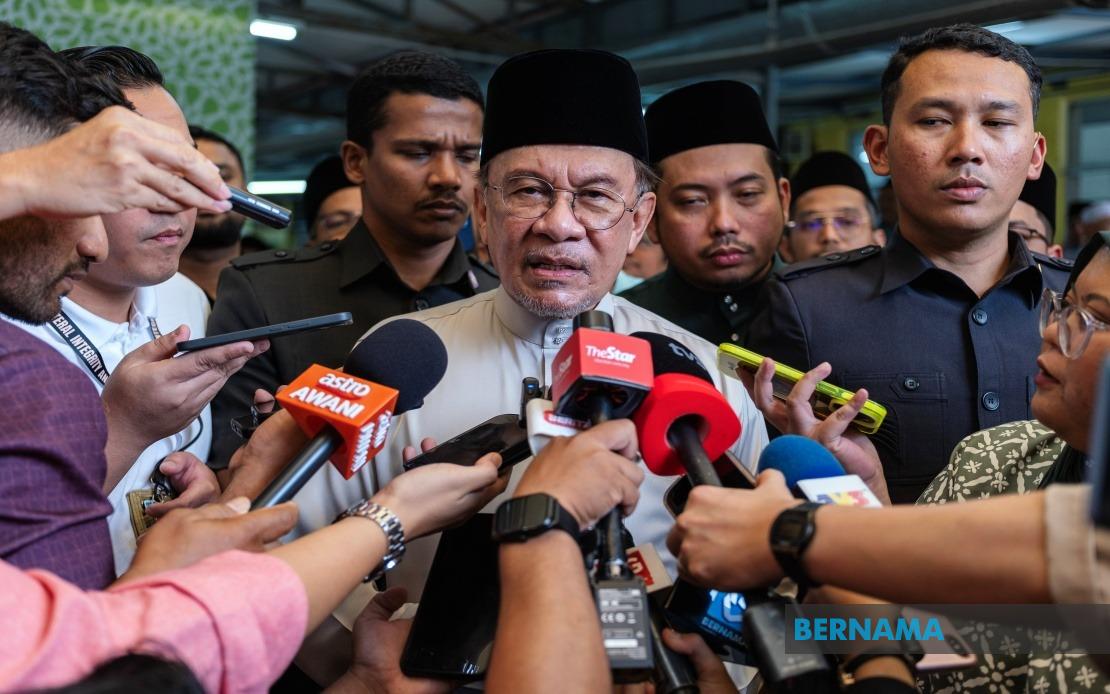
Prime Minister Datuk Seri Anwar Ibrahim has reaffirmed Malaysia's unwavering commitment to its legal position concerning fugitive businessman Low Taek Jho, commonly known as Jho Low, even as international media reports suggest he may feature among approximately 250 individuals under consideration for a potential pardon by United States President Donald Trump. The Malaysian government's statement comes ahead of the US Independence Day celebrations, a traditional occasion when presidential pardons are announced, underscoring Kuala Lumpur's determination to maintain its principled stance independent of external diplomatic pressures.
Speaking to reporters following Friday prayers at Masjid As-Sodiqin in Taman Kobena here, the Prime Minister emphasised that Malaysia's position remains unequivocal and grounded in the rule of law. Anwar Ibrahim made clear that while the government respects American sovereignty and recognises that any decisions regarding pardons constitute an internal matter for the United States, Malaysia will chart its own course without being influenced, disturbed, or otherwise affected by Washington's determinations. This pronouncement reflects the careful diplomatic balancing act Malaysia must perform, acknowledging the significance of the bilateral relationship while simultaneously protecting its domestic legal interests and integrity.
The fugitive businessman has long been at the centre of one of the most significant financial scandals in Malaysian history. Jho Low faces multiple charges in Malaysia related to the 1Malaysia Development Berhad (1MDB) scandal, which resulted in the misappropriation of billions of ringgit from the sovereign wealth fund. The case has been a cornerstone of the government's efforts to demonstrate accountability and transparency following the political transition of 2018. Any pardon by the United States would therefore carry considerable symbolic and practical weight, potentially complicating Malaysia's legal proceedings and raising questions about the effectiveness of international cooperation in prosecuting financial crimes.
Malaysia's legal framework has pursued Jho Low on charges encompassing money laundering, criminal breach of trust, and conspiracy. The businessman's continued evasion of Malaysian authorities, reportedly residing beyond the country's borders, has proven a persistent challenge for law enforcement. A US pardon would not technically shield him from Malaysian prosecution; however, it would complicate extradition efforts and potentially undermine the coordinated international legal strategy that has characterised recent years of investigation and prosecution in the 1MDB matter.
The timing of this statement is particularly significant given the evolving geopolitical landscape in Southeast Asia and Malaysia's ongoing efforts to strengthen its rule of law credentials. Successive Malaysian governments have prioritised the resolution of the 1MDB scandal as essential to national reconciliation and the restoration of international confidence in Malaysian institutions. The government's firm rhetoric regarding Jho Low signals its determination to prevent any external developments from derailing these domestic objectives, which remain central to Malaysia's broader governance agenda.
Prime Minister Anwar Ibrahim's comments also reflect broader principles of Malaysian foreign policy, which have historically emphasised non-alignment and independence in decision-making despite pressure from major powers. By publicly restating Malaysia's position, the government demonstrates to both domestic audiences and the international community that Kuala Lumpur will not compromise on matters of national legal sovereignty, regardless of bilateral relationships or geopolitical considerations.
In a separate but noteworthy development, Anwar indicated that the Malaysian government has received a proposed contribution of RM1 million from the United States directed towards the restoration of Tugu Negara, the National Monument. This announcement comes in conjunction with the country's preparations for next year's National Day celebrations. The Prime Minister noted that this matter would be brought before the Cabinet at their next scheduled meeting for deliberation and approval. The proposed US contribution, while modest in absolute terms, carries symbolic importance as a gesture of bilateral cooperation and American engagement with Malaysian national heritage preservation.
The restoration of Tugu Negara represents a significant cultural undertaking for Malaysia, as the monument stands as an enduring symbol of national independence and collective sacrifice. The involvement of international partners in such preservation efforts demonstrates the cross-border recognition of its historical importance and underscores how cultural patrimony can serve as a vehicle for diplomatic engagement even amid complex geopolitical circumstances.
Malaysia's diplomatic handling of these concurrent issues—maintaining firmness on the Jho Low matter while accepting cultural assistance from the United States—exemplifies the nuanced approach required in navigating relationships with major powers. The government's strategy suggests an effort to compartmentalise different dimensions of the bilateral relationship, preserving Malaysia's legal autonomy and sovereignty while remaining open to cooperation in non-sensitive domains.
The statement by Prime Minister Anwar Ibrahim will likely resonate strongly across Southeast Asia, where concerns about international pressure on domestic legal matters remain pertinent. Other regional nations monitoring Malaysia's response may draw conclusions about their own capacity to resist external influence on matters they consider domestically sensitive. Malaysia's articulation of its position therefore extends beyond bilateral Malaysia-US considerations to broader questions about legal sovereignty and the limits of external influence within the ASEAN region.
Looking ahead, the government's firm position suggests that regardless of any presidential action in Washington, Malaysia will continue pursuing its legal strategies concerning individuals implicated in the 1MDB scandal through its own judicial mechanisms. The statement serves notice to the international community that Malaysia remains committed to accountability and transparency, values that the current administration has consistently emphasised as central to its political programme and legitimacy.

