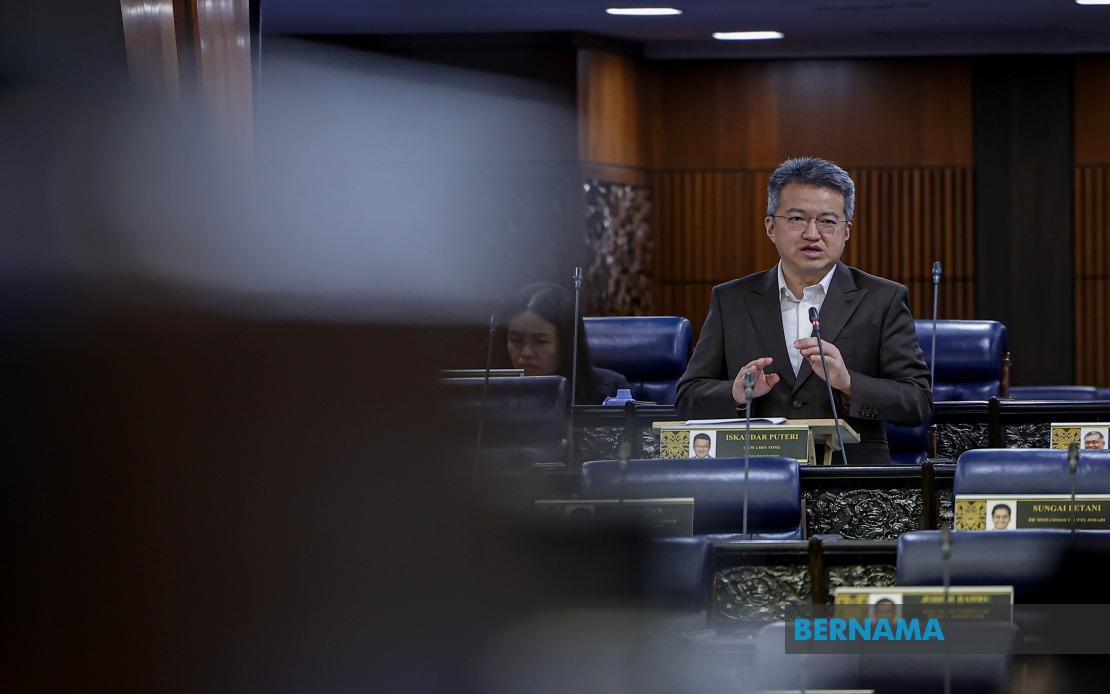
The Malaysian Government is pursuing comprehensive institutional overhauls to shield the country from repeating the catastrophic 1Malaysia Development Berhad scandal that ravaged its global standing and finances. Deputy Finance Minister Liew Chin Tong told the Dewan Rakyat that these governance reforms, steered by Prime Minister Datuk Seri Anwar Ibrahim, represent a determined effort to restore international investor confidence and strengthen public administration across critical sectors.
The centerpiece of this reform architecture is the Public Finance and Fiscal Responsibility Act 2023, which establishes firmer guardrails around how government money is managed and allocated. This legislation directly addresses the governance vacuum that allowed 1MDB to operate with minimal oversight, imposing strict fiscal discipline and creating accountability mechanisms designed to detect and prevent the abuse of public funds. By codifying these protections into law, the government has signalled its commitment to transparent stewardship of national resources.
Complementing this financial legislation, the government has substantially expanded the Auditor-General's mandate through amendments to the Audit Act. Under the new "follow the public money" framework, Malaysia's chief auditor can now conduct deeper, more comprehensive examinations of how public expenditure flows through government agencies and entities. This investigative approach enables auditors to trace funds across multiple institutions and transactions, making it exponentially harder for misappropriation schemes to flourish undetected. The shift represents a fundamental recalibration of Malaysia's internal oversight capacity.
Two additional reform initiatives remain under development: a Government Procurement Bill intended to bring greater transparency and competition to how the state purchases goods and services, and a restructured legal framework governing state-owned enterprises. These parallel efforts target the institutional channels through which the 1MDB scandal occurred. By reforming procurement processes and tightening SOE governance, the government addresses systemic vulnerabilities that previous administrations overlooked or exploited.
The reputational damage inflicted by 1MDB extended far beyond Malaysia's borders and balance sheet. The scandal triggered investigations by foreign enforcement agencies, sparked extensive international media coverage, and exposed Malaysia to cross-border legal proceedings that consumed diplomatic and financial resources. For years, the country's governance framework became synonymous with corruption and financial mismanagement in the eyes of global investors, rating agencies, and trading partners. This perception gap between Malaysia's economic fundamentals and its governance reputation created a drag on competitiveness and investor appetite.
Liew emphasized that rebuilding confidence required demonstrating tangible institutional change, not merely rhetorical commitment. The government's record since the MADANI administration took office in March 2023 reflects this philosophy. Malaysia has achieved record-breaking investment approvals and expanded trade performance, metrics that suggest foreign investors are beginning to trust in the sincerity of governance reforms. Simultaneously, the country has improved its standing in global competitiveness rankings, an important signal that the reputation damage is gradually reversing.
The financial toll of 1MDB remains staggering and ongoing. Since 2017, successive governments have spent RM18.7 billion from operating and development budgets to service 1MDB's obligations and liabilities. The MADANI Government inherited this burden and has had to allocate RM13 billion from development expenditure to redeem USD3 billion in government-guaranteed bonds issued on behalf of 1MDB. This redemption represented roughly 13.1 percent of the government's total development budget for that fiscal year—an enormous opportunity cost that diverted resources from infrastructure, education, and social spending. For Malaysian policymakers, preventing another such scandal is not merely a governance imperative; it is an economic necessity.
The reforms also reflect lessons learned about the interconnected nature of modern financial crime. 1MDB demonstrated how weak domestic governance frameworks can enable international money laundering, how the absence of robust audit mechanisms permits large-scale fraud, and how insufficient oversight of state-owned enterprises creates opportunities for malfeasance. By tightening governance across multiple fronts simultaneously, the MADANI Government is attempting to eliminate redundancies that criminals might exploit. No single loophole should again prove sufficient to enable a scandal of comparable scale.
For regional observers, Malaysia's governance reform agenda carries broader implications. Southeast Asia has attracted increasing foreign investment in recent years, but investor confidence remains contingent on perceived institutional quality and rule of law. Malaysia's experience demonstrates how quickly reputation can be damaged and how difficult the rehabilitation process becomes. Other nations in the region are watching whether Malaysia's reforms succeed in preventing recurrence and genuinely restoring investor trust. Success would validate the proposition that governance reforms can work; failure would undermine confidence across the region.
The government's approach also signals a philosophical shift in how Malaysia intends to compete globally. Rather than relying on tax incentives, favorable exchange rates, or strategic geographic positioning, the MADANI administration is betting that institutional quality—transparent governance, robust audit mechanisms, and clear accountability—will become increasingly important differentiators in attracting high-quality foreign investment. This positioning reflects recognition that sophisticated multinational firms increasingly conduct governance due diligence and calibrate investment decisions accordingly. By strengthening institutional frameworks, Malaysia aims to appeal to investors who prioritize long-term stability over short-term returns.
Yet governance reform remains a multi-year undertaking, and skepticism persists about implementation capacity and political will. Previous administrations introduced anti-corruption initiatives that achieved mixed results. The MADANI Government must demonstrate not only that it can enact legislation but that it can enforce these laws fairly and consistently, regardless of political connections or influence. Building public confidence in institutional reform requires visible prosecutions, transparent enforcement, and demonstrated independence of oversight bodies. In this sense, the reforms announced represent just the beginning of a longer journey toward restoring Malaysia's governance reputation.

