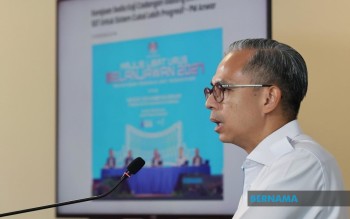
The Malaysian government is undertaking a methodical examination of a proposed hybrid taxation system that would merge select components of the Goods and Services Tax with the existing Sales and Services Tax framework. Finance Minister II Datuk Seri Amir Hamzah Azizan has been allocated adequate time to conduct this extensive study before presenting findings to the Cabinet for deliberation, according to MADANI Government spokesperson Datuk Seri Fahmi Fadzil, who also holds the Communications portfolio.
Fahmi emphasized during a post-Cabinet press briefing in Putrajaya that this exploratory phase demands careful analysis rather than expedited action. The undertaking involves scrutinizing both the previous experiences from Malaysia's GST implementation period and the complications that have emerged under the current SST regime. Such a comprehensive review is essential given the significant fiscal implications and potential economic impact of any taxation restructuring on businesses and consumers across the nation.
Prime Minister Datuk Seri Anwar Ibrahim has directed the Ministry of Finance to conduct this thorough examination, recognizing that taxation architecture represents a critical policy domain requiring sustained deliberation. The initiative reflects the government's commitment to optimizing the national tax framework while learning from historical precedent. Fahmi stressed that the findings would undergo Cabinet-level scrutiny before any policy direction is established, ensuring that decisions emerge from collective ministerial assessment rather than unilateral action.
The proposed framework would maintain SST as Malaysia's foundational taxation system while selectively incorporating proven GST mechanisms that authorities determine to be operationally sound and equitable. This measured approach contrasts with wholesale adoption of either system, instead favoring a tailored structure suited to Malaysia's particular economic circumstances and revenue requirements. The government's explicit retention of SST as the base system signals continuity in tax administration while creating flexibility to enhance progressivity and efficiency.
Anwar articulated the underlying rationale yesterday, noting that the objective centers on establishing a more progressive national taxation architecture capable of meeting contemporary fiscal needs. Progressive taxation systems are designed to distribute the tax burden more equitably across income levels and economic sectors, potentially reducing regressive elements where lower-income households bear disproportionate tax burdens. The combination strategy would theoretically allow policymakers to preserve SST's administrative familiarity while extracting beneficial aspects from GST architecture that proved effective or efficient during its operational period.
Malaysia's taxation history provides instructive context for this undertaking. The GST system, implemented in 2015, encountered sustained criticism before its abolition in 2018, with political opposition centered on claims that it placed excessive burden on lower-income earners and small businesses. The subsequent return to SST involved its own challenges, including compliance complications and perceived inefficiencies in revenue collection. Policymakers now seek to learn from both systems' shortcomings while constructing a framework that optimizes revenue generation with equitable distribution.
Fahmi declined to specify any deadline for the Finance Minister II's report completion or to confirm whether findings would feature in the forthcoming budget announcement. This measured communication approach reflects the government's desire to avoid raising public expectations prematurely regarding policy timelines or specific content. Budget presentation deadlines typically concentrate minds in economic ministries, though officials have deliberately avoided linking this taxation study to that broader fiscal exercise.
The initiative carries significance extending beyond immediate fiscal mechanics. Business communities, consumer representatives, and economic analysts will scrutinize how any hybrid framework addresses persistent concerns from prior taxation systems. Small and medium enterprises, which constitute the backbone of Malaysia's economy, require clarity regarding compliance obligations and administrative burden implications. Additionally, the construction industry, manufacturing sector, and services economy face different taxation dynamics that comprehensive study must address.
Regional competitiveness dimensions also merit consideration. Singapore's Goods and Services Tax and Thailand's Value Added Tax offer neighboring examples of consumption-based taxation systems. International experience demonstrates that hybrid or transitional tax frameworks often encounter implementation complexities if design lacks clarity or administrative preparation proves inadequate. Malaysia's taxation authorities will undoubtedly examine global precedent throughout this study process.
The broader Cabinet environment suggests openness to taxation reform within the MADANI Government's policy framework. Finance Ministry officials possess technical expertise and institutional knowledge from both GST and SST operational periods, providing valuable foundation for evidence-based recommendations. The extended timeline Fahmi referenced indicates recognition that substantial policy work precedes any announcement, reflecting professional governance standards rather than political expediency.
For Malaysian businesses awaiting clarity on long-term taxation direction, this study phase represents an opportunity for stakeholder engagement with policymakers. Industry associations and trade bodies traditionally submit representations during such consultation windows, allowing diverse sectoral interests to inform official analysis. The comprehensive nature of the Finance Ministry's mandate suggests receptiveness to such input.
Economic implications remain substantial. Taxation systems influence business investment decisions, consumer spending patterns, and sectoral competitiveness. A well-designed hybrid framework could enhance revenue adequacy while reducing distortions that emerged under previous systems. Conversely, poorly conceived transitions risk business uncertainty and compliance costs. The government's deliberate approach to this study signals awareness of these stakes.
As deliberations unfold within the Finance Ministry and subsequently the Cabinet, Malaysian stakeholders will monitor developments carefully. The coming months will likely see intensified discussion among economists, business representatives, and policy analysts regarding optimal taxation architecture. Whether the resulting hybrid system emerges through the budget process or separate announcement, its eventual design will reflect lessons drawn from Malaysia's recent taxation history and contemporary fiscal requirements.

