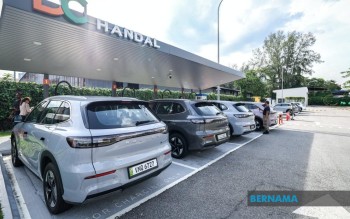
Malaysia's government has deliberately stepped back from regulating electric vehicle charging prices, choosing instead to allow commercial operators to set their own rates in a bid to stimulate private investment and expand the charging network nationwide. The Ministry of Investment, Trade and Industry confirmed in a recent parliamentary response that no price control mechanism exists for public EV charging services, marking a strategic decision to let market forces guide the sector's development rather than impose government-enforced tariffs.
This market-oriented stance reflects a broader philosophy within the government's energy transition strategy, where officials believe that unfettered competition will ultimately serve consumers better than regulatory price caps. By permitting charging station operators to make their own commercial decisions, the ministry argues that the private sector gains the confidence to invest more aggressively in expanding infrastructure. The approach mirrors similar deregulatory frameworks adopted in other rapidly growing EV markets, though the specific application to Malaysia's developing charging ecosystem carries distinctive implications for local adoption rates and regional competitiveness.
As of May 31, 2026, Malaysia had installed 6,416 public EV chargers across the nation, representing substantial progress in establishing the basic infrastructure required for mass EV adoption. The charging network comprises two technology types: 2,143 direct current fast chargers, which account for just over one-third of the total, and 4,273 alternating current chargers making up the remaining two-thirds. This distribution reflects the reality that most public charging stations cater to daily commuting and shorter-stay parking scenarios, where slower AC charging suffices, while the smaller DC fast-charging segment addresses highway travel and longer-distance journeys that require rapid top-ups.
Geographically, the expansion remains heavily concentrated in Peninsular Malaysia, where 6,176 chargers—representing 96 percent of the national total—have been deployed. This concentration underscores the economic reality that urban and highly populated regions attract greater private investment due to higher demand density. Sarawak and Sabah lag considerably behind with 208 and 32 units respectively, a disparity that could create challenges for EV adoption in these regions and raise questions about equitable access to the national EV transition.
Although pricing remains unregulated, the government has not abandoned all oversight of the charging sector. Technical standards, safety requirements, and operational regulations enforced by the Ministry of Investment, Trade and Industry, the Energy Commission, and local authorities continue to govern how charging facilities are developed and operated. This bifurcated approach—regulatory freedom for pricing coupled with strict safety and technical compliance—attempts to balance market dynamism with public protection, though critics might question whether this strikes the optimal balance.
Coordination of Malaysia's broader EV transition occurs through two high-level mechanisms established by the government. The National EV Task Force Meeting, chaired by MITI, and the National EV Steering Committee Meeting, led by the deputy prime minister in his capacity as Minister of Energy Transition and Water Transformation, serve as platforms for synchronizing policy across multiple agencies and engaging industry stakeholders. These forums address cross-cutting issues including regulatory harmonization, safety standards, infrastructure development timelines, and industrial growth targets, creating a skeletal governance structure that attempts to give strategic direction without imposing prescriptive controls.
The government's position reflects emerging global debates about whether EV charging infrastructure should follow utility-style regulation or operate as a competitive service market. Malaysia has chosen the latter path, betting that transparent competition will prevent excessive pricing while incentivizing rapid network expansion. However, this approach carries risks: without some mechanism to ensure affordability or equitable geographic access, charging networks may concentrate in profitable urban areas while rural and lower-income communities face underinvestment. Neighbouring countries such as Singapore and Thailand have experimented with different models, providing comparative lessons for Malaysian policymakers.
MITI signalled ongoing collaboration with the Energy Commission and Tenaga Nasional Bhd to develop what it termed a "regulatory approach" for EV charging fees. The phrase itself suggests some ambiguity in government messaging—regulatory approaches typically involve oversight and frameworks, yet the ministry has consistently stated that prices remain unregulated. This potential tension suggests that future policy evolution may introduce some form of guidance or transparency requirements without formal price controls, a middle ground between pure deregulation and direct price-setting.
For Malaysian consumers and businesses, the implications of this market-driven approach are mixed. Competition may eventually drive down charging costs as multiple operators vie for customers, particularly in densely populated areas where multiple charging networks can coexist. Conversely, first-mover operators in less competitive markets might maintain higher prices indefinitely without fear of regulatory intervention. The absence of uniform national pricing standards could also create confusion for EV owners planning longer journeys across regions with varying rate structures.
The government's approach also carries implications for Malaysia's regional standing in the EV transition race. As Southeast Asian economies compete to attract EV manufacturing and battery production investments, charging infrastructure readiness becomes a competitive factor. A fragmented, market-driven pricing landscape with potential affordability concerns might disadvantage Malaysia against countries that have implemented more systematic national charging strategies with clearer cost certainty for end-users and businesses.
Looking ahead, the success of Malaysia's deregulated EV charging model depends critically on whether private investment materialises at the pace the government anticipates. If charging infrastructure expands rapidly and prices stabilise at competitive levels through market pressure, the strategy will validate its laissez-faire philosophy. If expansion stalls or pricing proves unreasonably high in certain regions, political pressure may force the government to reconsider and introduce price guardrails or subsidy mechanisms. The parliamentary question that prompted this response suggests growing scrutiny of charging policy, indicating that stakeholders remain engaged and ready to demand accountability based on outcomes.
Ultimately, Malaysia's decision to eschew price controls in favour of market competition represents a calculated wager on private sector dynamism and consumer choice. Whether this gamble pays off will depend on whether competitive pressures and profit incentives align sufficiently to ensure nationwide, affordable EV charging access—a outcome that remains uncertain as the market continues to develop.

