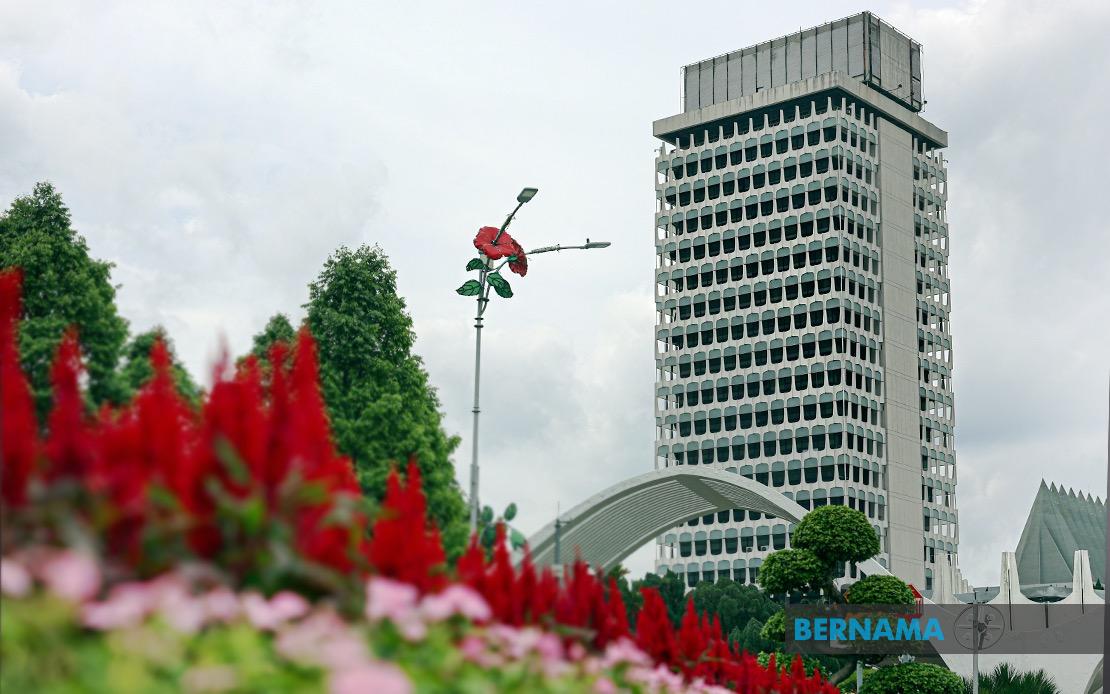
Parliament convened on July 14 for a session set to examine two issues with immediate bearing on Malaysia's prosperity and regional standing: the development trajectory of the Malaysia-Thailand Border Economic Zone and the destabilising effects of prolonged tensions in the Strait of Hormuz. The sitting, which began at 10 am, opened with a Ministers' Question Time during which lawmakers raised concerns about how the country stands to benefit from one of Southeast Asia's most ambitious cross-border initiatives while navigating geopolitical hazards that could upend trade and regional security.
Datuk Adnan Abu Hassan, the Kuala Pilah representative from the Barisan Nasional coalition, used his parliamentary slot to probe the government on quantifiable economic returns the nation anticipates from the Malaysia-Thailand BEZ venture. The Dewan Rakyat member pressed for specifics on what tangible gains Malaysia was positioned to realise, signalling backbench interest in seeing concrete returns from the project rather than aspirational rhetoric. His line of questioning zeroed in on a dimension often overlooked in grand border development announcements: ensuring that prosperity reaches beyond large corporations to small-scale enterprises and residents in boundary communities who have historically been marginalised in cross-border trade frameworks.
The mechanism for distributing BEZ dividends to smaller players and local populations represents a crucial policy concern for Adnan, who sought clarity on how the government would prevent wealth concentration among multinational firms and large traders. This reflects growing parliamentarian anxiety that major transnational projects can exacerbate inequality if not deliberately designed to include grassroots participation and benefit-sharing. The inquiry underscores Malaysia's ongoing struggle to translate bilateral economic initiatives into inclusive growth at the community level, particularly in peripheral zones where residents often bear disproportionate adjustment costs.
Meanwhile, Datuk Rosol Wahid, representing Hulu Terengganu under the Perikatan Nasional banner, redirected parliamentary focus toward the Middle Eastern dimension of Malaysian stability. He requested that the Prime Minister provide a formal government assessment of how the protracted Strait of Hormuz standoff—a waterway through which roughly one-third of global maritime petroleum traffic transits—threatens both Malaysia's political equilibrium and economic trajectory. The query reflects legitimate concern that regional flashpoints can ripple unpredictably through supply chains, investment sentiment, and energy costs, creating domestic strain that politicians must anticipate and manage.
Rosol's intervention signals recognition that Malaysia, as an energy-importing nation with substantial petrochemical and manufacturing sectors, faces genuine vulnerability to Middle Eastern volatility. The Strait of Hormuz crisis, if it escalates beyond current levels of tension, could disrupt Malaysian refineries, inflate fuel costs for transport-dependent industries, and weaken currency valuations. His question implicitly asked whether the government possessed contingency frameworks and mitigation strategies commensurate with the genuine risks posed by great-power competition and proxy conflicts playing out thousands of kilometres away but with immediate domestic consequences.
The government's response would reveal whether officials had conducted systemic vulnerability assessments and formulated resilience measures, or whether they were operating reactively. For Malaysian manufacturers and consumers, such preparedness matters enormously, since unexpected energy price shocks can cascade into job losses and inflation that erode purchasing power far faster than policymakers can implement remedial programmes. The parliamentary session thus became a venue where opposition and government parliamentarians jointly interrogated whether Malaysia's crisis management apparatus was sufficiently robust.
A third parliamentary query, from Datuk Yusuf Abd Wahab representing Tanjong Manis under the GPS (Gabungan Parti Sarawak) coalition, pivoted to domestic safety concerns. Yusuf directed questions at the Transport Minister regarding nationwide initiatives to suppress illegal highway racing, citing a particularly severe incident that unfolded in Simpang Renggam, Johor, on June 1. The episode apparently highlighted systemic enforcement gaps and cultural issues surrounding high-speed street racing that ministerial interventions had failed to adequately address, justifying parliamentary scrutiny of the Transport Ministry's deterrence and detection strategies.
Following the question-and-answer exchanges, the sitting proceeded to legislative business. The Parliament tabled the Statistics Bill 2026 for its opening reading, advanced by the Economy Minister, and the National Trust Fund Bill 2026, brought forward by the Finance Minister. These legislative instruments represented routine parliamentary machinery advancing government economic and fiscal frameworks through the prescribed three-reading process, though their substantive policy implications would become clearer during subsequent stages.
A centrepiece item on the parliamentary agenda involved Datuk Seri Azalina Othman Said, the Minister in the Prime Minister's Department (Law and Institutional Reform), presenting the conclusions and recommendations of the Parliamentary Special Select Committee on Constitutional Amendments. The committee, which had convened seven times, had spent considerable hours refining an amendment proposal centred on disaggregating the dual roles of Attorney General and Public Prosecutor into distinct institutional positions. This separation, committee members contended, would strengthen the independence, integrity, and accountability mechanisms governing Malaysia's chief prosecutorial body, reducing scenarios where political pressures could theoretically compromise prosecutorial impartiality.
The constitutional amendment proposal reflected Malaysia's broader institutional reform trajectory, wherein parliamentarians and judicial observers had grown concerned that concentrated authority within single office-holders could create vulnerabilities to politicisation. By separating the roles, the committee reasoned that each position could develop distinct accountability frameworks and professional cultures insulated from the other's political pressures. Azalina's tabling of this report marked a critical juncture in Malaysia's incremental constitutional evolution, suggesting that lawmakers remained committed to reinforcing institutional safeguards even amid competing fiscal and security priorities.
The sixteen-day parliamentary sitting, scheduled to extend from June 22 through the following Thursday, represented the calendar's allocated window for legislative and executive scrutiny. Across this period, members of parliament would cycle through questioning ministers, debating bills, and confronting the executive branch with accountability demands spanning economic development, regional security, institutional reform, and public safety. The July 14 session thus exemplified parliament's role as the nation's primary forum wherein elected representatives could transform constituent concerns and policy anxieties into formal interrogation of government performance and direction.

