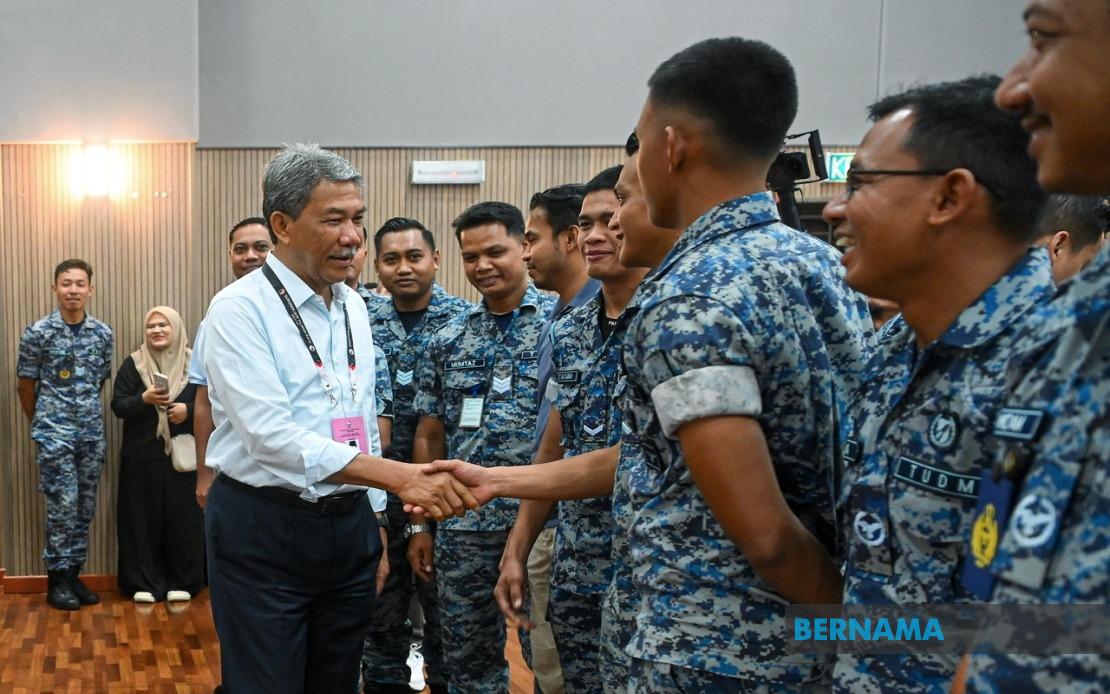
Malaysia's Foreign Minister Datuk Seri Mohamad Hasan has issued a stark warning that the country will reassess its relationship with the United Nations High Commissioner for Refugees if the international body does not commit to tightening controls over refugee card issuance. Speaking in Seremban on July 28, Mohamad framed the potential withdrawal of UNHCR's operational license as a necessary step to prevent Malaysia from continuing to shoulder what he characterised as an unsustainable burden of refugee populations in the region.
The minister's stance reflects deepening frustration within Malaysia's government over the ease with which individuals can obtain UNHCR documentation. He highlighted a critical vulnerability in the current system: applicants are able to complete the initial application process entirely online from their countries of origin, including Myanmar, before arriving in Malaysia and immediately receiving their refugee cards upon arrival. This streamlined but unvetted pathway effectively bypasses any meaningful security or eligibility verification at the point of entry or residence, creating what Mohamad views as a persistent security and administrative gap.
Central to the government's complaint is the absence of a standardized operating procedure that would mandate joint screening between UNHCR officials and Malaysian authorities. Mohamad stressed that any reformed system must require cooperation between the UN agency and local enforcement bodies to ensure refugee status is verified through a rigorous, coordinated process before documentation is issued. The Foreign Minister's remarks gain added weight given that they followed discussion at a Cabinet Committee meeting chaired by Deputy Prime Minister Datuk Seri Dr Ahmad Zahid Hamidi, where officials formally requested that the Host Country Agreement with UNHCR be accelerated to establish explicit guidelines and enforcement mechanisms.
The timing of these statements reflects a broader concern within Malaysia's policy establishment about the magnetising effect the UNHCR office in Kuala Lumpur exerts on refugee populations across Southeast Asia. By maintaining an operational headquarters in Malaysia, the UN agency inadvertently incentivises migration flows, particularly among the Rohingya ethnic group, who face persecution and displacement pressures in Myanmar and neighbouring Bangladesh. The mere existence of UNHCR infrastructure and perceived pathways to international protection status serve as pull factors that channel desperate populations toward Malaysian shores, straining both social services and public order.
Recent events underscore the scale of this challenge. Hundreds of Rohingya individuals were recently documented camping outside the UNHCR office on Jalan Bukit Petaling in Kuala Lumpur in pursuit of documentation. These individuals were subsequently transferred to Kuala Lumpur police contingent headquarters for identity verification and registration processing, illustrating the operational burden these migration flows place on Malaysian law enforcement and administrative capacity. Such scenes highlight the gap between Malaysia's capacity to absorb refugee populations and the draw that UNHCR's presence creates.
The government's position reflects a strategic calculus that Malaysia, as a middle-income developing nation, should not bear a disproportionate share of the global refugee burden, particularly when neighbouring countries and wealthier developed nations contribute minimally to solutions. Malaysia currently hosts approximately 180,000 registered refugees and asylum seekers, a figure that has grown substantially over the past decade and represents one of Southeast Asia's largest refugee populations relative to national population size. The strain on housing, healthcare, education, and employment in major urban centres has become politically salient, especially as Malaysia contends with its own development priorities and social inequality challenges.
Moreover, the security dimension cannot be overlooked. Without rigorous joint screening protocols, Malaysian authorities face potential risks from individuals who may exploit the refugee documentation system to enter the country under false pretences or with concealed criminal or security backgrounds. The absence of coordinated vetting procedures means that UNHCR's decision-making operates independently of Malaysia's own national security and border management assessments, creating institutional friction and potential enforcement gaps. From Kuala Lumpur's perspective, this represents an unacceptable dilution of sovereign control over who enters and remains within Malaysian territory.
The call for expediting the Host Country Agreement signifies that Malaysia seeks to formalise a new working relationship with UNHCR based on reciprocal responsibilities rather than one-sided accommodation. Any revised agreement would need to explicitly delineate UNHCR's obligations to cooperate with Malaysian agencies, establish timelines for joint screening operations, and include provisions for enforcement and dispute resolution. Without such a framework, Malaysia's government argues, the UNHCR office functions as an autonomous entity pursuing international mandates without adequate regard for Malaysia's absorptive capacity or institutional capacity constraints.
Moreover, Mohamad's ultimatum carries implications for UNHCR's regional operations more broadly. Malaysia serves as UNHCR's operational hub for Southeast Asia, hosting its regional office and serving as the staging ground for protection and humanitarian activities across the Mekong region and beyond. A Malaysian withdrawal would significantly hamper the organisation's ability to respond to refugee crises in Cambodia, Thailand, Laos, and Vietnam, while also signalling to other host nations in the region that they too might consider reconsidering their UNHCR partnerships if institutional cooperation proves inadequate.
The Foreign Minister's remarks also underscore a growing assertiveness within Malaysia's foreign policy establishment regarding conditionality and reciprocity in engagement with international bodies. Rather than accepting UNHCR's operational presence as a given obligation of international humanitarian responsibility, Malaysia is articulating its own terms and demanding that the UN agency align its practices with domestic governance standards and security requirements. This reflects a wider pattern in which middle-income countries are increasingly willing to challenge the authority and autonomy of international institutions when their interests are perceived to be disadvantaged.
Looking forward, the trajectory of Malaysia-UNHCR relations will depend on whether substantive negotiations can produce agreements that satisfy both parties. From UNHCR's standpoint, joint screening with Malaysian authorities may raise concerns about the independence of refugee status determination and the risk that political or security considerations could compromise the impartiality of protection decisions. Conversely, Malaysia's insistence on tighter controls reflects legitimate state interests in border security, administrative capacity management, and equitable burden-sharing among the international community. How these competing interests are reconciled will set a precedent not only for Malaysia but for other Southeast Asian nations grappling with similar refugee pressures and institutional constraints.

