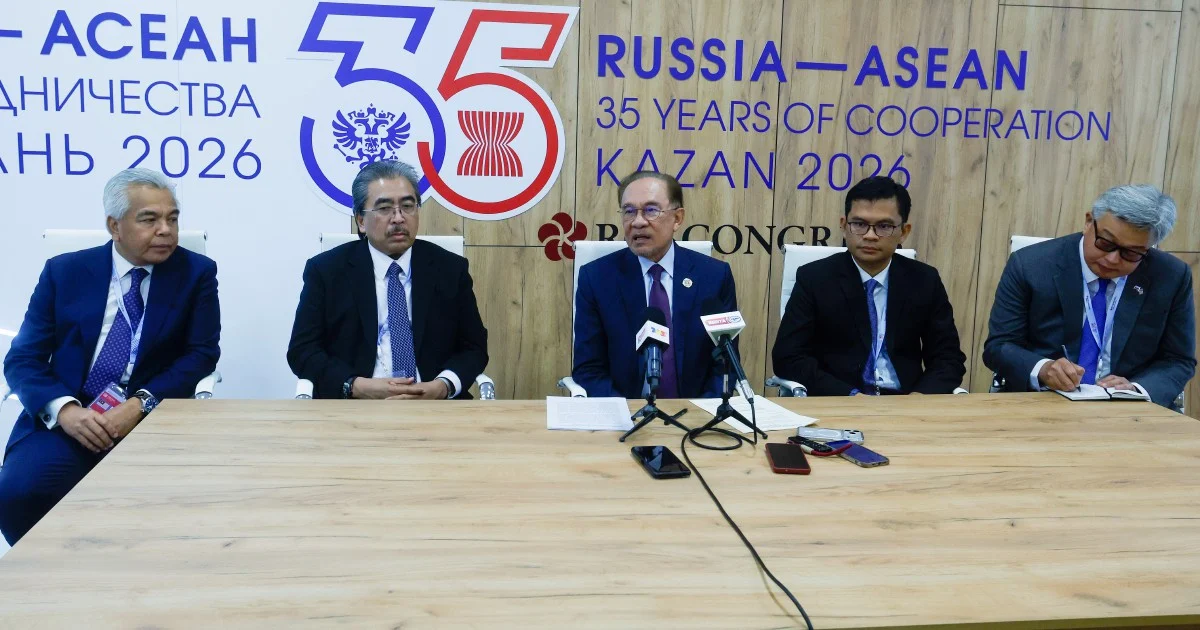
Prime Minister Datuk Seri Anwar Ibrahim has instructed government agencies to accelerate the rollout of visa-free travel privileges for Russian tourists entering Malaysia, signalling renewed determination to boost visitor numbers from a major source market. The directive, issued during remarks in Kazan, underscores the administration's commitment to loosening entry barriers as a strategic tool for economic recovery in the tourism industry, which has faced sustained headwinds in recent years.
The move reflects Malaysia's ongoing efforts to diversify its tourism base beyond traditional visitors from neighbouring countries and East Asia. Russia has historically represented an untapped demographic for Malaysian tourism, with geographic distance and visa requirements having previously constrained travel flows. By removing bureaucratic hurdles, Kuala Lumpur aims to capture a larger share of Russian outbound travel, particularly during peak seasons when European and Asian destinations compete intensely for visitor spending.
Visa-free or simplified entry arrangements have become standard competitive tools among Southeast Asian nations seeking to attract high-spending international tourists. Thailand, Indonesia, and Vietnam have all deployed variations of this strategy to stimulate arrivals and foreign exchange earnings. For Malaysia, which has seen tourism revenues lag behind regional peers in recent years, the timing of the announcement reflects an acknowledgment that structural barriers—including visa procedures—continue to deter spontaneous travel decisions among prospective visitors.
The broader tourism revival agenda extends beyond visa policy alone. Malaysia has been undertaking simultaneous efforts to enhance airport infrastructure, diversify accommodation offerings, and market niche attractions to international audiences. The Russian market represents a particularly valuable demographic, as Russian tourists typically demonstrate strong purchasing power and extended stay patterns compared to other international segments. Enhanced access could translate into meaningful increases in hotel occupancy, restaurant revenues, and spending at retail and entertainment venues across major tourism corridors.
Geopolitical considerations may also inform the timing of this initiative. Malaysia's traditional foreign policy stance of non-alignment has historically allowed it to maintain pragmatic engagement with major powers across competing blocs. Facilitating Russian tourism aligns with this positioning while simultaneously supporting economic objectives. The move signals Malaysia's willingness to engage constructively with Russian interests during a period of international tensions, without compromising existing relationships with Western partners who remain critical tourism source markets.
Implementation challenges could arise from backend processing requirements, despite the removal of formal visa obligations. Malaysian immigration authorities will require updated protocols for processing Russian nationals at border checkpoints, potentially including enhanced screening procedures or documentation verification systems. Coordinating these changes across multiple agencies—including the Ministry of Tourism, Immigration Department, and airline partners—typically consumes considerable administrative bandwidth, making the Prime Minister's push for expedition particularly significant in signalling urgency throughout the bureaucracy.
The domestic tourism sector also stands to benefit indirectly. Enhanced international visitor flows create multiplier effects throughout the economy, supporting employment in hospitality, transportation, and related service industries. Regional destinations beyond Kuala Lumpur and Penang have expressed particular interest in capturing portions of any surge in Russian arrivals, given their current under-utilisation and capacity for absorbing incremental visitors without congestion.
For Russian travellers themselves, streamlined access to Malaysia opens new leisure and business possibilities in a region offering distinct comparative advantages: cultural authenticity, beach destinations, tropical biodiversity, and competitive pricing relative to Western alternatives. The timing may also appeal to Russian citizens seeking travel options amid various international travel restrictions affecting their mobility elsewhere.
The Prime Minister's comments in Kazan—a significant Russian cultural and economic centre—delivered the message directly to potential stakeholders and the Russian government, elevating the announcement beyond typical diplomatic channels. This approach signals that simplifying entry constitutes genuine policy priority rather than routine administrative adjustment, likely to accelerate actual implementation timelines.
Regional implications deserve consideration as well. Should Malaysia successfully attract substantially higher Russian visitor volumes, other ASEAN members may respond by pursuing comparable visa facilitation, potentially sparking regional competition to capture this demographic. Malaysia's first-mover advantage in formally expediting such arrangements could generate meaningful differentiation, at least temporarily, in the regional tourism marketplace.

