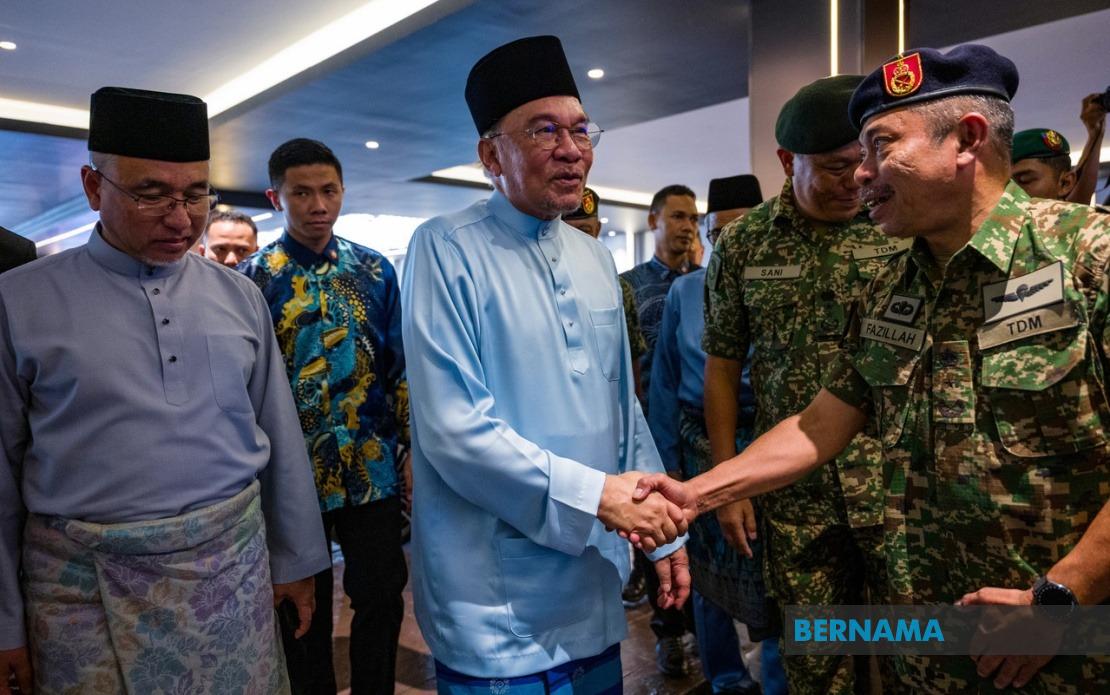
Prime Minister Datuk Seri Anwar Ibrahim has signalled the government's determination to strengthen national defence through a planned increase in military spending under Budget 2027, a move that reflects growing attention to the Malaysian Armed Forces' readiness and capabilities. The announcement, made during a Semarak Kenegaraan Programme event at Terendak Camp in Melaka, underscores the administration's recognition that sustained investment in defence infrastructure and personnel remains essential to maintaining regional security and operational effectiveness.
Chief of Defence Force General Tan Sri Malek Razak Sulaiman welcomed the budgetary commitment, characterising it as evidence of government backing for modernisation initiatives across the armed forces. His endorsement carries particular weight given the military's direct stake in equipment upgrades and force development, and signals institutional alignment between civilian and defence leadership on strategic priorities. The increased allocation represents more than symbolic support—it reflects a concrete policy shift toward directing greater fiscal resources toward defence sector needs during a period of competing budgetary demands.
The modernisation agenda extends beyond hardware acquisition. Anwar, who holds concurrent responsibility as Finance Minister, emphasised that additional defence funding would encompass comprehensive improvements to military personnel conditions, including renovation and construction of residential quarters, establishment of a new medical facility, and maintenance of essential utilities including water supply systems. These welfare enhancements address longstanding concerns within the armed forces regarding living standards and family support, issues that directly impact recruitment, retention, and morale among service members.
The proposed improvements to military housing and healthcare facilities carry particular significance for personnel motivation and operational effectiveness. Defence forces globally recognise that adequate housing, medical services, and utility infrastructure directly correlate with personnel satisfaction and their ability to focus on professional duties. By addressing these foundational welfare requirements, the government aims to create conditions that enable service members to concentrate fully on their operational responsibilities without the distraction of inadequate living conditions or family hardship.
Beyond personnel welfare, the budgetary increase will support the modernisation of the Malaysian Armed Forces' equipment and assets in line with its Future Force strategic development plan. This phased modernisation approach reflects the armed forces' longer-term vision for upgrading capabilities across multiple domains—land, maritime, and air—to address evolving regional security challenges and maintain operational parity with neighbouring nations. The Future Force framework provides strategic direction for capital investments, ensuring that spending decisions align with comprehensive defence planning rather than ad-hoc procurement decisions.
The timing of this announcement coincides with broader regional military development patterns, where Southeast Asian nations are increasingly investing in defence modernisation. Malaysia's commitment mirrors similar initiatives across Asean, where countries balance economic development pressures against security imperatives. The Malaysian approach emphasises both capability enhancement and personnel welfare, suggesting a holistic philosophy that recognises force effectiveness depends on equipment quality and human element considerations equally.
Simultaneously, Anwar announced that the government has approved in principle a streamlined promotion pathway for Malaysian Armed Forces and Royal Malaysia Police personnel, aligning their advancement procedures with other public service schemes. This procedural reform aims to expedite career progression, potentially addressing frustrations around promotion timelines and creating clearer advancement expectations. Simplified promotion mechanisms can enhance career planning for military officers and NCOs, contributing to retention of experienced personnel and development of leadership capability within the armed forces.
The personnel advancement reform carries implications beyond simple bureaucratic efficiency. Clear, predictable promotion pathways encourage long-term career commitment and enable the military to retain institutional knowledge and experienced leadership. When promotion timelines become protracted or opaque, capable personnel may exit the force prematurely, creating institutional knowledge loss and increasing training costs for replacements. By aligning armed forces advancement with broader public service frameworks, the government signals that military careers offer comparable professional development opportunities to civilian government positions.
These combined measures—increased defence allocation, welfare improvements, and promotion reform—represent an integrated approach to defence force development. Rather than focusing solely on equipment acquisition, the government acknowledges that modern military effectiveness requires simultaneous attention to infrastructure, personnel conditions, and career structures. This comprehensive strategy recognises that an adequately resourced, professionally satisfied, and effectively managed armed forces contributes substantially to national security and regional stability.
For Malaysia's defence sector and the broader region, sustained commitment to military modernisation carries strategic implications. Predictable defence spending signals to regional partners and potential adversaries that Malaysia takes its security responsibilities seriously and maintains credible defence capabilities. The modernisation initiative also provides domestic defence industry opportunities, potentially stimulating local production of military equipment and supporting employment in defence-related sectors. Regional analysts will likely monitor Budget 2027's final defence allocation to assess whether the government's stated commitments translate into actual spending levels.
The announcement also reflects the government's effort to demonstrate tangible commitment to armed forces concerns during a period of competing domestic spending priorities. By publicly committing to defence allocation increases and personnel welfare improvements, civilian leadership addresses institutional interests within the military while managing public expectations regarding fiscal discipline. The emphasis on modernisation through strategic asset upgrades and facility improvements, rather than pure expenditure expansion, attempts to balance defence ambitions with broader economic management responsibilities that characterise Malaysia's governance approach.

