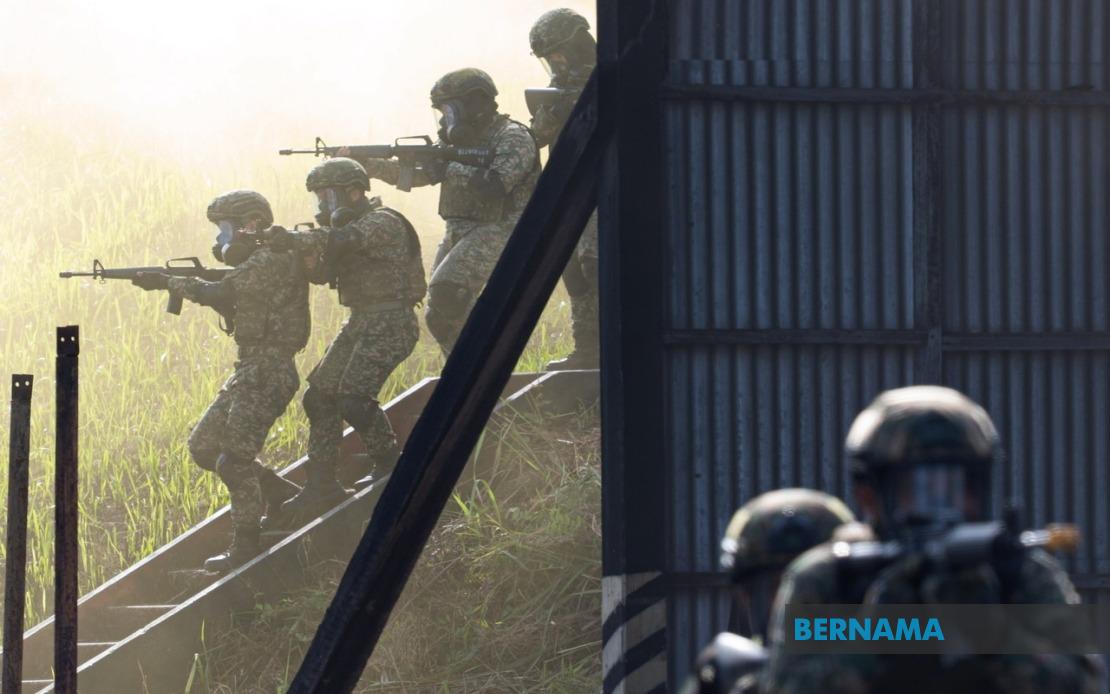
Prime Minister Datuk Seri Anwar Ibrahim has signalled the government's determination to increase defence spending in the 2027 budget, framing the commitment as essential to maintaining national security and protecting what he describes as Malaysia's most precious resource—sustained peace. Speaking in Melaka, Anwar, who also holds the Finance portfolio, underscored that military preparedness cannot be treated as a discretionary item deferred until threats materialise. His remarks reflect a strategic shift in how the MADANI administration justifies growing outlays on defence within the context of competing budget priorities across healthcare, education, and infrastructure.
The prime minister's emphasis on advance planning reveals a key understanding about security challenges in the contemporary environment. Anwar stressed that waiting for conflict to emerge before mobilising defensive capabilities represents a fundamental miscalculation of national risk management. This perspective aligns with regional tensions and evolving geopolitical dynamics in Southeast Asia, where maritime disputes, transnational security threats, and technological advancement in neighbouring militaries demand sustained investment rather than episodic spending surges.
Crucially, Anwar framed the defence commitment within a broader narrative of transparent, merit-based procurement. He explicitly rejected the opaque commissioning structures that have historically plagued defence acquisition across the region, calling instead for systematic purchasing practices devoid of profiteering or inflated agent fees. This language signals an attempt to build public confidence in defence spending by positioning the government as determined to eliminate the waste and corruption that often accompany military contracts. Such messaging becomes particularly important in Malaysia, where defence procurement has periodically attracted scrutiny from civil society and opposition politicians.
The scale of recent defence investment deserves closer examination. Over the preceding three years, the Defence Ministry's allocation had grown by more than 35 per cent under the MADANI Government—a figure substantially exceeding general inflation or economic growth rates. Yet Anwar acknowledged that this expansion remains underappreciated by the public and defence community, suggesting that inadequate communication about spending increases has allowed misconceptions about military readiness to persist. The government appears keen to translate financial commitments into visible improvements in living conditions and equipment maintenance that service personnel and their families would directly experience.
Anwar connected the defence spending pledge to Malaysia's improving macroeconomic conditions, citing the firmer ringgit, expanding foreign investment inflows, and inflation management as enabling factors. This framing suggests that increased defence allocation will not require cuts to other budget categories but rather represents a redistribution of growth dividends. However, this assumes sustained economic expansion—a proposition that depends on global trade dynamics and commodity prices beyond Malaysia's full control. The government's ability to deliver on defence promises thus carries implicit dependencies on navigating international economic headwinds.
The personnel welfare dimension of the proposed spending increase addresses longstanding grievances within the military establishment. Anwar specifically identified improved housing quarters, expanded medical facilities, and maintenance of essential services including water supply as priorities. Such investments serve dual purposes: they enhance operational effectiveness by supporting soldier morale and retention, while simultaneously demonstrating tangible government commitment to those serving in uniform. In Malaysia's competitive labour market, defence force recruitment and retention have occasionally faced challenges, making welfare investments strategically significant beyond simple humanitarian considerations.
The announcement of the RM147,000 allocation to the Armed Forces Family Welfare Association and RM1 million for religious facility maintenance at four Melaka military installations illustrates how the defence commitment extends into the social fabric surrounding military communities. These supplementary measures, while modest in absolute terms, acknowledge that military readiness depends substantially on the stability and wellbeing of service members' families and on the integration of military personnel into broader civilian society.
The presence of senior government figures including Minister in the Prime Minister's Department (Religious Affairs) Senator Dr Zulkifli Hasan, Deputy Defence Minister Adly Zahari, and Army Chief General Tan Sri Azhan Md Othman underscored the cross-ministerial coordination surrounding this initiative. Such visible alignment among defence, religious affairs, and executive leadership suggests the government views military strengthening as interconnected with broader national governance priorities, including religious harmony and institutional stability.
For Malaysia and Southeast Asia more broadly, this defence spending signal arrives amid shifting regional security architecture. The South China Sea maritime environment, transnational terrorism threats, and the strategic importance of the Strait of Malacca mean that Malaysian defence modernisation carries implications extending beyond national borders. Neighbouring countries, particularly those in ASEAN, will interpret Malaysia's commitment to military investment within their own security calculations and procurement decisions.
The government has scheduled the full Budget 2027 presentation for October 9 in the Dewan Rakyat, providing a formal occasion for detailed articulation of defence priorities and justifications. The intervening months will likely involve bureaucratic consultation, inter-ministry negotiation, and potentially public debate about whether defence spending represents an optimal allocation of resources given competing national needs. Anwar's advance signalling of the commitment suggests the government has already resolved internally to prioritise military readiness, but parliamentary scrutiny and civil society responses may yet shape the final contours of the defence budget.
The defence allocation pledge ultimately reflects a government reassessing Malaysia's security posture amid complex regional circumstances. Whether the proposed increases translate into modernised capabilities, improved personnel conditions, and enhanced operational readiness will depend substantially on execution quality and procurement discipline. The government's explicit rejection of corruption and systemic inefficiency in defence spending offers a framework for evaluating whether future defence budgets genuinely strengthen the Malaysian Armed Forces or simply enlarge budgetary allocations without corresponding capability gains.

