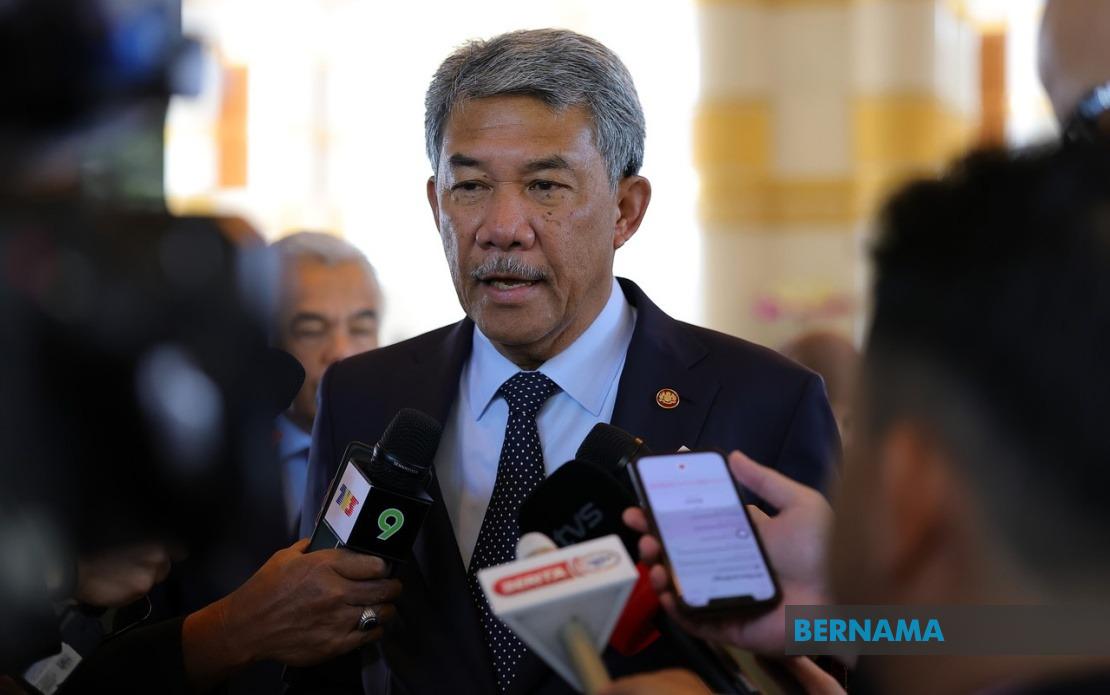
Malaysia is stepping up efforts to combat the transboundary haze crisis gripping parts of Southeast Asia by activating its diplomatic machinery within the ASEAN framework. Foreign Minister Datuk Seri Mohamad Hasan announced the strategy during his official visit to Brunei this week, signalling that the regional bloc remains the government's preferred vehicle for resolving air quality challenges that respect no borders. The move reflects a calculated diplomatic approach that prioritises multilateral engagement over unilateral action, a methodology that has historically yielded better results in addressing environmental issues that fundamentally demand cross-border cooperation.
The escalation comes as air quality deteriorates markedly across Malaysian territory, particularly in Sarawak where several monitoring stations are registering hazardous pollution levels. Serian District in the eastern state recorded an Air Pollutant Index reading of 217 as of mid-afternoon, firmly placing it in the "very unhealthy" bracket that triggers health warnings and outdoor activity restrictions. Nine additional locations across Sarawak—spanning Sri Aman, Sarikei, Kuching, Samarahan, Sibu, Samalaju, Bintulu, Mukah, and Kapit—have crossed into the "unhealthy" classification, with readings ranging from 108 to 186. This geographical distribution suggests the pollution source likely extends across a wide area, pointing toward regional atmospheric circulation patterns that carry particulates across international boundaries.
The Malaysian government's response involves a coordinated effort across multiple agencies and diplomatic channels. The Ministry of Natural Resources and Environmental Sustainability (NRES) will formally lodge correspondence with the ASEAN Secretariat, while NRES Minister Datuk Seri Arthur Joseph Kurup will establish direct ministerial contact with his Indonesian counterpart. This dual-track approach—simultaneously engaging the regional institution and bilaterally addressing the primary source nation—reflects practical diplomacy that recognises both the symbolic weight of ASEAN mechanisms and the reality that Indonesia, as the nation harbouring suspected transboundary pollution sources, requires direct ministerial-level communication to effect meaningful action.
For Malaysian observers, ASEAN's involvement carries particular significance given the organisation's historical record of managing sensitive environmental disputes. The association has repeatedly proven effective as a neutral mediating space where member states can address thorny issues without the recrimination that might accompany unilateral accusations. Mohamad Hasan's explicit endorsement of ASEAN as "the most appropriate platform" and "more effective" mechanism than individual diplomatic approaches suggests the government believes this institutional route will yield swifter, more coordinated responses across the bloc rather than isolated bilateral wrangling.
The haze issue also dominated bilateral discussions between Malaysian and Brunei leadership during high-level consultations scheduled in Bandar Seri Begawan. Prime Minister Datuk Seri Anwar Ibrahim and Sultan Hassanal Bolkiah are expected to address the transboundary pollution crisis during their Annual Leaders' Consultation, where Brunei's particular vulnerability to haze originating from larger regional sources will likely feature prominently. Malaysian High Commissioner to Brunei Datuk Mohd Aini Atan identified the haze as a mutual concern to both nations, underscoring that environmental degradation transcends national interests and unites even traditionally formal relationships around shared environmental anxieties.
The diplomatic initiative reflects a broader recognition within Southeast Asian capitals that transboundary haze cannot be effectively countered through isolated national action. Wind patterns, atmospheric conditions, and monsoon cycles operate at regional scales that outmatch individual country borders, rendering the problem inherently multilateral in nature. Malaysia's experience with recurring haze episodes—particularly during burning seasons in neighbouring territories—has evolved from episodic diplomatic complaints into a structured engagement strategy leveraging institutional frameworks designed precisely for such cross-border environmental management.
Historically, the ASEAN Agreement on Transboundary Haze Pollution, established in 2002, has provided the legal and diplomatic scaffold for addressing these recurring crises. Yet enforcement and effectiveness have varied considerably depending on political will, climatic conditions, and the resources allocated to land management and fire prevention in source countries. Malaysia's invocation of ASEAN mechanisms now, combined with direct ministerial engagement, signals an intention to reinvigorate institutional responses while simultaneously applying targeted diplomatic pressure through bilateral channels. This layered approach avoids the false choice between cooperative multilateralism and pragmatic bilateral pressure, instead pursuing both simultaneously.
For Malaysian citizens and businesses, particularly those in Sarawak experiencing hazardous air quality, the diplomatic efforts underscore the reality that environmental challenges demand responses operating at scales above local or even national governance. The Air Pollutant Index readings reaching "very unhealthy" thresholds create immediate public health implications—respiratory stress, cardiovascular strain, and reduced visibility affecting transportation and economic activity. These tangible impacts lend urgency to diplomatic channels that might otherwise operate at a leisurely pace typical of regional institutions.
The timing of these initiatives, occurring during Mohamad Hasan's Brunei visit in conjunction with scheduled bilateral consultations, reflects the integration of environmental diplomacy into broader regional engagement frameworks. Rather than treating haze as a standalone crisis requiring emergency protocols, Malaysia's approach positions it within regular high-level political dialogue. This integration normalises environmental concerns as central rather than peripheral to regional relations, potentially strengthening institutional capacity to respond swiftly when pollution episodes inevitably recur.
Looking ahead, the success of Malaysia's diplomatic initiative will hinge on whether ASEAN institutions and bilateral engagement generate concrete outcomes—such as enhanced monitoring agreements, accelerated land management initiatives in source regions, and structured mechanisms for real-time data sharing during pollution episodes. Generic expressions of concern at regional forums ring hollow to populations suffering respiratory distress. Therefore, the formal letters to be submitted to the ASEAN Secretariat and Indonesian authorities must translate into measurable commitments that transition from diplomatic courtesy into environmental accountability. Malaysia's decision to pursue this multi-layered approach reflects sophisticated understanding that sustainable solutions to transboundary environmental challenges require simultaneously leveraging institutional frameworks, bilateral relationships, and concrete technical cooperation mechanisms.

