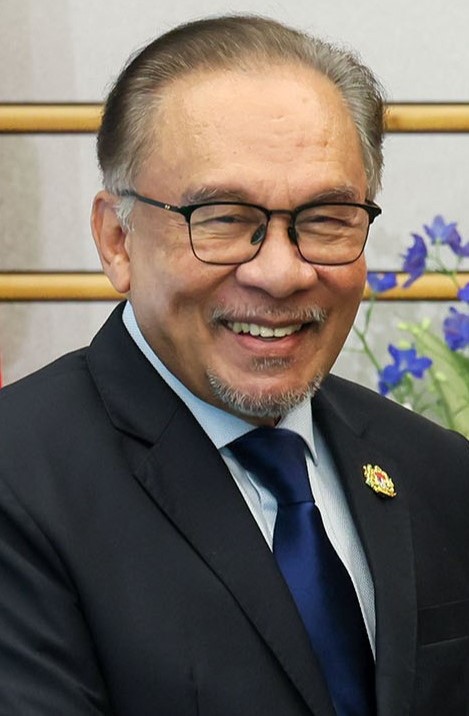
Prime Minister Anwar Ibrahim is travelling to Russia to prioritise Malaysia's fuel security at the highest diplomatic level, meeting with President Vladimir Putin as part of a broader ASEAN-Russia engagement. The working visit underscores the government's conviction that energy supply stability remains central to national economic resilience, particularly as regional and global supply chains face mounting pressure from geopolitical disruptions. Through direct dialogue with Russian leadership, Anwar aims to establish enduring arrangements that guarantee the continuity of crude oil and diesel shipments to Malaysia, reflecting a strategic pivot toward diversified energy partnerships in an increasingly volatile global environment.
The Prime Minister has consistently articulated that maintaining robust international relations directly translates into tangible economic benefits for ordinary Malaysians. During remarks made to constituents in Muar, Anwar emphasised that proactive diplomatic engagement creates the conditions for preferential energy arrangements, allowing Malaysia to sustain one of the world's most competitive domestic fuel prices. The retail price of RON95 petrol at RM1.99 per litre represents a significant competitive advantage compared to neighbouring economies, a position that depends heavily on reliable supply relationships and stable global market conditions. By leveraging Malaysia's standing among major powers, the government seeks to shield citizens from the inflationary pressures that have begun materialising elsewhere across Southeast Asia.
The timing of this diplomatic mission reflects deepening concerns about regional energy stability. Geopolitical tensions in West Asia, triggered by Israeli and American military operations against Iran, have created a cascading threat to maritime commerce through potential disruptions at the Strait of Hormuz—one of the world's most critical chokepoints for global petroleum trade. Any sustained closure or significant obstruction of this narrow passage would immediately elevate oil prices worldwide, with Malaysia's economy bearing direct consequences through increased import costs and subsequent inflationary pressures. The government's assessment indicates that preventative diplomatic engagement, rather than reactive policy-making after disruptions occur, offers the most effective pathway to protecting Malaysia's energy interests.
Anwar's approach to energy security reflects a calculated assessment that bilateral relationships with major energy producers, coupled with broader ASEAN-Russia cooperation frameworks, provide multiple hedging strategies against supply shocks. Rather than relying solely on market mechanisms or short-term spot purchases, the government is pursuing structured arrangements that embed preferential treatment into long-term commercial and diplomatic agreements. This strategy acknowledges that in an era of strategic competition among major powers, energy security increasingly depends on cultivation of political relationships alongside conventional commercial transactions. Malaysia's geographic position as a Southeast Asian hub and its reputation for diplomatic non-alignment enhance its capacity to negotiate favourable terms with diverse energy suppliers.
The geopolitical context extends beyond immediate energy concerns to encompass broader questions about Malaysia's role in an increasingly multipolar world. By positioning itself as a bridge between different power centres—simultaneously maintaining strong ties with the United States, China, and now deepening engagement with Russia—Malaysia seeks to ensure that its economic interests remain protected regardless of how international tensions ultimately resolve. This diplomatic pluralism has historically served Malaysian interests well, allowing policymakers to avoid entanglement in zero-sum competitions between major powers while securing maximum benefits from economic relationships with multiple parties. The Russia visit exemplifies this strategy in practice.
Anwar has signalled hope that escalating tensions in West Asia may be moving toward resolution, citing recent conversations with Pakistani leadership suggesting that a potential settlement could materialise within days. Should diplomatic efforts succeed in de-escalating the regional conflict, the immediate threat to the Strait of Hormuz would diminish substantially, relieving upward pressure on global petroleum prices. However, the Prime Minister's acknowledgement of this possibility—combined with his emphasis on the catastrophic consequences should conflict persist—demonstrates the government's clear understanding of how exposed Malaysia remains to external shocks beyond its direct control. Even modest increases in global crude prices cascade through Malaysia's economy, affecting manufacturing competitiveness, transportation costs, and ultimately household purchasing power.
The domestic political dimension of this initiative merits consideration. By publicly emphasising his government's proactive engagement in securing Malaysia's energy future, Anwar projects competence and foresight to voters and international observers. The visible pursuit of fuel price stability—a matter of genuine concern to ordinary Malaysians across all income levels—demonstrates responsiveness to tangible economic anxieties. Unlike purely technical or procedural policy changes that escape public notice, diplomatic missions to secure energy supplies carry immediate symbolic weight and can reinforce public confidence in government management of the economy.
Malaysia's energy profile adds urgency to these diplomatic initiatives. While the nation remains a petroleum exporter with significant domestic crude reserves, it has increasingly become a net importer of refined petroleum products as domestic consumption has outpaced local refining capacity. This structural shift has rendered Malaysia more vulnerable to global price volatility and supply disruptions than it was historically. Securing preferential access to crude supplies from major producers thus becomes essential for maintaining domestic refining operations and preserving the downstream petroleum sector that provides substantial employment and government revenues. The Russia visit reflects recognition that Malaysia cannot take its energy security for granted.
The involvement of other ASEAN leaders in the Russia meeting format adds another dimension to Malaysia's diplomatic strategy. ASEAN's collective interest in stable energy supplies creates natural alignment among regional governments, potentially allowing for coordinated engagement with Russian leadership on supply issues affecting the entire region. Southeast Asia's rapid economic development and rising energy consumption make it an increasingly important market for major energy producers, providing leverage that individual nations might lack. Regional coordination through ASEAN mechanisms amplifies Malaysia's diplomatic influence while distributing both the benefits and risks of engagement with external powers across multiple governments.
Looking forward, the outcomes of this Russia visit will likely shape Malaysia's energy security posture for years to come. Should Anwar successfully negotiate durable supply arrangements with Russian leadership, the agreement would provide crucial insulation against future market volatility and geopolitical disruptions. Conversely, should the visit yield only symbolic affirmations of cooperation without concrete commercial agreements, the underlying vulnerabilities in Malaysia's energy supply chains would remain unaddressed. The success of this diplomatic initiative will ultimately be measured not by the stated commitment to cooperation, but by whether Malaysia can reliably access supplies at stable prices even when geopolitical crises threaten global energy markets.