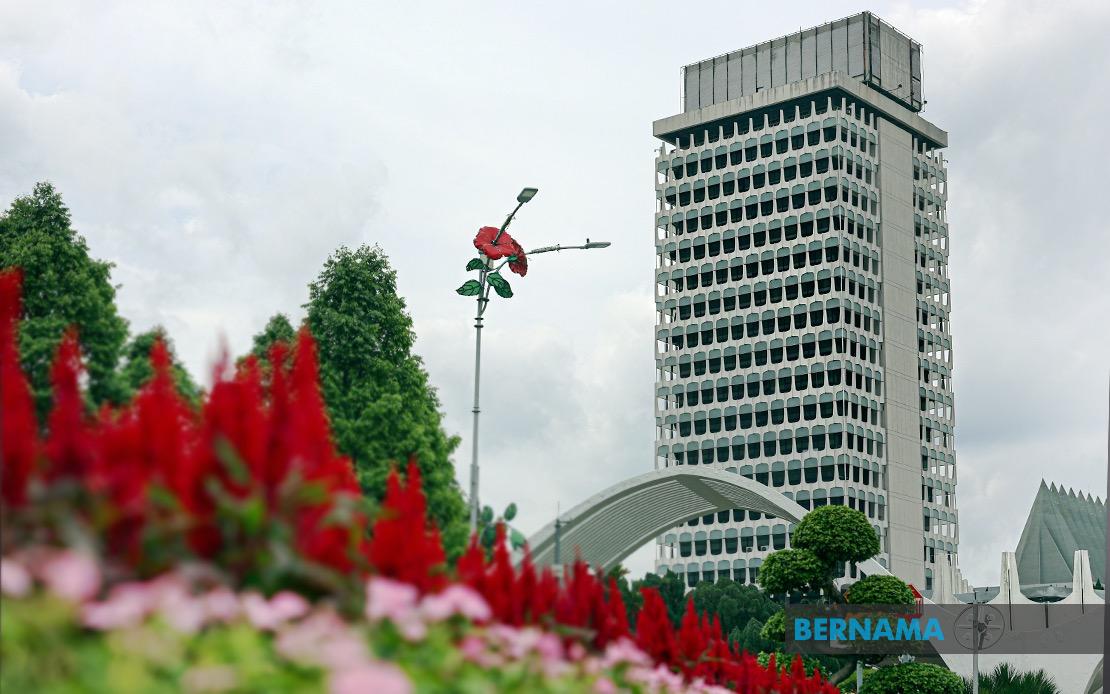
Malaysia's Dewan Rakyat returns to debate a slate of domestic and international governance challenges today, with legislators set to grill the Foreign Ministry on the nation's strategy for reforming the United Nations Security Council whilst simultaneously addressing concerns about food supply vulnerabilities triggered by global instability. The 16-day parliamentary sitting, which concludes on July 16, has been heavily subscribed with substantive parliamentary questions and legislative business that collectively signal growing anxiety within government circles about Malaysia's strategic positioning amid shifting global power dynamics.
The morning's proceedings will open with Datuk Seri Sh Mohmed Puzi Sh Ali from the Pekan constituency raising a fundamental question about how Malaysia plans to advance structural reforms within the UN system itself. His inquiry probes deeper than routine diplomatic pleasantries, asking specifically what strategic framework guides Malaysia's efforts to amplify its influence and secure a more meaningful voice within an international architecture that many developing nations view as frozen in Cold War configurations. The question implicitly acknowledges Malaysia's frustration with the Security Council's veto mechanism, which concentrates disproportionate power among five permanent members whilst marginalising the interests of nations like Malaysia that contribute substantially to global peacekeeping and development initiatives.
This theme of structural imbalance in global governance resonates particularly across Southeast Asia, where middle-power nations have long advocated for reformed multilateralism that better reflects contemporary geopolitical realities and demographic weight. Malaysia's positioning on this issue carries implications beyond bilateral diplomacy; it shapes how the country aligns itself within regional forums like ASEAN, which collectively exercise considerable soft power but lack formal mechanisms to translate that influence into Security Council reform. The Foreign Ministry's response will likely reveal whether Malaysia intends to champion this cause through independent advocacy or coordinate efforts with fellow ASEAN members and other developing nations.
Equally pressing is the government's vulnerability on food security, a topic Shaharizukirnain Abd Kadir from the Setiu constituency will press during today's session. His question targets a sensitive nerve for Malaysian policymakers: the nation's heavy dependence on food imports, particularly from regions experiencing economic turbulence and supply disruptions linked to geopolitical conflicts in West Asia. The legislator seeks clarity on whether the government has devised comprehensive contingency planning should global food markets experience sustained shocks, and whether financial incentives offered to food-producing states are actually translating into measurable gains in domestic self-sufficiency. This interrogation reflects genuine parliamentary concern that agricultural subsidies and support mechanisms may be inadequately calibrated to address structural vulnerabilities in Malaysia's food system.
The import reliance question becomes more acute when considered alongside rising input costs that squeeze domestic farmers' profitability and discourage production expansion. Malaysia, like many Southeast Asian nations, faces a paradoxical situation where global food inflation erodes purchasing power and threatens social stability, yet import tariffs and trade commitments constrain the government's ability to shield domestic producers through traditional protectionist measures. The agriculture sector's structural weakness and the competing demands on limited government resources suggest that Malaysian food security may remain a persistent policy headache, particularly if supply chain disruptions intensify. Observers will watch carefully whether the Agriculture and Food Security Minister acknowledges these structural constraints or projects overconfident self-sufficiency timelines.
On the defence and procurement front, Datuk Awang Hashim from the Pendang constituency will interrogate Malaysian military supply chain vulnerabilities, pressing the Defence Minister to explain how foreign supplier dependence affects strategic planning for national defence capabilities. This question illuminates a critical infrastructure anxiety that ripples across Southeast Asia: regional militaries' reliance on equipment and spare parts sourced from distant suppliers exposes them to geopolitical pressure, sanctions regimes, and logistical brittleness. Malaysia's experience with delayed deliveries and contract complications underscores the risks inherent in purchasing advanced defence platforms from suppliers who may themselves face supply constraints or political pressures to redirect capacity toward other customers.
The question carries implications for Malaysia's broader defence industrial ambitions and whether the country might pivot toward greater regional procurement cooperation or vertical integration of defence manufacturing. A robust ministerial response would detail concrete measures to diversify supplier bases, accelerate domestic production capacity, and establish strategic stockpiles of critical spare parts. Yet such initiatives require substantial capital investment and technical capacity that may strain defence budgets already under pressure from other competing needs, suggesting that Malaysian defence planners will likely pursue a middle path combining modest domestic capability building with more careful supplier relationship management.
Sarawak-based legislator Rodiyah Sapiee will shift parliamentary focus toward the emerging green hydrogen sector, asking how the Science, Technology and Innovation Ministry plans to coordinate national energy policy to position the nation competitively in hydrogen development. Her question specifically invokes Sarawak's regional ambitions to become Southeast Asia's green hydrogen hub, a notion that reflects larger Malaysian aspirations to capture high-value-added segments of the energy transition. This inquiry acknowledges that hydrogen development requires coordinated policy frameworks spanning energy regulation, investment incentives, grid infrastructure, and international partnerships. Sarawak's particular interest stems from its hydroelectric capacity, which could generate the renewable electricity needed to produce green hydrogen competitively.
The parliamentary sitting's legislative agenda includes seven government Bills receiving first reading, among them the Communications and Multimedia (Amendment) Bill 2026 and the Malaysian Communications and Multimedia Commission (Amendment) Bill 2026, which signal continuing regulatory evolution in Malaysia's digital economy. The Social Work Profession Bill 2026 addresses another policy domain, suggesting the government intends to professionalise and standardise practice within the social services sector. These legislative priorities, combined with resumption of debate on the Control of Paddy and Rice (Amendment) Bill 2026, paint a picture of parliamentary business spanning telecommunications regulation, social services modernisation, and agricultural commodity management. The rice bill's return to debate suggests outstanding technical disagreements require continued legislative attention before final passage.
Collectively, today's parliamentary agenda reflects Malaysia's navigation of contemporary governance challenges spanning global reform advocacy, food system resilience, defence procurement strategy, and energy transition positioning. The quality of ministerial responses will signal whether the government approaches these issues with strategic clarity or bureaucratic opacity, and whether it has calibrated policies to address genuine structural vulnerabilities or merely offered reassuring rhetoric. For Malaysian observers and regional analysts alike, the sitting offers crucial insight into how the government prioritises competing interests and whether it possesses the institutional capacity to execute coherent strategies across these interconnected policy domains.

