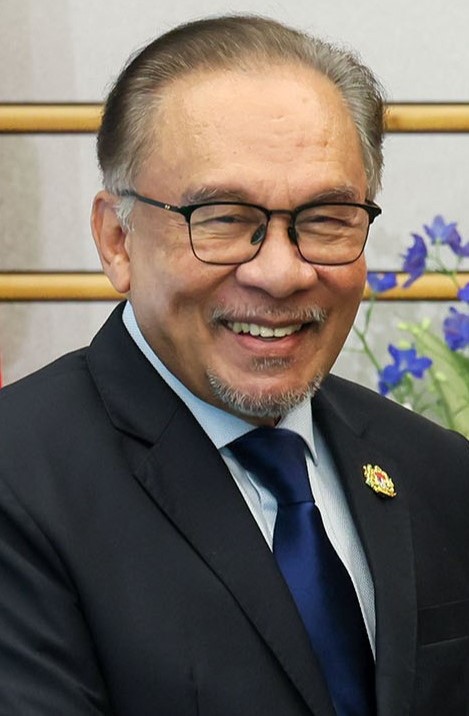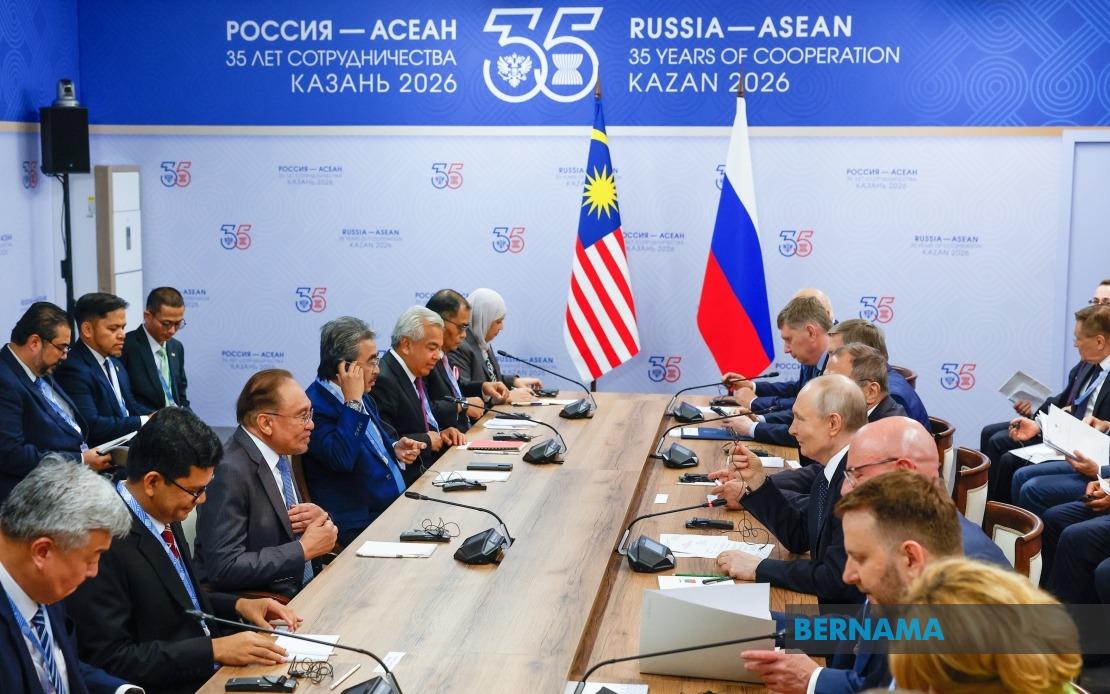
Malaysia's Prime Minister Datuk Seri Anwar Ibrahim has stepped into the fraught geopolitical landscape of Middle Eastern conflict by openly commending Russian President Vladimir Putin and Chinese President Xi Jinping for their positions on regional peace, marking a striking diplomatic moment that underscores how Kuala Lumpur navigates between rival global powers. Speaking during an exclusive interview with RT, the Russian state television network, during his official visit to Kazan to commemorate 35 years of ASEAN-Russia relations, Anwar articulated a vision of Malaysian foreign policy rooted in principle rather than deference to superpower interests.
The Prime Minister's public gratitude toward Moscow and Beijing for condemning violence against civilians in Gaza, Iran, and Lebanon reflects Malaysia's sustained criticism of Israeli military operations and the international backing they receive. Anwar emphasised that Malaysia has maintained a consistent, unwavering stance against what he characterised as aggression by the "Zionist regime," a position that transcended partisan divisions and secured bipartisan parliamentary support. This domestic consensus on the issue signals the depth of public feeling within Malaysia on the conflict and demonstrates that opposition to Israeli military campaigns enjoys broad political backing across the country's divided parliament.
Crucially, Anwar drew a conceptual distinction between neutrality and what Malaysia terms centrality—a framing that carries significant implications for Southeast Asian diplomacy and ASEAN's collective positioning. Rather than claiming to stand outside geopolitical contests altogether, Malaysia asserts that it occupies the centre while declining to subordinate itself to any single power bloc. The Prime Minister stressed that centrality does not silence Malaysia on human rights violations, atrocities, or abuses directed against vulnerable populations, particularly religious and ethnic minorities. This philosophical position allows Kuala Lumpur to condemn specific actions while avoiding the appearance of ideological alignment with either Western powers or rising rivals like Russia and China.
The diplomatic groundwork for these public statements reflects months of intensive engagement by the Malaysian government across multiple regions and with diverse stakeholders. Anwar has conducted direct dialogues with leaders from the Arabian Gulf states, Pakistan, Türkiye, and Iran as part of a broader effort to identify pathways toward a negotiated settlement. These multilateral contacts demonstrate Malaysia's aspiration to serve as a bridge-builder in a region fractured by sectarian tensions, strategic competition, and overlapping conflicts. For a medium-power nation without the military or economic heft of established great powers, such diplomatic activism represents both an opportunity to increase regional influence and a test of whether dialogue can succeed where military solutions have only deepened division.
Anwar's critique of what he calls Western hypocrisy strikes at the heart of Malaysia's frustration with the international system. He questioned the logical coherence of a global order that condemns aggression in principle yet appears to grant Israel exceptional tolerance for military campaigns against neighbouring states. The PM noted that the ramifications of Middle Eastern conflict extend far beyond economic hardship, touching fundamental questions about whether core principles of sovereignty and non-aggression apply equally to all nations or whether geopolitical weight determines which states enjoy immunity for their actions. This line of argument resonates deeply in Southeast Asia, where smaller nations have historically feared that great power competition might override international law.
A particular emphasis in Anwar's comments concerned the treatment of Iran's response to external threats. While acknowledging that Iran's actions might invite criticism from some quarters, he pointed to what he perceived as deafening international silence regarding aggression directed at Tehran. This apparent double standard—where Israeli and American actions generate widespread condemnation from Malaysia and its peers, yet Iranian responses receive far less scrutiny from Western capitals—epitomises the contradiction Anwar identifies. His use of the word hypocrisy signals frustration not merely with policy disagreements but with what Malaysia views as fundamental inconsistency in how international norms are applied depending on which nation stands accused.
For Southeast Asia more broadly, Malaysia's articulated position carries significant weight. ASEAN as a collective body has long struggled with how to address Middle Eastern conflicts without fracturing its own unity or appearing to take sides in superpower rivalries. By framing the issue through the lens of centrality rather than neutrality, Malaysia offers ASEAN a language that permits principled positions on specific issues while avoiding blanket alignment. This approach may provide a template for how the bloc manages future crises that pit universal humanitarian concerns against great power interests.
The timing of these remarks—delivered during an anniversary celebration of ASEAN-Russia relations—carries its own diplomatic significance. Russia has sought to strengthen ties with Southeast Asian nations as Western sanctions limit its economic engagement elsewhere. By giving Putin credit for peace advocacy while meeting in Moscow, Anwar signals that improved relations with Russia need not imply abandonment of Malaysia's independent stance on regional security issues. Simultaneously, the explicit praise for Xi Jinping's position ensures that China understands Malaysia continues to value the relationship despite any tensions over other matters such as the South China Sea disputes.
The challenge facing Malaysia lies in sustaining this delicate balancing act amid an increasingly polarised international environment. As the Middle Eastern conflict evolves and great power competition in Asia intensifies, maintaining genuine independence while engaging substantively with Russia, China, the United States, and the Gulf states will test Malaysian diplomatic skill. Anwar's framework of centrality provides intellectual coherence to this strategy, yet coherence alone cannot shield a medium power from the pressures exerted when rival blocs demand clearer alignment. Malaysia's ability to walk this tightrope while building regional consensus through ASEAN will likely determine not only its own foreign policy success but also whether Southeast Asia can preserve strategic autonomy in an era of renewed great power confrontation.
The Prime Minister's willingness to publicly credit Russian and Chinese diplomacy on Middle Eastern peace, even as Western powers dominate global economic structures and security architectures, underscores Malaysia's determination to assert agency in world affairs. For a nation shaped by colonial history and acutely aware of how smaller states can be marginalised by great power games, such assertions of independence carry historical resonance. Whether Malaysia's diplomatic activism can actually shape outcomes in distant conflicts remains uncertain, but the effort itself communicates that Kuala Lumpur refuses the role of passive observer in defining the rules by which the international system operates.