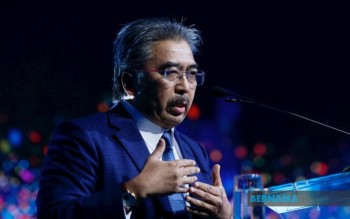
The Malaysian government faces a delicate balancing act as it considers introducing a proposed electric vehicle levy to finance the expansion of charging infrastructure across the country. During a Dewan Negara session, MITI Minister Datuk Seri Johari Abdul Ghani clarified that no final decision has been made on implementing such a levy, and officials are still evaluating the most workable approach to fund this critical component of the national EV ecosystem. The minister's comments reflect ongoing deliberation within government circles about how to move forward with charging network development without placing undue financial burden on consumers during a period of economic sensitivity.
The fundamental challenge facing policymakers stems from Malaysia's constrained fiscal position and the enormous capital requirements needed to build a public charging infrastructure network comparable to what exists in more developed EV markets. Johari emphasised that the government operates under a fiscal deficit, which significantly limits its capacity to fund large-scale infrastructure projects entirely from the public purse. This reality forces officials to explore alternative financing mechanisms, including potential levies on vehicle manufacturers or EV buyers themselves. The minister acknowledged that choices made now will have ripple effects across the automotive and energy sectors for years to come, making the decision-making process necessarily complex and multifaceted.
One critical consideration underlying this debate is the distinction between where a levy might be applied and who ultimately bears the financial burden. Should the government impose charges on vehicle manufacturers, those additional costs would inevitably be reflected in higher purchase prices for consumers, effectively shifting the burden downstream. Conversely, a direct levy on EV purchases would transparently signal the true cost of building charging infrastructure but could potentially slow adoption rates among price-sensitive buyers. Johari highlighted this inherent tension, noting that many observers focus narrowly on one aspect of the policy puzzle rather than appreciating the interconnected nature of the various cost and subsidy elements involved.
The electricity generation profile underlying Malaysia's energy mix adds another layer of complexity to infrastructure planning discussions. The country remains substantially dependent on gas and coal-fired power plants to generate electricity, with renewable energy sources still representing a relatively modest proportion of the overall supply. This reality means that the transition to electric vehicles does not automatically translate into environmental benefits until Malaysia's power generation becomes significantly greener. Planning for EV charging infrastructure therefore requires consideration not only of charger deployment but also of broader energy policy, grid capacity expansion, and the long-term trajectory of Malaysia's electricity generation sources. These interconnected challenges demand coordinated policy responses across multiple government agencies and sectors.
Government subsidies have played a significant role in supporting various sectors of the Malaysian economy, and the automotive industry is no exception. MITI officials point out that the administration has extended considerable financial support to help keep vehicle prices accessible to ordinary Malaysians. However, as the government simultaneously attempts to build new EV charging infrastructure and support the transition toward cleaner transportation, the cumulative subsidy burden becomes increasingly difficult to sustain indefinitely. The minister stressed that stakeholders need to understand the broader fiscal picture, including not only vehicle-related costs but also the expenses associated with electricity provision, natural gas, coal procurement, and other fundamental inputs that underpin the economy.
The proposed levy structure under consideration would channel proceeds into a dedicated fund specifically designated for expanding Malaysia's public EV charging network. This approach differs from general taxation in that it creates a direct link between the revenue source and the infrastructure investment, providing transparency about how funds are allocated. By establishing a purpose-built fund rather than allowing levy revenues to flow into general government coffers, policymakers could build public confidence that money collected specifically for charging infrastructure would actually be spent on that objective. Johari indicated that relying solely on private vehicle manufacturers and distributors to fund public charging infrastructure has proven insufficient, necessitating some form of government-backed financing mechanism to ensure adequate network coverage across the country.
Malaysia's experience with EV adoption provides important context for infrastructure planning. As more Malaysians purchase electric vehicles, the absence of adequate public charging facilities creates a genuine barrier to further market expansion. Potential buyers remain hesitant about purchasing EVs if they cannot reliably access charging points for longer journeys or in public spaces. This creates a classic chicken-and-egg scenario where infrastructure investment must precede widespread adoption, yet manufacturers may be reluctant to invest heavily in charging networks when EV market penetration remains relatively modest compared to traditional internal combustion vehicles. Government intervention through dedicated funding becomes necessary to break this deadlock and accelerate the development of a charging ecosystem that can support higher EV adoption rates.
The minister's acknowledgment that Malaysia cannot replicate the charging infrastructure scale achieved in China reflects realistic assessment of differing economic capacities and development trajectories. China has invested hundreds of billions in EV charging networks, drawing on stronger fiscal resources and different governance structures. Malaysia must develop an approach calibrated to its own financial constraints and market conditions while still making meaningful progress toward transportation electrification goals. This may involve focusing initial charging infrastructure investments in high-traffic corridors and urban centres where usage density would justify capital expenditure, rather than attempting comprehensive national coverage immediately.
The broader policy question extends beyond charging infrastructure to encompass Malaysia's overall energy transition strategy and industrial development priorities. A well-designed EV levy could catalyse investment in related industries, create employment opportunities in charging network installation and maintenance, and position Malaysia more competitively within regional automotive supply chains increasingly focused on electric vehicles. However, poorly designed levies could dampen EV adoption, disadvantage lower-income Malaysians who wish to purchase electric vehicles, and drive vehicle purchases toward neighbouring countries with more favourable tax treatment. These competing considerations explain why MITI officials emphasise ongoing assessment and consultation rather than rushing toward implementation.
The government's commitment to allowing both electric vehicles and internal combustion engine vehicles to coexist during the transition period reflects pragmatic recognition that Malaysia cannot mandate a rapid wholesale shift in transportation technology. Consumers have different needs and circumstances, and forcing adoption of EVs before adequate infrastructure and affordability exist would generate significant public resistance. However, deliberate policy mechanisms including potential levies can nudge the automotive market toward electrification while ensuring that the transition occurs in a managed, fiscally sustainable manner that maintains public support and allows domestic industries to adjust accordingly.

