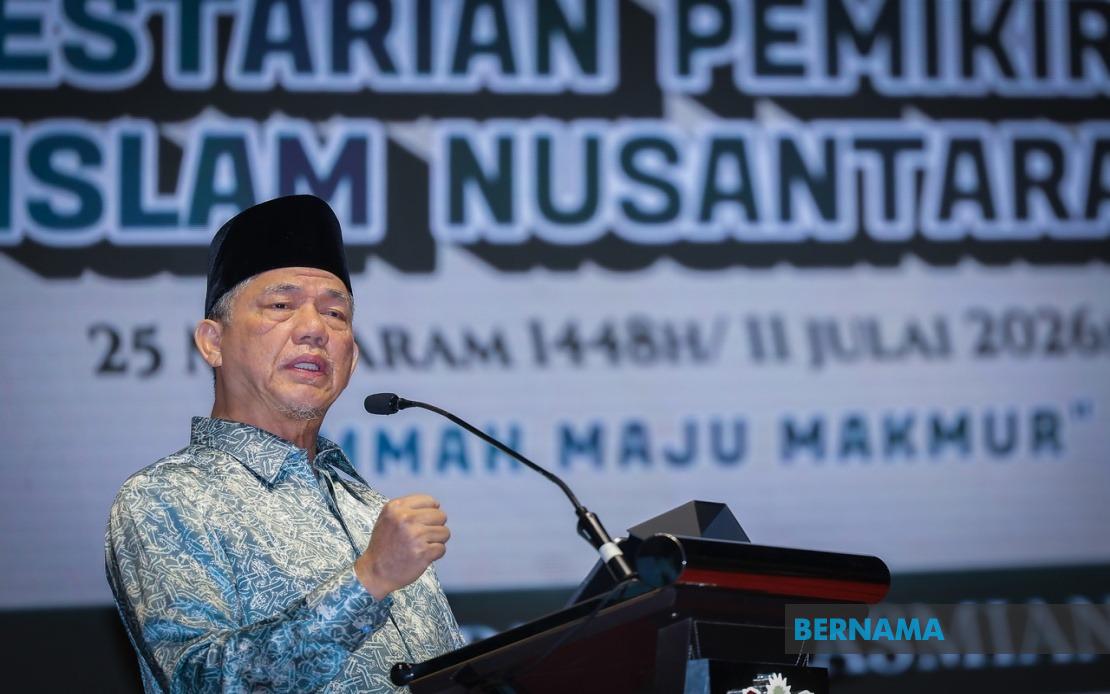
Malaysia's leadership has reaffirmed its uncompromising position against the proliferation of extremist and radical ideologies, which pose a direct threat to the nation's multicultural fabric and social cohesion. Speaking at the 2026M/1448H Sustainability of Nusantara Islamic Thought Seminar in Kuching on July 11, Deputy Prime Minister Datuk Seri Fadillah Yusof outlined a strategy that moves beyond conventional security responses, emphasising the foundational importance of character development in inoculating society against radicalisation.
Fadillah's remarks reflect growing recognition among Malaysian policymakers that extremism cannot be adequately addressed through enforcement mechanisms alone. Instead, he proposed a more nuanced framework that positions moral education at the centre of national defence against radical movements. This approach acknowledges that while legislative tools remain relevant, they function most effectively within a broader ecosystem of social resilience built upon shared values and ethical principles rooted in Islamic teachings.
The Deputy Prime Minister stressed that the burden of preventing extremist ideology cannot fall exclusively on the federal government, highlighting the distributed nature of this challenge across Malaysian society. Families, schools, tertiary institutions, and civil society organisations all bear responsibility for creating an environment where radical ideas struggle to gain purchase. By diffusing responsibility across multiple sectors, Fadillah's framework suggests that Malaysia's defence against extremism operates most effectively when woven into the everyday socialisation processes that shape individual and collective identity.
Central to this preventive strategy is the cultivation of strong moral character among Malaysians from early childhood through adulthood. Individuals equipped with robust ethical foundations and guided by religious principles are significantly less susceptible to extremist recruitment and messaging. This insight underscores a philosophical shift in how Malaysia conceptualises national security, moving from reactive measures targeting suspect individuals or groups toward proactive investments in moral formation.
Educational institutions occupy a particularly strategic role in this framework. Fadillah advocated for moral education grounded explicitly in Quranic and Sunnah teachings, creating curricula that reinforce character development alongside conventional academic subjects. For Malaysia, a country grappling with the legacy of past extremist incidents and ongoing security concerns, embedding Islamic ethical instruction within formal education systems represents an attempt to channel religious identity toward constructive rather than destabilising ends.
Fadillah's emphasis on legislative measures serving as tools of last resort rather than primary mechanisms marks a significant policy position. While acknowledging that laws addressing extremism, radicalisation, and threats to national security remain necessary, he argued they should form part of a calibrated approach that carefully balances security imperatives with respect for individual freedoms and international human rights norms. This measured stance reflects awareness that overly punitive or preventative detention frameworks can themselves generate grievances exploited by extremist recruiters.
The presence of Deputy Inspector-General of Police Tan Sri Ayob Khan Mydin Pitchay at the seminar underscored law enforcement's alignment with this holistic approach. However, Ayob Khan's reflections on the repealed Internal Security Act (ISA) introduced a complicating perspective into the discussion. The ISA, which permitted detention without trial for individuals deemed security threats, had enabled rapid governmental response when ideologies threatened national security or contravened rulings by the National Fatwa Council.
Ayob Khan highlighted the operational advantages the ISA afforded authorities before its repeal, particularly regarding intervention in cases involving deviant Islamic teachings, racial and religious sensitivities, or matters touching the 3R—race, religion and royalty. Under the ISA regime, law enforcement could act preemptively without waiting for State Islamic Religious Departments to initiate action, concentrating counter-extremism powers in federal hands. The implicit tension between Fadillah's preference for preventive education and moral formation, and Ayob Khan's nostalgia for expedited detention powers, reveals underlying disagreements about how aggressively the state should intervene.
For Malaysia, balancing these competing approaches remains consequential. The nation's transition from ISA-era security practices toward more democratic frameworks reflects international pressure and domestic commitments to constitutional governance, yet security agencies continue encountering situations they believe would have been efficiently managed under the old preventive detention regime. This tension remains unresolved within contemporary Malaysian policy discussions.
The seminar's focus on Nusantara Islamic thought—intellectual traditions rooted in Southeast Asian Islamic scholarship—suggests an additional strategic dimension to Malaysia's counter-extremism efforts. By promoting locally-grounded Islamic intellectual frameworks, the government implicitly positions moderate Southeast Asian Islamic traditions against foreign-origin radical ideologies. This approach recognises that extremist movements often derive legitimacy from claims to defend authentic Islam against cultural compromise, making indigenous Islamic intellectual traditions potential resources for countering such claims.
For Malaysia's multicultural society, the stakes involved in countering extremism extend beyond public safety toward the preservation of communal coexistence. Radical ideologies that promote religious supremacy or justify violence against minority populations fundamentally threaten the constitutional compact undergirding Malaysia's plural democracy. Fadillah's emphasis on building a progressive, moderate society thus addresses not merely individual radicalisation but the broader project of maintaining interethnic and interreligious stability.
The government's position also carries implications for Southeast Asia more broadly, as Malaysian approaches to extremism often influence counterterrorism strategies throughout the region. Malaysia's regional influence means that its prioritisation of educational and moral responses over predominantly security-focused measures may shape how neighbouring countries, particularly Singapore and Brunei, conceptualise their own counter-extremism frameworks. The seminar itself, bringing together government officials and Islamic scholars, models the kind of institutional cooperation that Fadillah's approach demands.
Looking forward, Malaysia's commitment to preventing extremism through character development rather than legislation alone will require sustained investment in educational reform, institutional capacity-building, and community engagement. The success of this strategy depends upon widespread buy-in from families, teachers, religious leaders, and community figures—constituencies whose cooperation cannot be mandated but must be cultivated through demonstrated commitment and consistent policy implementation.

