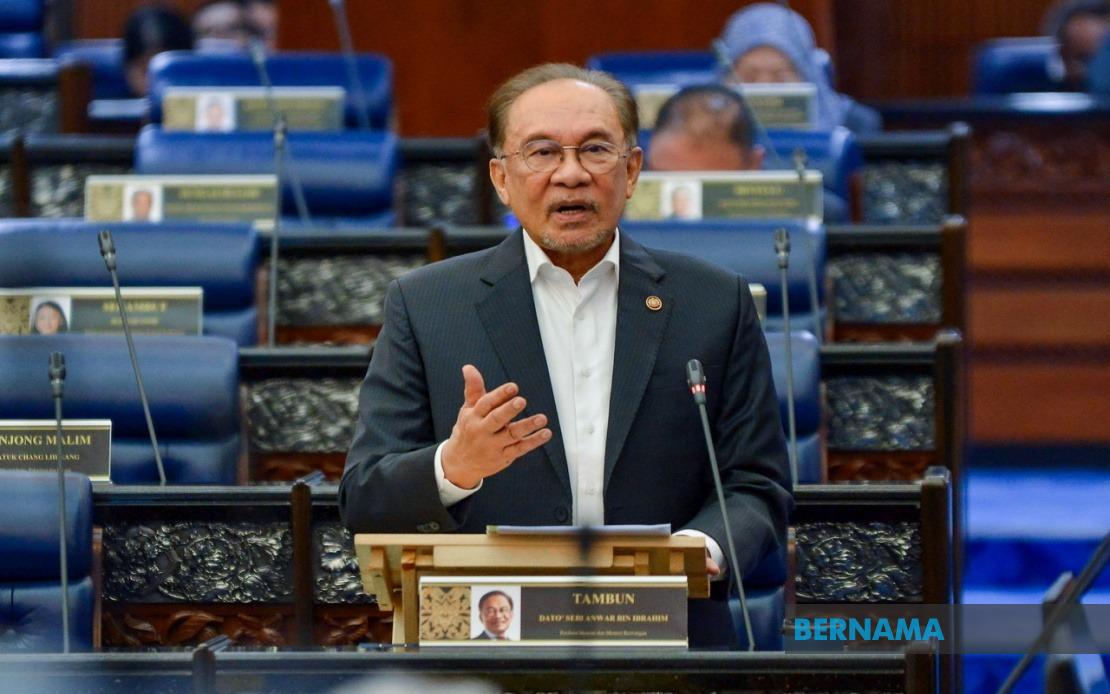
Prime Minister Datuk Seri Anwar Ibrahim has reaffirmed Malaysia's steadfast commitment to resolving maritime boundary disputes with neighbouring countries through diplomatic negotiations and the established framework of the 1982 United Nations Convention on the Law of the Sea. Speaking in Parliament, Anwar outlined a comprehensive approach that prioritises dialogue and legal frameworks over confrontational measures, positioning Malaysia as a nation committed to peaceful resolution of complex territorial issues that span multiple boundaries across Southeast Asia and beyond.
The Prime Minister acknowledged that while Malaysia recognises the International Maritime Organization's role in maritime affairs, all such engagement must ultimately operate within the parameters established by UNCLOS 1982. This convention, he explained, provides the essential legal scaffold that underpins maritime law globally. However, Anwar demonstrated nuanced understanding by noting that interpretations of UNCLOS provisions frequently diverge among nations, creating situations where the convention alone cannot definitively resolve every boundary dispute that arises between states with overlapping maritime claims.
Regarding the contentious South China Sea situation, Anwar highlighted ASEAN's collective commitment to using UNCLOS as the negotiating foundation while working cooperatively with China to develop a Code of Conduct designed to manage tensions and prevent escalation. This incremental approach, he suggested, represents a pragmatic middle ground between asserting maximalist claims and surrendering legitimate interests. He noted, however, that discussions involving the Philippines present additional complexities due to the unresolved Sabah territorial question, which intertwines maritime boundary issues with broader sovereignty concerns and requires careful diplomatic handling.
Anwar illustrated Malaysia's practical methodology by describing the negotiating approach adopted with other ASEAN partners. Rather than seeking rapid conclusions, Malaysia has chosen to engage in extended dialogue rounds, accepting that reaching consensus may require multiple sessions. When discussions encounter impasses, the government strategically adjourns negotiations rather than allowing them to collapse entirely, preserving the possibility of future productive engagement. This patient, iterative approach reflects a sophisticated understanding that maritime disputes cannot typically be resolved through single negotiations but instead require sustained commitment to the diplomatic process.
The Prime Minister drew particular attention to Malaysia's successful joint development models with Thailand and Vietnam, which he presented as evidence that economic cooperation can flourish without requiring nations to abandon their underlying sovereignty claims. These arrangements represent a creative solution to otherwise intractable boundary disputes, permitting states to derive mutual benefit from contested marine areas while preserving their legal positions. In the Vietnam case specifically, Malaysia established a Joint Development Authority covering disputed territories, enabling both nations to undertake coordinated resource development and share resulting revenues, all while maintaining their respective boundary claims without prejudice.
Anwar enumerated Malaysia's complex maritime boundary situation, noting that the country faces overlapping claims with six neighbours: Brunei, Thailand, Indonesia, Singapore, the Philippines, and China. Rather than viewing this multiplicity as justification for unilateral assertions or military posturing, the government has consistently selected diplomacy as the preferred instrument for managing these disputes. This deliberate choice reflects Malaysia's assessment that escalation would generate far greater costs than the benefits derived from provisional solutions or joint development arrangements.
Progression differs across various bilateral relationships. Negotiations with Brunei have advanced considerably, with substantive agreement achieved on most issues, leaving only a narrow band of unresolved matters now primarily involving the Sarawak state government's positions. These discussions represent some of Malaysia's most successful maritime boundary negotiations, suggesting that patient, technical dialogue can yield tangible results. Conversely, talks with Indonesia concerning Sabah-related maritime areas remain ongoing and are conducted in close consultation with Sabah's state leadership, reflecting the federal structure's requirements and local stakeholders' legitimate interests.
The Prime Minister's parliamentary statement effectively articulated a broader regional perspective on maritime governance. Rather than presenting these disputes as zero-sum competitions demanding absolute victory, Anwar positioned them as manageable issues requiring cooperative approaches. His emphasis on UNCLOS adherence provides Malaysia with strong legal standing while his commitment to negotiation demonstrates recognition that legal frameworks alone cannot generate binding outcomes without political will from all parties. This balanced approach acknowledges both the principle of international law and the practical reality that voluntary cooperation typically produces more durable agreements than imposed solutions.
For Malaysia and other Southeast Asian nations, the implications are significant. As a maritime state with substantial shipping interests and resource extraction potential, Malaysia benefits from UNCLOS stability and the predictability that comes from international legal frameworks. However, Malaysia also recognises that regional peace and prosperity depend upon managing boundary disputes without allowing them to metastasise into military confrontations. The pursuit of joint development agreements and extended negotiations represents an acknowledgment that perfect solutions rarely emerge from maritime disputes, but workable compromises that permit simultaneous maritime activity by multiple claimants can generate sufficient mutual benefit to discourage escalation.
Anwar's insistence on negotiations and UNCLOS as bedrock principles also implicitly addresses concerns about great power pressure on smaller Southeast Asian states to take hardline positions on maritime disputes. By maintaining commitment to international legal frameworks and multilateral ASEAN approaches, Malaysia preserves space for independent diplomatic manoeuvre while avoiding isolation. The emphasis on dialogue respects the sovereignty concerns of all parties and recognises that the region's prosperity depends upon maintaining freedom of navigation, resource access, and commercial activity rather than upon settling boundary questions in ways that leave other parties feeling aggrieved.

