A Malaysian man's brief and unsuccessful foray into organised crime has ended with him behind bars. Yip Chee Ming, 30, received a sentence of 16 months and two weeks in jail on Friday after pleading guilty to membership in an organised crime syndicate. His tenure as a scammer was notably short—he managed just three days of work in November 2024 before being fired by his employers for failing to successfully defraud a single victim, an embarrassing outcome that ultimately contributed to his arrest and conviction.
Yip's path into criminal activity began innocuously enough when a friend named Jason informed him about employment opportunities at what they believed was a lucrative call centre operation based in Cambodia. In October 2024, the pair were introduced to Tang Soon Wah, identified as a leadership figure within the syndicate, who extended an invitation to visit the operation's headquarters in Phnom Penh. The compound itself was an imposing five-storey structure with security personnel stationed at its entrance, designed to house a sophisticated criminal enterprise. After viewing the facilities and considering the proposition, both men returned to Malaysia and subsequently boarded a flight to Cambodia on 21 November 2024.
The syndicate represented a substantial criminal operation targeting Singapore's population through an insidious scheme centred on impersonating government officials. Operating from their Phnom Penh base between September 2024 and September 2025, members orchestrated at least 528 documented fraud cases that resulted in approximately S$52.5 million in losses for victims. The organisation functioned as a hierarchical structure with leadership overseeing operations and commission payments, supervisors and trainers managing individual callers, and a dedicated money laundering division converting cryptocurrency from fraudulent proceeds. Court evidence indicated the syndicate numbered at least 78 suspected members, indicating a significant criminal network.
Yip commenced his position on 22 November 2024 with an assignment to impersonate a banking official while conducting telephonic fraud against Singaporean targets. His compensation package included US$1,800 monthly in cryptocurrency plus a one per cent commission based on successful deceptions. Trainers within the organisation equipped callers with standardised scripts and coaching techniques designed to enhance persuasiveness, including instruction on adopting Singaporean accents to build victim credibility. The operation represented the culmination of careful planning and systematic methodology refined across hundreds of previous frauds.
Yip's performance, however, proved catastrophically inadequate. Despite faithfully adhering to the prepared scripts provided by his supervisors, he demonstrated a complete inability to convince any Singaporean to part with money during his initial shift. Undeterred but apparently still hopeful, he attempted the work again the following day, only to encounter identical failure. His supervisors, evidently operating with little patience for underperformers, made their assessment quickly. On 23 November 2024, Tang terminated Yip's employment and proceeded to delete all messages between them, effectively severing connections before Yip returned to Malaysia.
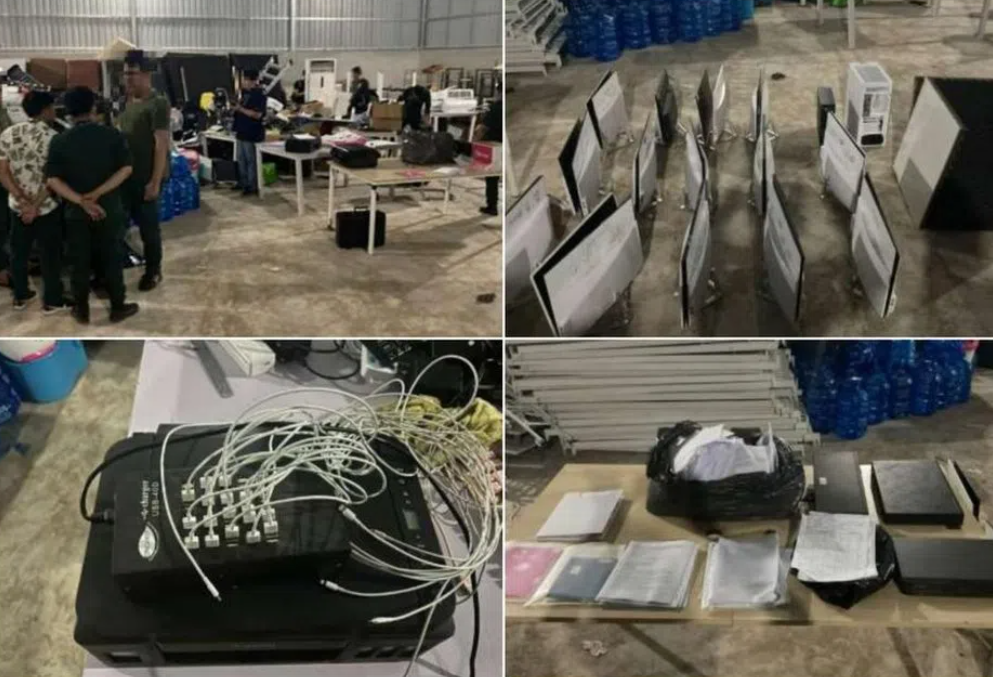
Yip's arrest came nearly ten months later when Singapore police and Cambodian National Police conducted coordinated operations targeting the syndicate on 9 September 2025. A total of twelve individuals faced charges as alleged syndicate members. Nine of those charged were Singaporeans: Deon Tan Ke Yuan, 25; Lester Ng Jing Hai, 29; Christy Neo Wei En, 29; Heiqal Lee, 30; Tay Jun Xiang, 32; Ng Wei Kang, 33; Zachary Lee Jia An, 35; Melvin Tan Wenzheng, 35; and Lau Haoxiang, 39. Alongside Yip, the remaining accused included fellow Malaysian Muhamad Asyraf Anuar, 29, and Filipino national De Villar Rizalyn Panganiban, 34. The arrests represented a significant blow against a transnational criminal network that had extended its reach across multiple countries.
The broader context of government official impersonation scams reveals an alarming trend in Southeast Asia. Despite an overall decline in scam incidents during 2025, cases involving false government official impersonation experienced explosive growth, more than doubling from 1,504 reported cases in 2024 to 3,363 in 2025. This surge elevated the fraud type to Singapore's fifth most prevalent scam category, suggesting that criminal syndicates have identified this particular methodology as increasingly effective against regional populations. The apparent sophistication of operations like the Phnom Penh ring—complete with training protocols, scripted dialogue, and technical infrastructure—demonstrates how these criminals continuously refine approaches to maximise victim compliance and financial extraction.
The syndicate's exploitation of Cambodia as an operational base reflects a broader regional vulnerability. The geographic distance from target populations combined with weak enforcement capacity in certain jurisdictions creates attractive conditions for transnational organised crime. Malaysian and Singaporean nationals' involvement in the network, alongside Filipino participation, underscores how such enterprises recruit across borders and leverage regional talent and expertise. For Malaysia specifically, the involvement of its nationals as both perpetrators and potential victims highlights the country's position within cross-border criminal ecosystems that demand coordinated law enforcement responses.
Yip's conviction carries significant implications for understanding recruitment into organised scam operations. His swift termination despite formal employment arrangements suggests that criminal syndicates maintain rigid performance standards and demonstrate willingness to discard members who prove unproductive. Yet his arrest months later indicates that authorities possess investigative capabilities and international cooperation mechanisms to track and apprehend individuals involved in transnational fraud schemes. The legal sentencing framework allows courts to impose penalties up to five years imprisonment and fines reaching S$100,000 for organised crime membership, penalties that apply regardless of whether individual perpetrators successfully completed fraudulent transactions.
For Malaysian and Southeast Asian readers, the case underscores personal vulnerability to sophisticated scam operations originating from the region. The growth in government impersonation frauds suggests criminal organisations have successfully developed methodologies that overcome initial victim scepticism. The involvement of individuals from multiple nationalities and the multinational nature of the law enforcement response indicate that combating such enterprises requires sustained cooperation among regional governments. Furthermore, the case illustrates how criminal recruitment occurs through social networks and personal relationships—Yip was brought into the scheme by a friend—emphasising the importance of exercising caution regarding unexpected employment opportunities involving overseas relocation or unusual working arrangements.

