Malaysia's ongoing effort to digitalize its government operations has reached a significant milestone, with the civil service paperless initiative delivering RM1.99 million in cost reductions through the elimination of 116,405 reams of paper. The achievement, disclosed during a recent Digital Economy and Fourth Industrial Revolution Council meeting, reflects the tangible financial and environmental benefits emerging from the government's commitment to modernizing administrative processes across federal agencies.
Chief Secretary to the Government Tan Sri Shamsul Azri Abu Bakar presented the results during the MED4IR council session chaired by Prime Minister Datuk Seri Anwar Ibrahim, underscoring how incremental efficiency gains in routine government operations can compound into substantial savings. The paperless approach, which commenced in February following an initial announcement in early 2024, demonstrates that transitioning away from physical documentation remains achievable even within the traditionally paper-heavy bureaucratic environment.
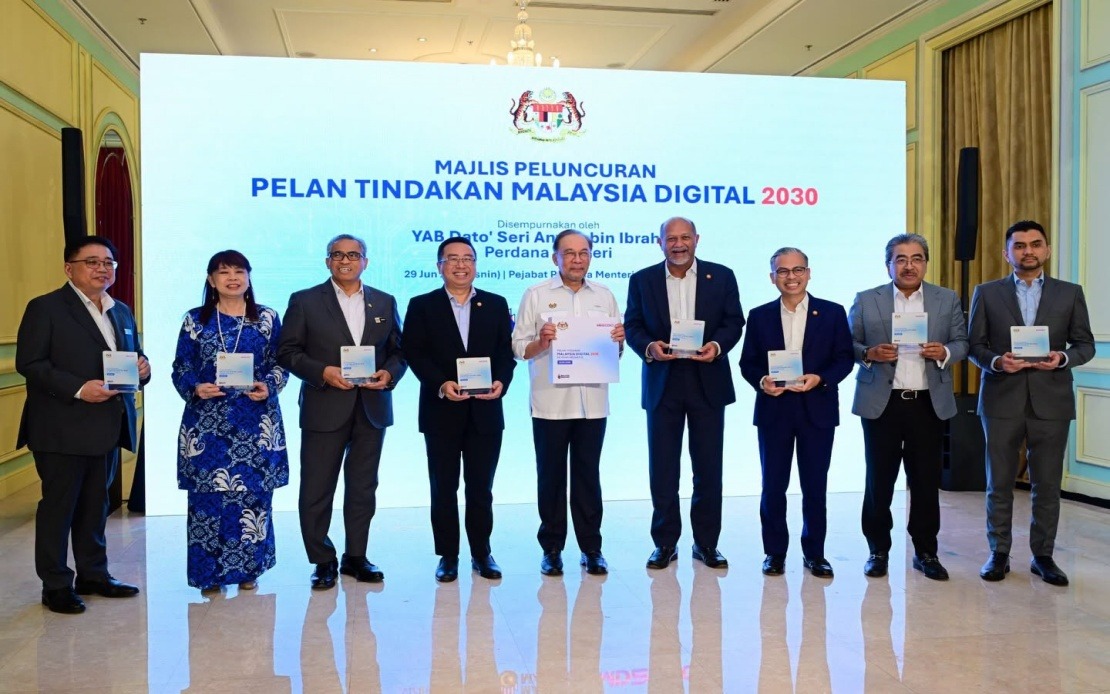
The initiative gains particular significance within the context of Malaysia's broader digital ambitions. During the same council meeting, the government unveiled Malaysia Digital 2030, a comprehensive strategy designed to position the nation as an artificial intelligence powerhouse by the conclusion of the decade. This framework represents an escalation beyond simple digitalization toward embedding advanced computational capabilities throughout the public sector and wider economy.
Within the Malaysia Digital 2030 roadmap, the government is simultaneously prioritizing the MyDigital ID platform and the MyGov initiative, both intended to streamline citizen interactions with public services. These systems fundamentally depend on reducing reliance on paper-based records and processes, making the paperless initiative a foundational component rather than a standalone cost-reduction exercise. Without operational readiness among civil servants to manage digital workflows, ambitious digital governance projects cannot achieve their intended impact.
Higher education institutions represent another focal area for the government's digital expansion strategy. The council agreed to broaden digital access pathways across Malaysia's university system, recognizing that developing skilled workers capable of operating within advanced digital and AI-enabled environments requires exposure beginning at tertiary level. This upstream investment in digital literacy infrastructure supports the eventual deployment of AI applications throughout the economy and government.
Complement to these educational initiatives, the MyMAHIR National AI Council for Industry has been tasked with developing more sophisticated digital talent pipelines. This coordinating body is expected to align workforce development with industry requirements and government priorities, avoiding the common scenario where technical training diverges from actual employer needs. By centralizing talent development strategy, Malaysia hopes to accelerate the transition toward an AI-capable workforce.
The paperless initiative itself began modestly, focusing initially on simple transactions rather than attempting comprehensive conversion of all government documentation simultaneously. This phased approach reflects pragmatic implementation strategy, allowing civil servants to adjust to new workflows while identifying technical obstacles before scaling to complex processes. By February, agencies had begun transitioning routine submissions and approvals to digital channels, creating momentum for broader adoption.
From a financial perspective, the RM1.99 million savings, while meaningful, represents only the direct cost reduction from eliminated paper purchases and associated material handling. Hidden benefits likely include reduced storage requirements, diminished environmental compliance costs, and accelerated transaction processing times that indirectly boost productivity. These secondary savings often dwarf the primary gains but remain difficult to quantify precisely without detailed departmental audits.
For Southeast Asian observers, Malaysia's experience offers instructive lessons regarding government digitalization feasibility within developing economies. The initiative demonstrates that substantial progress toward paperless operations need not require complete technological overhaul or massive infrastructure investment. Rather, systematic adoption of available digital tools, combined with workforce training and managerial commitment, can generate measurable improvements within established bureaucracies.
Regional competitiveness factors into the Malaysian government's urgency regarding AI nation positioning by 2030. Singapore has already established itself as a regional technology leader, while other Southeast Asian nations are accelerating digital investments. Malaysia's Digital 2030 agenda represents recognition that remaining competitive requires proactive alignment of government capacity, educational output, and industrial capability toward emerging technological paradigms.
The connection between the immediate paperless initiative and longer-term AI ambitions illustrates how structural changes in government operations create foundations for more ambitious transformation. Civil servants becoming comfortable managing digital workflows develop the technological familiarity necessary for subsequent AI tool deployment. Organizations that have eliminated redundant paper processes possess the operational flexibility to adapt processes further when artificial intelligence systems become viable.
Looking forward, the government will likely publicize additional savings metrics from the paperless initiative as data accumulates across more agencies and transactions. These figures, while primarily serving accountability purposes, also function as change management tools, helping skeptical bureaucrats visualize concrete benefits from digital transformation. Success stories breed organizational culture shifts that facilitate broader acceptance of subsequent digital initiatives.
Ultimately, the RM1.99 million paperless saving represents not merely an accounting achievement but evidence of Malaysia's capacity to translate broad digital aspirations into implemented reality. The government's ability to execute this foundational initiative competently will substantially influence the likelihood of successfully delivering more ambitious components within the Malaysia Digital 2030 framework over the coming years.

