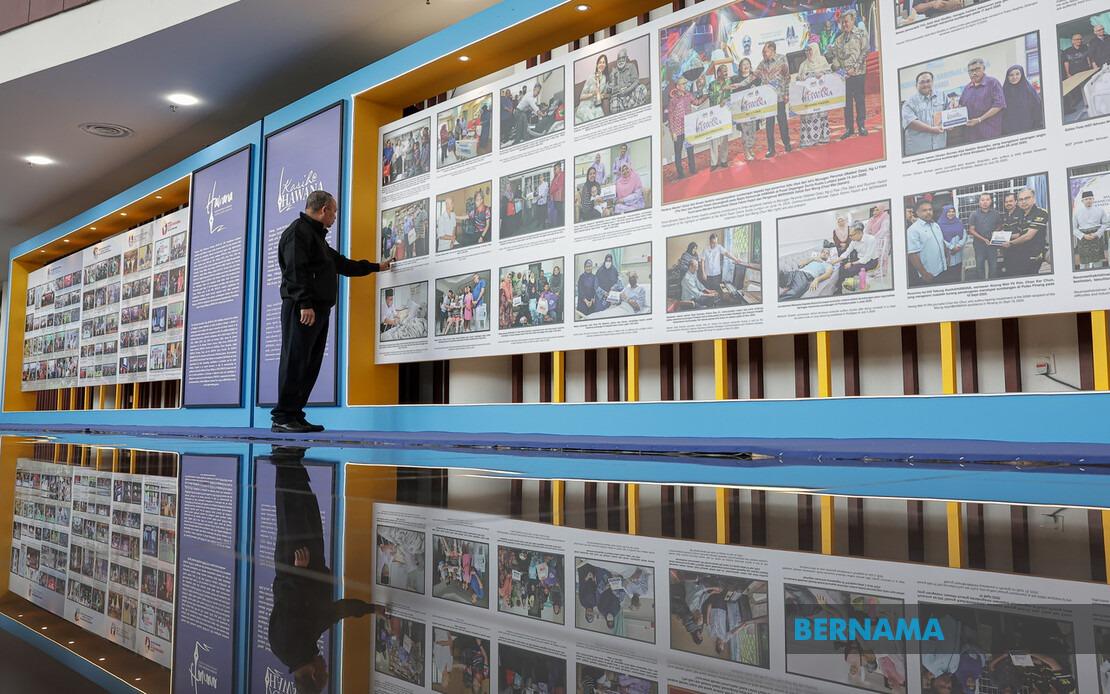
Malaysia's journalism community is gathering in Butterworth this week for the National Journalists' Day 2026 (HAWANA) celebration, an event that has become the nation's premier platform for recognising media practitioners' contributions while confronting the industry's most pressing contemporary challenges. Running under the theme 'Media Integrity, Foundation of Credibility', HAWANA 2026 represents more than ceremonial recognition—it signals the profession's determination to navigate an era of rapid technological and structural change. Prime Minister Datuk Seri Anwar Ibrahim is scheduled to officiate the main event tomorrow at PICCA @ Butterworth Arena, where approximately 1,000 media professionals from within Malaysia and internationally are expected to convene.
The lead-up to tomorrow's principal celebration has already established the event's substantive ambition, with multiple organisations orchestrating programmes that probe the industry's future rather than merely celebrating its past. The Malaysian Federation of Media Clubs (GKMM) convened the Malaysia Media Retreat 2.0, assembling representatives from 15 media clubs nationwide to strengthen professional networks and evaluate the federation's trajectory since its formal establishment in October 2022. This gathering served dual purposes: reinforcing institutional bonds among clubs under GKMM's structure while providing an opportunity for leadership to assess the federation's accomplishments and chart its direction ahead of the third annual general meeting. The retreat's official opening by Communications Minister Datuk Fahmi Fadzil underscored the government's engagement with media sector concerns, while participation by Bernama's Chief Executive Officer Datin Paduka Nur-ul Afida Kamaludin and Editor-in-Chief Arul Rajoo Durar Raj demonstrated the national news agency's central role in shaping industry discourse.
Perhaps most revealing of the event's contemporary focus is the Malaysian Press Institute's town hall session titled "2035: Will Journalists Still Exist?"—a question that crystallises the existential anxieties pervading newsrooms across Southeast Asia. Held at Han Chiang University College of Communication, the forum directly confronted the intersection of artificial intelligence, accelerating digitalisation, and the fundamental transformation of how audiences consume news. These factors collectively represent a structural challenge to journalism's traditional business models and gatekeeping functions, issues that resonate acutely across Malaysia where news consumption patterns have undergone dramatic shifts over the past five years. The panel assembled an impressive array of editorial leadership: MPI president Datuk Yong Soo Heong, Farrah Naz Abd Karim representing New Straits Times Press's editorial hierarchy, and Azhari Muhidin from Media Prima's news division. Their participation signalled that Malaysia's largest media organisations are actively engaging with rather than retreating from uncomfortable conversations about technological disruption.
The sequence of industry discussions occurring around HAWANA 2026 reflects a broader acknowledgement within Malaysian media that the sector faces multifaceted pressures requiring sustained professional and institutional responses. Artificial intelligence presents the most immediate challenge: newsrooms worldwide are navigating how automated content generation, algorithmic curation, and AI-assisted reporting will reshape employment, editorial quality, and journalistic authority. For Malaysian practitioners, these questions carry particular weight given the region's rapid technological adoption and the competitive pressures facing smaller and mid-sized news operations. Digitalisation has fundamentally altered the economics of journalism, undermining traditional advertising revenue streams that historically subsidised investigative reporting and international coverage. Simultaneously, changing consumption patterns—particularly younger audiences' preference for social media-aggregated news over branded news websites—have fragmented the audience and eroded the structural advantages legacy media organisations once enjoyed.
These industrial transformations occur against the specific Malaysian context, where media operations navigate regulatory frameworks, commercial pressures, and audience expectations distinct from Western markets. The Malaysian government's engagement with HAWANA 2026, reflected in ministerial participation and Communications Ministry involvement as the official organising body, indicates official recognition that journalism's sustainability serves broader national interests. This positioning is significant: it moves beyond celebrating individual journalist achievement to positioning the entire media ecosystem as deserving policy attention and institutional support. The theme of media integrity as the foundation of credibility addresses a distinct Malaysian concern—maintaining public trust in news institutions at a time when misinformation, disinformation, and competing information sources have fractured the epistemic commons that journalism traditionally anchored.
The Malaysian Media Council's scheduled engagement session tomorrow will further extend this institutional conversation, bringing media practitioners from Malaysia's northern region into dialogue about standards, ethics, and industry futures. This regional focus reflects a deliberate effort to ensure HAWANA celebrations remain inclusive of practitioners beyond Kuala Lumpur's media establishment, acknowledging that journalism's health depends on professional networks extending throughout the country. The MMC's participation signals the sector's commitment to self-governance and standard-setting at a moment when regulatory and technological pressures might otherwise fragment professional identity and practice.
The three-day RIUH @ HAWANA Carnival simultaneously occurring at PICCA Convention Centre @ Butterworth Arena introduces an element of public engagement alongside professional introspection. By combining a major industry convening with public-facing activities, HAWANA 2026 attempts to reconnect journalism with broader society, reminding audiences of news practitioners' essential role while inviting public participation in conversations about media's future. This public dimension carries particular importance in Malaysia, where news consumption remains heavily concentrated and where rebuilding public confidence in institutional media requires sustained engagement beyond professional circles.
The gathering in Butterworth ultimately reflects an industry recognising that strategic conversation about future models, technological adaptation, and professional standards cannot be deferred. Malaysian journalists and media organisations face competitive pressures from digital platforms, changing audience preferences, and economic constraints that collectively threaten newsroom sustainability. Yet HAWANA 2026 suggests that the sector is responding not through defensive isolation but through collective engagement with uncomfortable questions about artificial intelligence, digitalisation, and journalism's role in an increasingly fractured information environment. The participation of government ministers, major media organisations, professional bodies, and individual practitioners indicates a recognition that journalism's future requires sustained institutional commitment, technological adaptation, and renewed professional solidarity.
For Malaysian readers and the broader Southeast Asian media sector, HAWANA 2026 offers a window into how one regional media industry is confronting contemporary challenges. The event's intellectual honesty—openly questioning whether journalists will exist in 2035 rather than asserting their inevitable permanence—suggests a profession neither in denial nor paralysed by uncertainty. Instead, Malaysian journalism appears to be consciously rebuilding its professional identity around integrity, credibility, and public service at a moment when these foundations require active construction rather than passive inheritance. The week ahead in Butterworth will demonstrate whether this institutional commitment translates into concrete strategic and operational changes that ensure journalism's sustainability across Malaysia's transforming information landscape.

