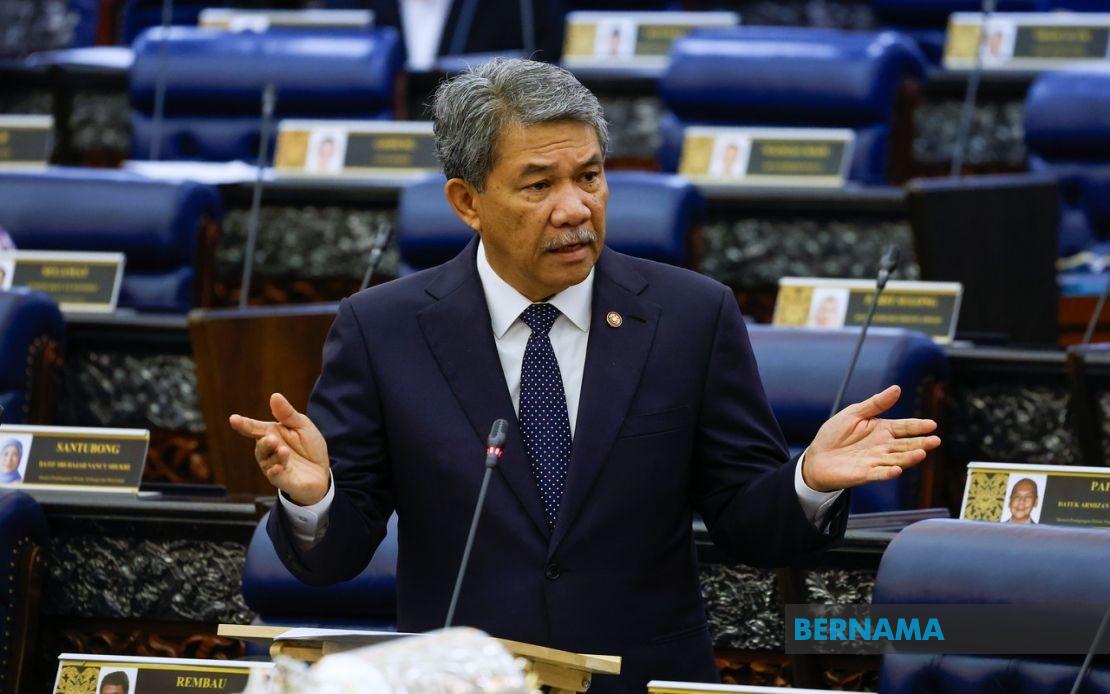
Malaysia's Foreign Minister Datuk Seri Mohamad Hasan has moved to quash speculation about his country's diplomatic overtures to Myanmar, stressing that a high-level delegation visit in May represented a continuation of ASEAN dialogue efforts rather than any endorsement of the military administration. Speaking in Parliament on June 25, Mohamad reiterated Malaysia's unwavering non-recognition stance toward the junta while explaining the rationale behind maintaining communication channels with Naypyidaw despite deep regional concerns over governance and human rights.
The clarification comes amid scrutiny of Malaysia's diplomatic approach to Myanmar, where the junta has faced international criticism following its 2021 takeover and subsequent political repression. Mohamad emphasized that the visit, which included a meeting with Myanmar Foreign Minister Tin Maung Swe, was conducted within the broader context of decisions made at the 48th ASEAN Summit. Rather than being a bilateral initiative signaling recognition or acceptance of Myanmar's current administration, the engagement reflected ASEAN's collective strategy of maintaining informal contact to influence developments on the ground.
The venue of the meeting itself conveyed Malaysia's careful diplomatic messaging. By meeting Tin Maung Swe at a hotel rather than the Foreign Ministry, Mohamad signaled that Malaysia was distinguishing between official recognition and pragmatic engagement. This distinction carries particular weight in Southeast Asian diplomatic culture, where the symbolism of venues and protocols often communicates political positions as clearly as formal statements. The decision to meet in a neutral setting underscored that Malaysia views dialogue as a means of exerting pressure, not as validation of Myanmar's governance legitimacy.
During their discussion, Mohamad conveyed Malaysia's expectations for Myanmar's trajectory, emphasizing that military administration must ultimately yield to more inclusive governance structures acceptable to ASEAN and the international community. The Foreign Minister impressed upon his counterpart that while Myanmar retains membership privileges within the regional bloc, these rights come with corresponding obligations to honor ASEAN protocols and commitments. This framing positions Malaysia's engagement not as acceptance but as conditional interaction predicated on Myanmar's future behavioral change.
Central to Malaysia's position remains ASEAN's Five-Point Consensus, a framework adopted to guide regional responses to the Myanmar crisis. The five points encompass cessation of violence, facilitation of dialogue among conflicting parties, humanitarian access, mediation by an ASEAN envoy, and constructive dialogue within ASEAN itself. Mohamad underscored that Malaysia's ongoing contacts with Myanmar are explicitly designed to advance these objectives, not to circumvent or diminish them. By anchoring his explanation in this framework, the Foreign Minister demonstrated that Malaysia's approach operates within agreed regional parameters rather than representing unilateral diplomacy.
The strategic imperative behind maintaining open communication channels reflects Malaysia's concern about Myanmar's potential isolation and the geopolitical consequences thereof. Mohamad articulated a sophisticated analysis of regional stability, cautioning that further ostracism of Myanmar could create a power vacuum that external actors—implicitly referencing major powers beyond Southeast Asia—might exploit for their own strategic advantage. This consideration reflects Malaysia's long-standing emphasis on regional autonomy and resistance to great power competition within ASEAN's sphere. By maintaining dialogue, Malaysia seeks to preserve ASEAN's ability to shape Myanmar's evolution according to regional interests rather than ceding influence to distant powers.
The implications of this approach extend beyond Myanmar itself to ASEAN's broader credibility and cohesion. Should ASEAN entirely disengage from Myanmar, the bloc risks appearing ineffectual or irrelevant in addressing one of its most serious internal challenges. Conversely, engagement must be calibrated to avoid appearing to condone military rule or diminish the urgency of democratic restoration. Malaysia's balancing act reflects this tension, positioning dialogue as a pressure tool while maintaining principled non-recognition.
Planned follow-up meetings with Myanmar stakeholders in early to mid-July signal that Malaysia intends to sustain this engagement strategy despite limited progress to date. These anticipated discussions suggest that Malaysia believes continued contact, even in the absence of immediate breakthroughs, serves regional interests by keeping diplomatic channels functional. For Malaysian policymakers, the value lies not necessarily in achieving rapid Myanmar political transformation but in ensuring ASEAN retains meaningful influence over the country's trajectory and preventing destabilizing outcomes.
For Malaysia specifically, maintaining this diplomatic posture carries domestic and regional implications. Domestically, Malaysian civil society and political actors remain divided on engagement with the Myanmar junta, with some viewing dialogue as collaboration with authoritarianism. By emphasizing Malaysia's non-recognition stance and framing engagement within ASEAN collective decisions, Mohamad attempted to navigate this domestic political tension. Regionally, Malaysia's approach influences how other ASEAN members calibrate their own Myanmar policies, with Malaysia positioning itself as a responsible interlocutor rather than an outlier.
The broader context underscores Malaysia's commitment to ASEAN centrality in regional security and political matters. By demonstrating that even controversial engagements operate through ASEAN frameworks and collective decisions, Malaysia reinforces the notion that regional mechanisms, not individual member initiatives, should govern ASEAN's external relations. This emphasis on institutional process over unilateral action reflects Malaysia's diplomatic philosophy and its investment in ASEAN as a mechanism for advancing Malaysian interests while preserving collective legitimacy.
Moving forward, the success of Malaysia's Myanmar strategy hinges on whether sustained dialogue can produce observable movement toward the Five-Point Consensus objectives. The Foreign Minister's parliamentary explanation serves to justify continued engagement to skeptical constituencies while maintaining diplomatic flexibility. Should Myanmar's situation deteriorate further or should the junta make gestures toward compliance with ASEAN expectations, Malaysia's framing positions the country to escalate or de-escalate pressure as circumstances warrant, all within a consistent framework of non-recognition and commitment to regional consensus.

