Malaysia's political landscape appears poised for significant upheaval in the final months of 2024, with the Islamic party Pas signalling that a general election is imminent. Datuk Mohd Amar Nik Abdullah, the party's vice-president, has publicly indicated his expectation that the 16th general election will take place sometime between late October and November. The timing of this statement carries considerable weight, given Pas's influential position within the current political constellation and its role in shaping the national coalition dynamics.
The prospect of an electoral contest during the October-November window represents a critical juncture for Malaysian politics at a moment when several structural pressures have been building. Prime Minister Anwar Ibrahim's administration, while having demonstrated relative stability since assuming office in late 2022, faces ongoing questions about its coalition's durability and legislative capacity. The timing suggested by the Pas leader implies that the government may be seeking to capitalise on current political momentum before unforeseen events destabilise the delicate balance that underpins the present ruling arrangement.
Pas's public positioning on election timing deserves particular scrutiny, as the party has become increasingly central to Malaysia's political equilibrium. As a component of the federal coalition and dominant force in several state administrations, particularly in the northeast, Pas has substantial leverage in any negotiations regarding electoral schedules. The party's willingness to discuss timing so openly suggests either confidence in its likely performance or an acknowledgement that electoral pressures have become sufficiently intense to require resolution sooner rather than later.
For ordinary Malaysians, an election in this timeframe would represent the first nationwide electoral test since the May 2023 vote that produced the current government. That contest delivered an inconclusive outcome that forced an extended period of coalition negotiations and institutional manoeuvring. A fresh election roughly eighteen months later would suggest that the political consensus achieved at that time has proven insufficient to provide the stability that parliamentary democracy requires, or that the government has decided the electoral arithmetic is sufficiently favourable to warrant a fresh mandate.
The economic implications of an October-November election cycle merit consideration. The Malaysian economy has demonstrated relative resilience in 2024, with growth trajectories and employment figures broadly stable. An election during this period would occur well before the year-end festive season ramps up to its peak, potentially limiting disruption to business activity and consumer spending. However, the six to eight-week period required to conduct a general election—including nomination periods, campaigning, and voting day—would necessarily create uncertainty for markets and investors who prefer political clarity.
Regionally, the timing carries implications for Southeast Asia's political and economic coordination. The Association of Southeast Asian Nations and various bilateral arrangements depend on stable, predictable leadership and policy continuity. An election during the October-November window would coincide with preparations for year-end regional forums and economic integration initiatives, potentially diverting high-level Malaysian attention at a consequential moment in regional dialogue.
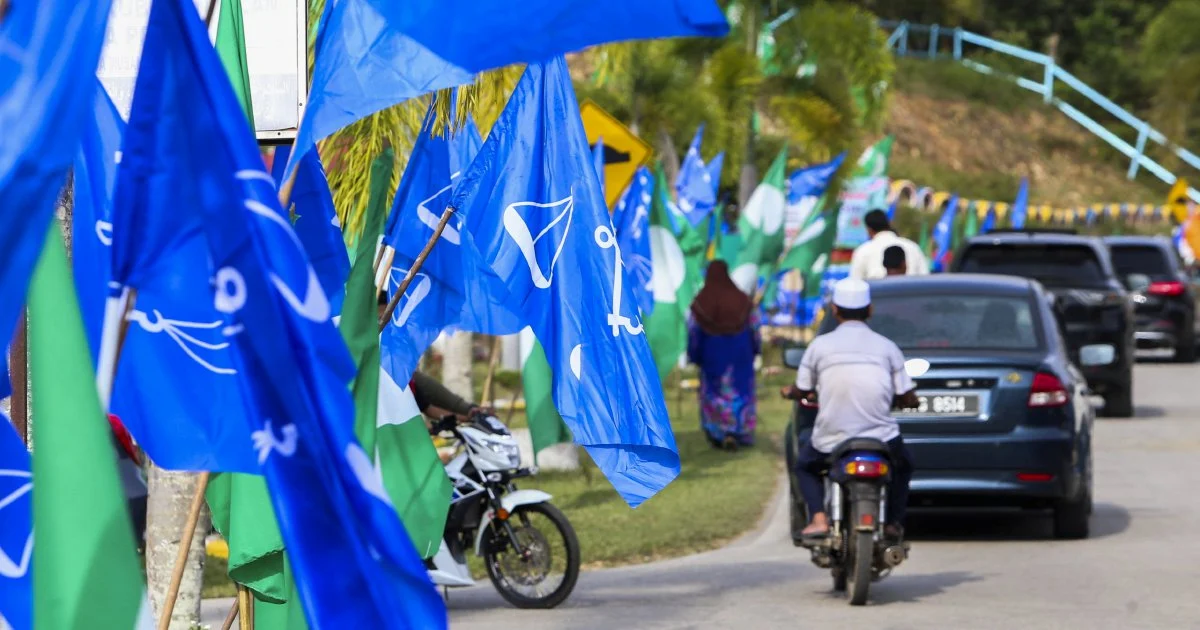
The opposition's readiness for such a contest remains uncertain. While the Democratic Action Party, Amanah, and other coalition partners continue to function as a political force, their performance in the 2023 election demonstrated vulnerability, particularly in rural constituencies where Pas has consolidated remarkable organisational advantages. The opposition would require substantially improved campaign machinery and messaging discipline to reverse the trajectory that cost them the 2023 contest. The compressed timeframe that an October-November election would provide—requiring only limited preparation time—presents particular challenges for parties seeking to mount effective counter-campaigns.
State-level elections also factor into the electoral mathematics. Several states are currently governed by administrations whose terms expire in 2024 and early 2025, creating a complex layering of electoral cycles. A federal general election timed for October-November could potentially be coordinated with concurrent state elections in jurisdictions where terms align, or conversely, could precede them if the government opts for sequential contests. This sequencing carries strategic implications for coalition partners, as electoral momentum can either compound or dilute across tightly scheduled campaigns.
Pas's role in this evolving scenario extends beyond mere prediction. The party's capacity to deliver parliamentary support for any government proves essential given the narrow margins that currently characterise Dewan Rakyat arithmetic. Whether Pas has signalled the election timing with government knowledge or is instead positioning itself for negotiations with prospective post-election governing coalitions remains unclear. The ambiguity reflects the transactional nature of contemporary Malaysian coalition politics, where party alignment proves contingent and fluid.
Civil society groups and election observers have begun preparing infrastructure for what would be Malaysia's nineteenth general election in the modern democratic era. The Election Commission will require several months to complete boundary delineation processes, voter roll updates, and logistical arrangements across the country's 222 parliamentary constituencies and corresponding state seats. The October-November window, if confirmed, would provide adequate time for such preparations while maintaining administrative integrity.
Investors and business leaders monitoring the Malaysian political environment have begun recalibrating medium-term planning horizons accordingly. The government's policy stability and legislative agenda will necessarily compress between now and any October-November electoral date, with long-term initiatives either accelerated or deferred pending electoral outcomes. This creates particular challenges for economic policy initiatives requiring sustained implementation periods.
The broader question of electoral legitimacy also emerges from this timeline. The 2023 general election produced a parliament that observers described variously as inconclusive, fragmentary, and requiring extraordinary coalition engineering. A 2024 election occurring just eighteen months later would test whether Malaysian voters have crystallised preferences or whether political fragmentation persists. The nature of the result would carry profound implications not merely for governmental formation but for institutional confidence in electoral processes themselves.