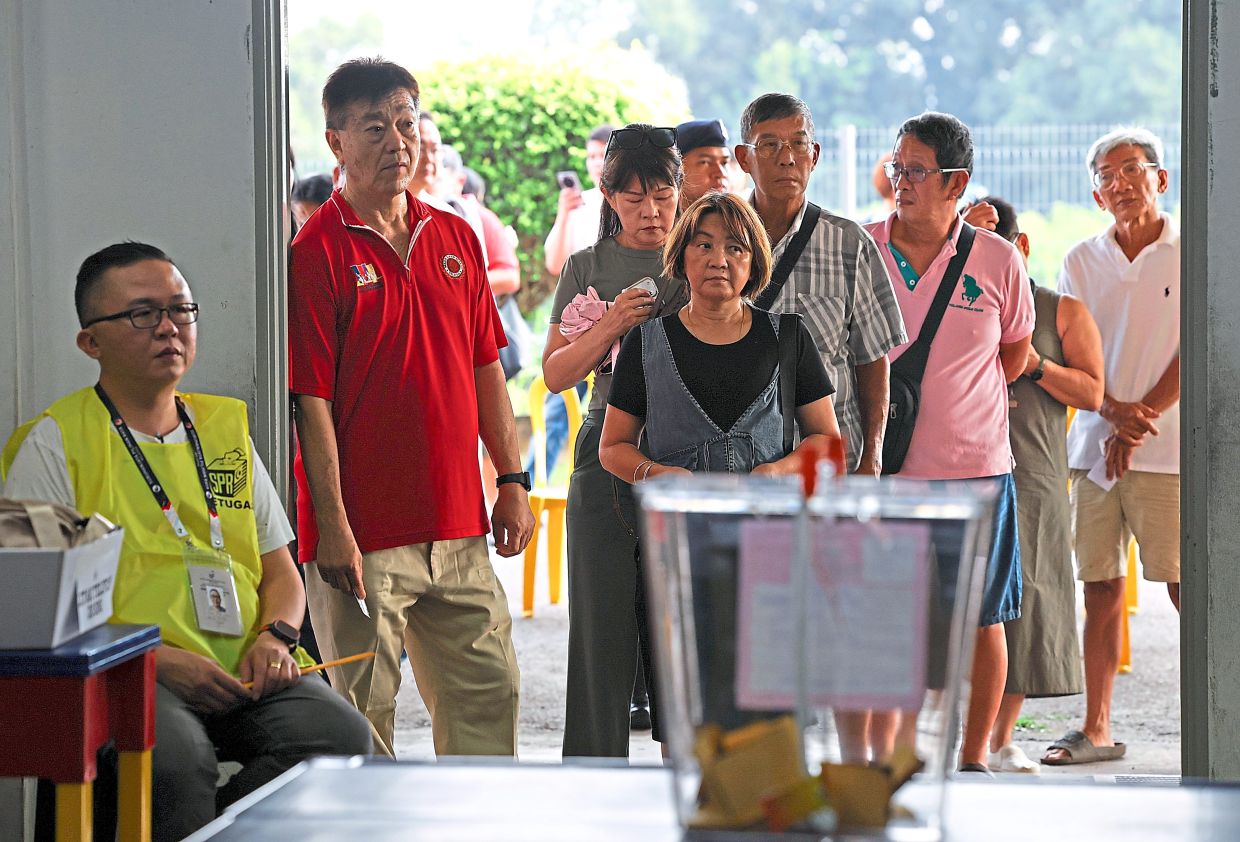
The Malaysian political system has entered a new era where traditional notions of allies and adversaries have become largely obsolete. The concept of the 'political frenemy'—a party that simultaneously functions as both partner and rival—now dominates our electoral landscape. This phenomenon occurs when political organisations enter strategic alliances driven purely by the mathematics of power rather than shared ideological conviction, creating an environment where Cabinet ministers criticise colleagues from partner parties on the campaign trail, only to sit beside them at the Cabinet table days later. This contradiction at the heart of contemporary Malaysian politics reflects a fundamental shift in how our parties approach governance and competition.
The most visible manifestation of this frenemy dynamic appears in the relationship between Barisan Nasional and Pakatan Harapan. At the federal level, these parties maintain the unity government, with their members occupying Cabinet positions jointly and observing the discipline required of governing coalitions. However, descend to state-level politics—particularly evident in recent contests in Johor and Negri Sembilan—and the pretence of partnership dissolves entirely. Ministers engaged in ceramah sessions have openly attacked their federal partners, treating them as opponents to be vanquished at the ballot box. This contradiction reveals how political necessity at the national level coexists uneasily with genuine electoral competition at the state level, creating a schizophrenic political culture that bewilders ordinary voters attempting to understand where parties actually stand.
The Umno-PAS relationship represents perhaps the most volatile manifestation of this frenemy phenomenon. These two parties historically competed fiercely for dominance within the Malay-Muslim electorate, with Umno anchoring the federal government while PAS controlled opposition strongholds in the north prior to 2018. Their relationship transformed dramatically following the Sheraton Move in 2020, which toppled the Pakatan government and forced Umno and PAS into an unexpected federal partnership under Tan Sri Muhyiddin Yassin and subsequently Datuk Seri Ismail Sabri Yaakob. This alliance, however, proved fundamentally unstable, fracturing over seat allocation disputes and competing ambitions well before the 15th General Election arrived in 2022. By that point, both parties had returned to open warfare on the campaign trail, only to find themselves repositioned as federal opponents rather than partners following the election results.
The post-GE15 configuration demonstrates how electoral outcomes can rapidly reorganise these frenemy relationships. Umno joined the unity government alongside Pakatan—the very party that had defeated it in 2018—while PAS, having achieved its best electoral performance with 71 seats, anchored the opposition through Perikatan Nasional. Yet despite this apparently clear federal division, the frenemy dynamic refuses containment. During the Johor state elections, PAS strategically instructed its supporters to vote for Barisan candidates in constituencies where PAS was not contesting, thereby blocking Pakatan's advance. Similar pragmatic calculations governed the Negri Sembilan contests, where seat-sharing agreements between Barisan and Perikatan aimed to prevent vote-splitting. Such manoeuvres highlight how parties maintain tactical flexibility despite their formal federal positioning, constantly recalibrating relationships based on immediate electoral circumstances.
This bewildering landscape generates profound confusion among the voting public, who struggle to comprehend how politicians can simultaneously wage political combat and share government responsibilities. The conventional understanding of political enemies suggests irreconcilable difference and principled opposition. Yet Malaysian reality presents a more complicated picture: politicians who engage in ferocious parliamentary exchanges or campaign-trail attacks frequently socialise cordially in Parliament's cafeteria, sharing tables and conversation during breaks. This disconnect between public antagonism and private collegiality fundamentally undermines public trust in political institutions and creates legitimate questions about whether politicians genuinely believe their own rhetoric or whether the entire enterprise constitutes sophisticated political theatre. The ambiguity serves certain political purposes for parties seeking to maintain multiple options, but it comes at the cost of meaningful democratic discourse.
Former minister Nik Nazmi Nik Ahmad, reflecting on this dynamic during a recent podcast appearance, identified a critical failure in how Pakatan approached its partnership with Umno. Rather than presenting their cooperation as a temporary, necessity-driven arrangement, Pakatan implicitly suggested the partnership might become permanent. This strategic miscommunication created unrealistic expectations and left voters unable to distinguish between tactical alliances and genuine ideological convergence. Had Pakatan explicitly framed the unity government as a one-term arrangement from its inception, the subsequent state-level electoral competitions would likely generate less public confusion and cynicism. Instead, the absence of clear boundaries has produced a tangled arrangement where Umno insists on testing its electoral strength independently in state contests to satisfy its grassroots supporters, all while knowing that once ballots are counted, its leaders must resume Cabinet positions alongside their defeated rivals.
The volatile nature of Umno-PAS relations further illustrates how electoral arithmetic rather than shared conviction governs these associations. While some observers romantically characterise the potential for a unified Malay-Muslim political bloc, such visions ignore the fundamental reality that these parties compete for the same voter base and cannot simultaneously expand their support. The stark arithmetic from GE15 makes this tension explicit: Perikatan's Bersatu-led formation secured 71 seats while Umno was reduced to merely 26. This dramatic reversal transformed the internal power dynamics within any future coalition involving both parties, rendering Umno more dependent on PAS while simultaneously creating resentment within Umno's grassroots. As Nik Nazmi observed, such relationships follow predictable patterns of opportunism: when one party feels vulnerable, cooperation emerges; when one party senses strength, the temptation to betray its partner becomes overwhelming.
Bersatu, meanwhile, exemplifies the existential vulnerability that characterises frenemy politics in its most acute form. Originally joining Pakatan in 2017 specifically to defeat Barisan, Bersatu now finds itself squeezed between an increasingly dominant PAS within Perikatan—where Bersatu has been relegated to secondary status—and the ruling Pakatan coalition. The party confronts what amounts to an identity crisis, having never been designed to operate independently and now struggling to justify its political relevance within Malaysia's crowded Malay political marketplace. This predicament has generated speculation that Bersatu might eventually return to the Pakatan fold, completing a cyclical journey that would reflect the fundamental instability of these frenemy arrangements. Alternatively, Bersatu could settle into the role of a spoiler party, fragmenting Malay votes and creating openings for other parties through vote-splitting rather than serving as a disciplined coalition member.
The fragmentation evident in these shifting relationships will likely intensify as Malaysia approaches the 16th General Election. The boundaries separating government and opposition, ally and opponent, will remain deliberately ambiguous, serving the interests of parties seeking to preserve multiple strategic options. State-level contests will continue showcasing electoral competition that contradicts federal-level partnerships, creating a two-tiered political system where the same parties wage genuine battles in some arenas while maintaining coalition discipline in others. Voters accustomed to clearer ideological or organisational distinctions between political forces must adjust expectations, accepting that Malaysian politics now operates according to principles of transactional interest rather than permanent alignment.
Navigating this era of political frenemies requires understanding one fundamental principle: Malaysia's political alignments reflect calculations of power, vulnerability, and immediate electoral advantage rather than enduring commitments or ideological coherence. The old adage that politics contains no permanent friends or enemies has never been more literally true. Parties will continue entering alliances when circumstances favour cooperation and abandon those partnerships when electoral conditions change. For voters seeking clarity about what political organisations genuinely believe or represent, such transparency increasingly appears elusive. Instead, the political map will continue shifting according to the arithmetic of coalitions, the vulnerability of individual parties, and the endless recalculation of mutual interest that defines the age of the political frenemy.

