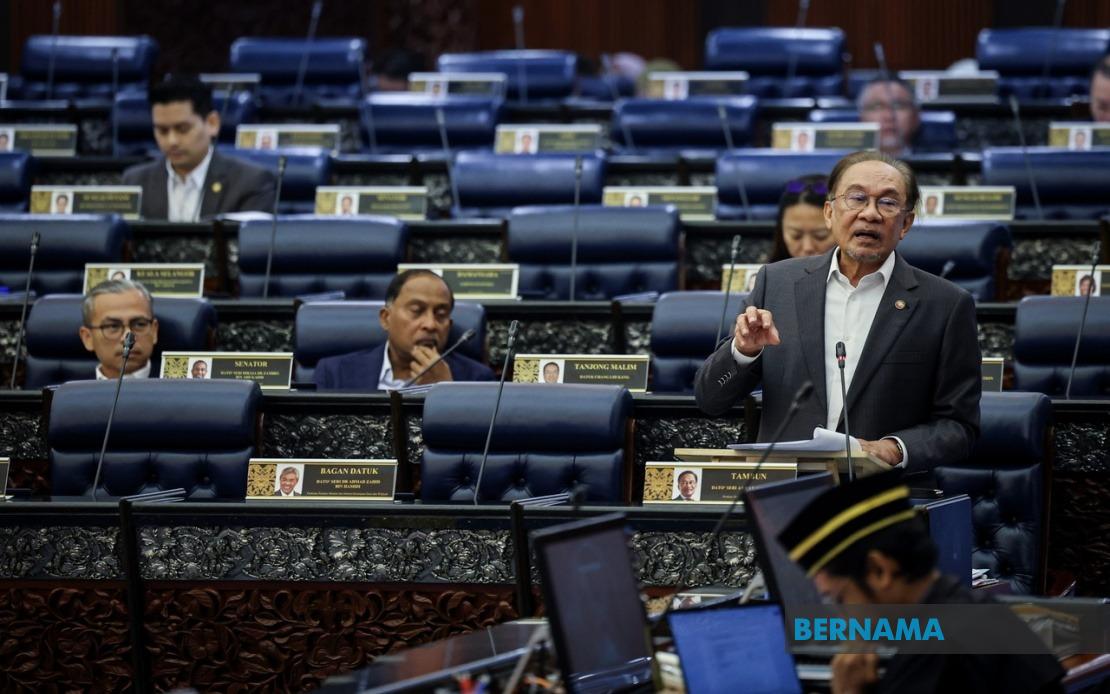
Prime Minister Datuk Seri Anwar Ibrahim has clarified that Malaysia's sliding position in this year's World Press Freedom Index reflects enforcement actions taken on sensitive content rather than any systematic effort to silence the media or stifle political discourse. Speaking during Question Time in Parliament on July 7, the Prime Minister acknowledged that Malaysia's ranking has fallen to 95th place in the 2026 index, down from 88th position the previous year, but stressed that the government's selective interventions target specific categories of content and operate within defined parameters.
The Prime Minister's explanation centred on Malaysia's commitment to protecting three distinct areas of societal concern—religion, race, and the royal institution, commonly referred to as the 3R framework. According to Anwar, regulatory actions against media outlets such as Sin Chew Daily and Sinar Harian were justified by the nature of their publication breaches rather than any desire to suppress legitimate journalism or political commentary. The Sin Chew Daily case involved an inaccurate illustration of the Jalur Gemilang national flag, whilst Sinar Harian faced action over the publication of the Inspector-General of Police's biography. Both cases, the Prime Minister acknowledged, have been interpreted by international media observers as violations of press freedom principles, yet he maintained that the government's response was proportionate and necessary.
Anwar emphasised that the international media community's perception of these enforcement actions has contributed meaningfully to Malaysia's declining position in global press freedom rankings. International assessments, he noted, do not always account for the unique cultural and institutional contexts in which individual nations operate. Whilst other democracies may take a more lenient approach to matters involving national symbols, Malaysia has traditionally maintained stricter standards regarding content that could undermine respect for the Jalur Gemilang or other state emblems. The Prime Minister stressed that the government views such matters with considerable seriousness and does not regard criticism of the enforcement approach as a valid counterargument to the necessity of protecting these national interests.
In defending the government's position, Anwar stressed that no punitive action has been taken against media organisations solely on the basis of factual inaccuracy or political criticism. The government's approach, he contended, distinguishes between legitimate journalism that may be critical of policy or political figures and content that transgresses established red lines. Instead of resorting to enforcement mechanisms for routine inaccuracies or political disagreement, the government has prioritised public clarification through official statements and parliamentary explanations. This more measured approach reflects a recognition that democratic societies require robust debate and that the media plays an essential watchdog function even when its coverage proves unfavourable to those in power.
The Prime Minister also highlighted recent legislative reforms designed to protect broader press freedom and reduce the scope for arbitrary enforcement. Amendments to Section 233 of the Communications and Multimedia Act 1998 have narrowed the definition of criminal offences to exclude satirical remarks directed at the Prime Minister or other political leaders. This reform represents a significant step toward depoliticising media regulation and ensuring that humour and satire—staple elements of free expression—are no longer treated as criminal conduct. Anwar presented this amendment as evidence of the government's genuine commitment to expanding the boundaries of permissible speech, even at the expense of allowing criticism that some officials might find uncomfortable.
The government's position is further complicated by factors beyond its direct control. Reporters Without Borders' assessment methodology incorporates multiple dimensions of the media environment, including political conditions, regulatory frameworks, economic circumstances, cultural factors, and security considerations. Malaysia's ranking reflects this multidimensional evaluation rather than any single enforcement action. Anwar acknowledged that the removal of online content by social media platforms based on user complaints, rather than government directives, also influences international rankings. These platform-level removals occur independently of government policy and represent private companies exercising content moderation rights according to their own standards and policies.
Anwar cited his own experience to illustrate the complexity of digital content governance in the modern era. Posts he had authored relating to Hamas were removed by social media platforms despite the government's disagreement with those removals. This example underscores a broader reality: that content moderation in the digital age operates through multiple channels, many of which lie beyond governmental jurisdiction. The Malaysian Communications and Multimedia Commission's requests for content removal are not automatically honoured by platform operators, who retain final authority over what appears on their services. This decentralised and privatised system of content control creates an environment where the government cannot be held solely responsible for deletions occurring across the digital ecosystem.
The Conference of Rulers, which represents Malaysia's constitutional monarchy, maintains active oversight of content that could constitute insults to the royal institution or inflammatory material regarding race and religion. This constitutional arrangement reflects Malaysia's historical evolution and the central role that the monarchy plays within the federal system. The government operates within parameters established through this institutional arrangement, meaning that enforcement actions in these areas represent compliance with positions agreed upon at the highest levels of state authority. Anwar's framing suggests that criticism of Malaysia's press freedom ranking from international observers overlooks this institutional context and imposes external standards that may not account for Malaysia's unique constitutional architecture.
The Prime Minister's parliamentary response also reflects a broader tension within Southeast Asia regarding the balance between press freedom and national stability. Malaysia, like several neighbouring jurisdictions, has experienced periodic communal tensions related to religious and racial issues. The 3R framework exists partly as a mechanism to prevent content that could reignite historical grievances or provoke violence. From this perspective, regulatory actions represent not censorship but conflict prevention—a public safety measure rather than political suppression. However, this justification often generates scepticism from international media freedom advocates, who worry that such frameworks can be manipulated to silence legitimate criticism under the guise of protecting sensitive categories.
For Malaysian readers and the broader Southeast Asian media community, Anwar's explanation raises important questions about how press freedom rankings should account for distinct national contexts and constitutional arrangements. The Prime Minister's argument essentially posits that international indices fail to capture the nuanced reality of Malaysian media governance, where selective enforcement coexists with broader protections for political speech and satirical expression. Whether this defence proves persuasive to international observers remains uncertain, but it reflects the government's conviction that its approach represents a defensible balance between competing values of press freedom and social stability within Malaysia's particular context.

