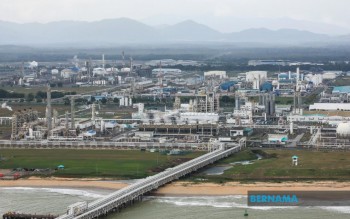
Malaysia's consideration of establishing a national petroleum reserve reflects growing recognition that energy security threats are no longer isolated incidents but structural features of the global supply landscape. Prime Minister Datuk Seri Anwar Ibrahim recently signalled the government's intention to examine the necessity and design of such a strategic stockpile, positioning it as a shield against geopolitical volatility and international supply disruptions that increasingly define energy markets.
The imperative behind this policy study is rooted in concrete shipping realities. The Strait of Hormuz, a chokepoint through which approximately one-fifth of the world's daily petroleum supply—roughly 20 million barrels—transits, has transformed from a periodic flashpoint into a chronic source of market instability. Rather than treating disruption threats as exceptional events, energy markets now price in a permanent risk premium reflecting the likelihood of repeated interference with traffic through this critical waterway. Stephen Innes, managing partner at SPI Asset Management, underscores that this shift represents a fundamental change in how geopolitical risk affects energy pricing, with consequences that ripple through supply chains, insurance mechanisms, and tanker availability across the region.
Recent military escalations compound these concerns. Iranian-backed Houthi forces in Yemen have demonstrated operational capability to threaten vessels navigating the Red Sea's southern entrance, with documented attacks on Saudi oil tankers following American military strikes on Iranian positions. This expansion of potential disruption beyond the Persian Gulf to multiple chokepoints simultaneously creates a more complex threat environment. Innes observes that the prospect of concurrent supply interruptions across both the Gulf and Red Sea routes poses unprecedented challenges for Southeast Asian economies dependent on stable crude and refined product imports.
Malaysia's particular vulnerability is quantifiable. Despite producing approximately 570,000 barrels daily, the country remains a net importer of refined fuels, with nearly 70 per cent of crude purchases sourced from suppliers intimately connected to Strait of Hormuz shipping corridors. This structural dependence means that supply disruptions directly affecting global availability would rapidly manifest as domestic energy cost pressures and potential supply shortages. The vulnerability extends beyond crude oil to liquefied natural gas and refined petroleum products, each flowing through exposed maritime routes.
The strategic petroleum reserve concept, however, represents only one component of a comprehensive resilience framework. Analysts emphasise that emergency stockpiles function as temporary buffers—what Innes describes as "emergency insurance"—enabling policymakers to navigate short-term crises without resorting to damaging emergency measures. They cannot substitute for diversified supply relationships, improved storage infrastructure, or clear governance structures determining reserve deployment and replenishment cycles. Instead, an effective reserve strategy must integrate with parallel initiatives addressing supply chain resilience from multiple angles simultaneously.
Diversification emerges as the critical counterweight to reliance on any single shipping route or supplier base. Innes advocates that Malaysian policymakers expand crude oil sourcing geographically, develop relationships with alternative liquefied natural gas exporters, and invest in enhanced storage capacity beyond existing commercial infrastructure. He further recommends reassessing blanket fuel subsidies in favour of targeted assistance protecting vulnerable households and essential industries, a shift that gains importance if elevated oil prices persist as a structural feature rather than temporary anomaly.
Regional coordination amplifies individual national efforts. Innes highlights the potential for ASEAN member states to align strategic inventory levels, establish mechanisms for sharing information on shipping disruptions, and pre-negotiate emergency supply arrangements that activate when crises emerge. Such coordination strengthens collective resilience without requiring each nation to bear duplicative costs, while creating diplomatic channels that may help defuse tensions before they escalate to supply disruption.
Domestic energy production capabilities offer another lever. Malaysia's gas sector holds particular significance, with industry forecasts suggesting dry gas output will reach 82.3 billion cubic metres in 2026, bolstering the domestic supply foundation while supporting the broader energy transition. Tariro Chiweza, BMI's oil and gas analyst, notes that expanding commercial gas production alongside renewable energy development, battery storage deployment, and cross-border electricity interconnections creates overlapping resilience mechanisms. Each component strengthens system functionality when others face disruption, whether from geopolitical events, equipment failures, or demand shocks.
Existing Malaysian initiatives—including the Solar@PETRA programme, the Corporate Renewable Energy Supply Scheme targeting commercial users, biodiesel fuel standards, and electric public transport expansion—already advance resilience objectives even if designed primarily as environmental or efficiency measures. These investments merit continuation and acceleration precisely because they reduce energy system vulnerability to import shocks while supporting decarbonisation goals. The alignment between resilience imperatives and climate transition objectives creates a compelling case for accelerated deployment.
Current energy market dynamics provide additional context. Brent crude recently traded near US$96.86 per barrel while West Texas Intermediate hovered around US$88.76, with prices responsive to every rumour of supply disruption or geopolitical escalation. This sensitivity suggests that markets perceive genuine scarcity risk rather than temporary fluctuation, validating analyst assessments that structural factors now dominate pricing rather than cyclical swings.
Chieweza emphasises that commercial petroleum inventories, while essential for operational continuity, prove inadequate when confronted with prolonged external disruptions affecting multiple suppliers or routes simultaneously. A strategically designed national reserve fills this gap, complementing rather than replacing private sector stock management. Effective implementation requires careful specification of when reserves enter circulation, how rapidly they deplete under stress scenarios, and mechanisms for timely replenishment that prevent the reserve from becoming permanently depleted.
The broader strategic context matters as well. Malaysia's consideration of a petroleum reserve reflects a region-wide recognition that energy security demands proactive policy responses. The confluence of geopolitical volatility, shipping route concentration, and dependence on distant suppliers creates an operating environment where resilience preparation offers superior returns to reactive crisis management. For Malaysian policymakers, this calculus suggests that comprehensive energy strategy—encompassing reserves, diversification, domestic production, storage infrastructure, and regional coordination—justifies both the upfront investment and the ongoing governance structures required for implementation and maintenance.

