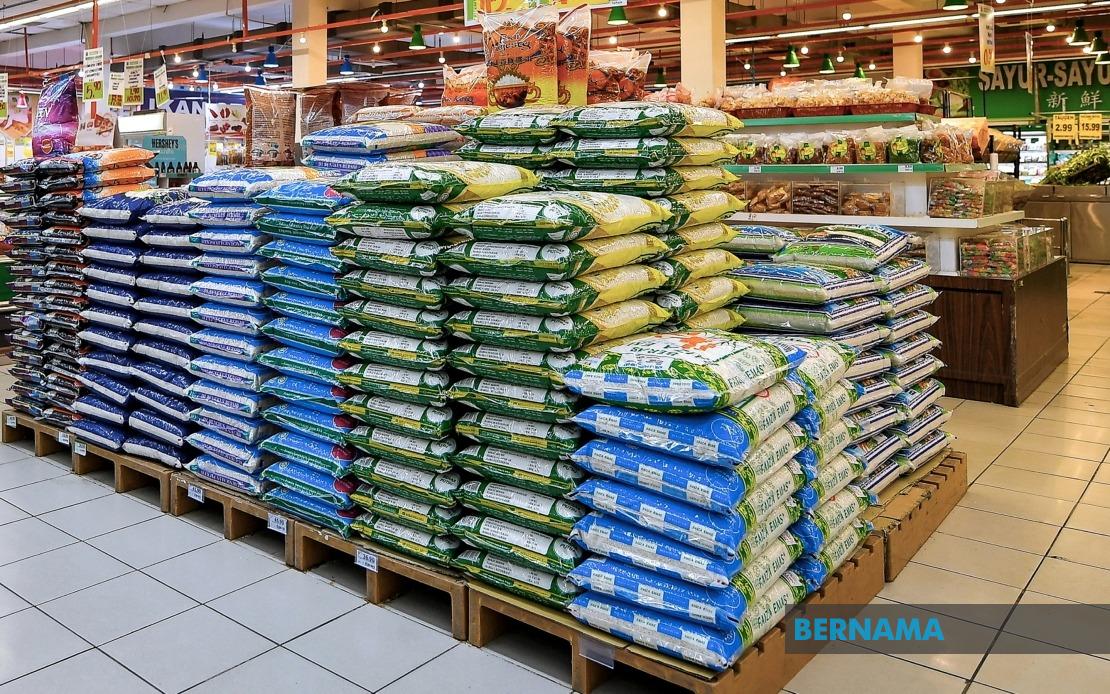
Malaysia's staple food security remains intact, with government assurances that the nation's rice reserves can sustain the population for half a year. Economy Minister Akmal Nasrullah Mohd Nasir delivered the reassuring statement during a media briefing in Kuala Lumpur on July 13, citing the country's preparedness against persistent global supply chain disruptions that have triggered food inflation worldwide. The minister's confirmation comes as nations across the Asia-Pacific region grapple with tightening commodity markets and volatile agricultural production.
The government's commitment extends beyond inventory management to direct price protection for consumers. Local White Rice, the benchmark staple for Malaysian households, will maintain its current retail cost with no increases anticipated in the foreseeable future. This price freeze represents a deliberate policy intervention designed to shield lower-income households from the inflationary pressures affecting developing economies. The measure reflects policymakers' understanding that sudden rice price jumps can destabilise household budgets and trigger broader inflationary expectations throughout the economy.
These policy positions emerged from discussions at the National Economic Action Council meeting, chaired by Prime Minister Datuk Seri Anwar Ibrahim at the Parliament building. The council's deliberations centred on navigating international uncertainties whilst maintaining domestic price stability and supply continuity. The administration's approach emphasises shielding ordinary Malaysians from external shocks rather than allowing market forces to determine essential food costs. This protective stance reflects lessons learned from previous regional food crises that disproportionately affected vulnerable populations.
Parallel to consumer protections, the government has implemented direct support for agricultural producers facing their own pressures. The Paddy Farmers Plowing Incentive programme distributed RM45.98 million across 118,908 rice farmers in Peninsular Malaysia. This financial assistance acknowledges the mounting operational challenges confronting smallholder and medium-scale producers, who form the backbone of domestic rice cultivation. Rising input costs, including fertilisers, fuel, and labour, have compressed farm profitability at a time when climate variability increasingly threatens yields.
Climate-related pressures constitute an underappreciated dimension of Malaysia's agricultural economics. Erratic rainfall patterns, unexpected dry spells, and flooding during monsoon seasons have made paddy farming more volatile and expensive. Farmers must invest in irrigation infrastructure, improved seed varieties, and pest management techniques simply to maintain historical productivity levels. Without targeted government support, many smallholders would struggle to remain economically viable, potentially reducing domestic production and increasing import dependence.
Malaysia's rice self-sufficiency position carries strategic importance within the Southeast Asian context. The region depends heavily on major exporters like Thailand and Vietnam, making individual countries vulnerable to export restrictions or supply disruptions in those nations. Malaysia's maintained domestic production, supported by farmer incentives and stable pricing frameworks, reduces regional vulnerability. A collapse in local production would increase pressure on regional supply markets and expose Malaysian consumers to foreign price fluctuations beyond government control.
The six-month buffer stock figure deserves contextualisation. This represents a substantial strategic reserve that provides breathing room during supply interruptions or production shortfalls. However, maintaining such stocks involves storage costs, quality management, and the need for systematic stock rotation to prevent spoilage. The government's willingness to maintain this inventory level demonstrates commitment to food security as a non-negotiable priority rather than a cost-saving exercise. Many countries maintain smaller reserves that would prove inadequate during extended global disruptions.
The government's dual approach—combining inventory management, price controls, and farmer support—reflects integrated thinking about food security. Price freezes alone, without securing supply or supporting producers, would eventually lead to shortages as farmers reduce output in response to unprofitable conditions. Conversely, supporting farmers without protecting consumer prices could simply transfer inflation from rural to urban populations. The comprehensive strategy attempts to balance producer viability with consumer affordability whilst maintaining domestic supply capacity.
International food inflation remains elevated by historical standards, with global rice prices fluctuating significantly in response to monsoon forecasts, geopolitical tensions affecting fertiliser supplies, and competing demand from biofuel producers. Malaysia's insulation from these pressures, achieved through policy interventions, provides economic stability that benefits beyond agricultural sectors. Predictable food costs allow businesses and households to plan investments and consumption with greater confidence. This certainty compounds into broader economic benefits through improved business planning and consumer confidence.
Looking ahead, Malaysia faces longer-term agricultural challenges requiring sustained attention. Climate change projections suggest increased variability in rainfall and temperature patterns, potentially threatening yields even with technological improvements. Water availability for irrigation may become constrained in certain regions. Labour shortages in rural areas continue as younger generations migrate to urban employment. These structural challenges suggest that maintaining food security will require ongoing investment in agricultural modernisation, water management infrastructure, and rural economic development alongside commodity price management and stock maintenance.

