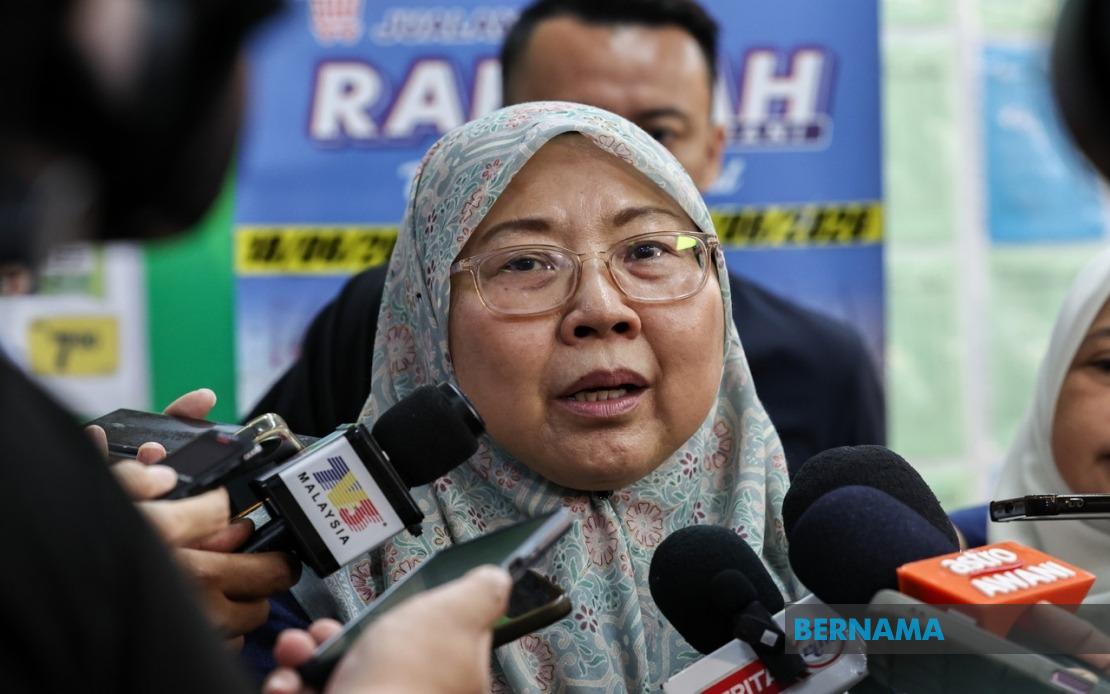
The Ministry of Domestic Trade and Cost of Living (KPDN) has given formal assurance that essential commodity stocks remain adequate throughout Johor and Negeri Sembilan as the two states prepare for their upcoming elections, notwithstanding mounting international shipping expenses stemming from regional tensions in West Asia. Deputy Minister Datuk Dr Fuziah Salleh outlined the ministry's confidence in supply continuity while acknowledging that global economic headwinds pose ongoing challenges to Malaysian logistics networks.
The ministry has implemented a series of anticipatory operational measures specifically designed to strengthen the resilience of local supply chains against potential disruptions. Officials anticipate a significant uptick in demand across the polling period, driven by the influx of election officials, visiting dignitaries, and out-of-state workers who typically travel to participate in state electoral processes. Rather than waiting for bottlenecks to emerge, KPDN has moved proactively to fortify distribution networks and ensure steady availability of price-controlled staples at the consumer level.
A cornerstone of this preparedness initiative involves restructuring how subsidised cooking oil reaches Malaysian shoppers. The ministry has engineered a direct supply pathway that connects repackers—the manufacturers responsible for portioning bulk cooking oil into consumer-friendly containers—directly to retail points of sale, effectively bypassing the traditional wholesaler intermediary. This streamlined model reduces handling points, cuts transportation time, and minimises opportunities for inventory to accumulate outside the formal control system, thereby accelerating product turnover and freshness.
Johor's allocation of subsidised cooking oil continues at its established monthly quota exceeding 3,000 metric tonnes, distributed through a network comprising 18 licensed repackers who supply 95 designated points of sale across the state. This network encompasses major supermarket chains including Econsave outlets strategically positioned to serve urban and suburban populations. The Deputy Minister's on-site inspection at Econsave Taman Daya revealed approximately 100 cartons of subsidised cooking oil stocked daily, demonstrating that current distribution architecture is meeting anticipated consumer demand without apparent strain.
To safeguard these government-subsidised provisions and prevent them from leaking into black markets or being acquired by non-eligible purchasers, KPDN has deployed verification protocols at retail checkouts. Point-of-sale staff now require customers to either scan a mobile application or present their MyKad national identity card before purchasing subsidised items, creating an audit trail that limits each household's entitlements and ensures only Malaysian citizens benefit from these price controls. Such gatekeeping mechanisms reflect growing sophistication in welfare programme administration, though they also impose minor inconvenience on shoppers during peak purchasing periods.
The broader Rahmah MADANI Sales Programme (PJRM)—a government-backed initiative designed to provide discounted essential goods and services directly to low and middle-income households—has achieved substantial reach across Malaysia's consumer base. Between January 1 and June 13, 2026, the programme organised 13,692 temporary retail events nationwide, with Johor alone hosting 920 such sessions that penetrated all 56 state constituencies. These activations attracted approximately 2.3 million visitors across Johor and facilitated over 1.46 million individual transactions, suggesting robust public engagement with subsidised purchasing opportunities and indicating that government price-support mechanisms retain meaningful real-world impact on household budgets.
The scale of PJRM's operational footprint underscores the government's commitment to cost-of-living relief at a moment when ordinary Malaysians face persistent inflationary pressures from food, energy, and transportation sectors. By organising temporary market events, the government circumvents traditional retail margins and connects consumers directly with suppliers willing to accept tighter profit spreads in exchange for volume and political goodwill. For Malaysian shoppers, this represents tangible opportunity to stock staples at below-market rates, while for the government, it represents evidence of programmatic effectiveness deserving of public credit during an election cycle.
The timing of KPDN's assurances carries particular significance given Johor's electoral calendar. The state's polling day is scheduled for July 11, following an early voting period on July 7 and candidate nominations on June 27. This compressed timeline concentrates government activity and public attention, creating a natural focal point where the visibility of supply adequacy becomes both a practical necessity and a political statement. By publicly confirming stock levels and unveiling distribution innovations, KPDN shapes the pre-election narrative around government competence and responsiveness to consumer welfare.
Negeri Sembilan's inclusion in these supply assurances, though less elaborated in official briefings, reflects the ministry's consciousness that both states merit equal operational preparedness. While Johor dominates the public discussion owing to its larger population and economic significance, Negeri Sembilan's smaller but strategically important market requires parallel attention to ensure equitable access to subsidised goods across Malaysia's peninsular landscape. The ministry's unified approach suggests that supply chain management during state elections has matured into a routine, rehearsed governmental function rather than an ad-hoc crisis response.
These preparations must be contextualised against the backdrop of global supply-chain volatility. Ongoing military operations and geopolitical tensions affecting shipping lanes through West Asia have elevated international freight costs, squeezing margins for importers and potentially translating into higher consumer prices for non-subsidised goods. By guaranteeing supplies of essential, price-controlled items, the government aims to provide a stabilising counterweight, ensuring that even households most vulnerable to inflation retain access to cooking oil and other daily necessities at prescribed, affordable rates. This strategic use of subsidies reflects a deliberate policy choice to shield core consumer baskets from global commodity volatility while maintaining fiscal discipline elsewhere.
Looking beyond the immediate election cycle, the innovations introduced by KPDN—particularly the direct repackager-to-retailer supply model and enhanced verification systems—may become permanent features of Malaysia's price-control infrastructure. These modifications suggest that the government is not simply firefighting periodic supply crises but rather investing in institutional capability that could endure and improve future programme delivery. For regional observers, Malaysia's approach offers a case study in how developing economies can balance market-oriented retail systems with strategic government interventions designed to protect lower-income consumers from commodity price shocks.

