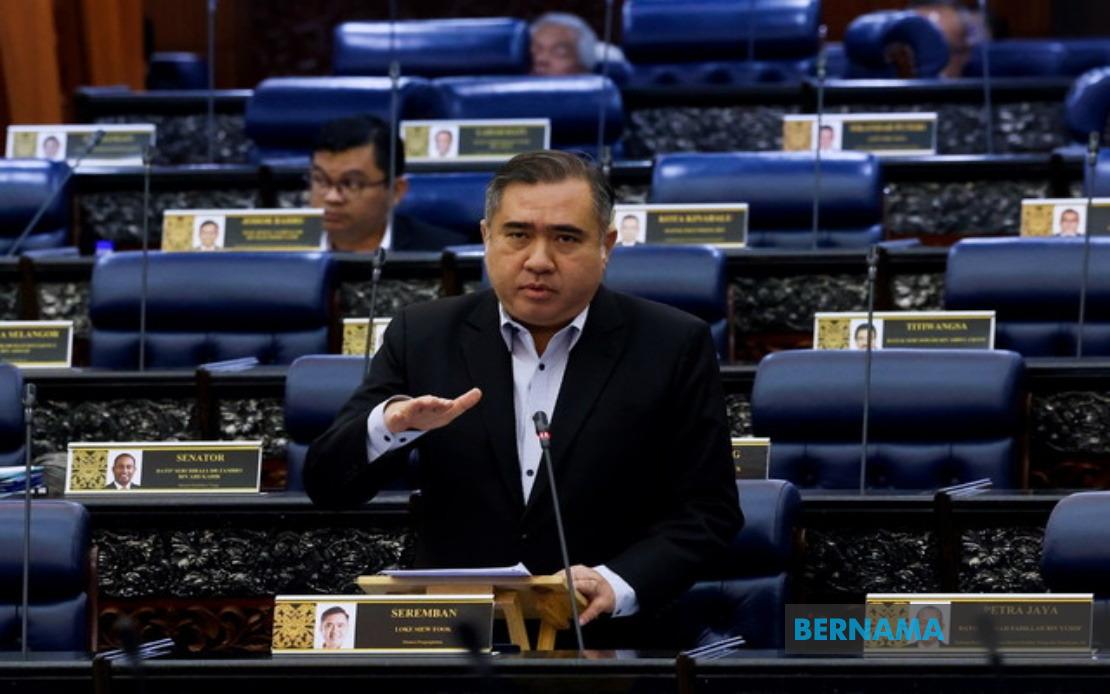
The Malaysian government is moving to overhaul its approach to road safety by introducing a legal mechanism that would require courts to order dangerous drivers to compensate victims of fatal and serious accidents, Transport Minister Anthony Loke announced in parliament this week. Under the proposed amendments to the Road Transport Act 1987, judges would gain the authority to impose compensation orders on individuals convicted of serious traffic offences, with the amount determined by the severity of injuries or fatalities, the financial losses incurred, and the offender's ability to pay. This shift represents a fundamental change in how Malaysia's legal system treats catastrophic road incidents, moving beyond purely punitive measures to ensure victims' families receive tangible financial support.
The compensation framework addresses a long-standing gap in Malaysia's traffic justice system, where criminal penalties for reckless driving have often been disconnected from victim restitution. Loke framed the initiative as part of a broader commitment to treat drivers who kill through dangerous driving and illegal street racing as serious offenders rather than ordinary traffic violators. The government's position reflects growing public concern over high-profile racing incidents, particularly the June 1 collision on Jalan Renggam-Simpang Renggam in Johor that killed five people and prompted the Attorney-General's Chambers to invoke Section 302 of the Penal Code, which addresses culpable homicide.
Parallel to the compensation scheme, the government has already secured parliamentary passage of the Road Transport (Amendment) Bill 2026, which introduces a new Section 42A specifically targeting illegal racing as a distinct criminal offence. This legislative change marks a pivotal moment in Malaysian road enforcement policy, as it enables authorities to prosecute individuals engaged in street racing before an accident occurs, rather than waiting for a tragedy to unfold. Previously, the system could only act once an incident had happened, allowing dangerous racing activities to persist unchecked in various jurisdictions throughout the country.
The penalties for illegal racing under the new framework carry substantial consequences designed to deter participation. A first offence results in fines ranging from RM2,000 to RM10,000 or imprisonment up to two years, while repeat offences carry substantially harsher penalties of RM5,000 to RM20,000 in fines or up to five years imprisonment. These escalating consequences reflect the government's assessment that illegal street racing has evolved into a serious social problem warranting criminal-level responses rather than simple traffic citations.
The legislative changes align with intensified enforcement operations that have already begun yielding results across Malaysian territories. A recent operation in Johor demonstrated the scope of the illegal racing problem, with authorities apprehending 16 individuals and confiscating 260 motorcycles involved in illicit racing activities. These figures underscore the prevalence of street racing culture among certain demographics, suggesting that enforcement efforts require sustained commitment and resource allocation across multiple states to achieve measurable impact on road safety.
Malaysia's annual road fatality statistics provide sobering context for the government's legislative push. With more than 6,000 deaths occurring on Malaysian roads every year, the transport sector faces a public health crisis of significant proportions. These casualties disproportionately affect families and communities already struggling economically, making the compensation mechanism particularly relevant for lower-income households unlikely to pursue civil litigation independently. The dual approach of criminal deterrence through enhanced penalties and financial support through compensation orders represents an attempt to address both prevention and remediation simultaneously.
Implementing these reforms will require careful coordination across multiple government agencies beyond the Transport Ministry. Loke acknowledged that road safety constitutes a national agenda necessitating cooperation from other ministries, traditional community leaders, and broader public participation. The courts will need training on applying new compensation provisions consistently, law enforcement agencies must expand capacity to identify and prosecute illegal racing, and public awareness campaigns must shift cultural attitudes toward street racing among youth demographics who view such activities as entertainment rather than deadly risk-taking.
The minister explicitly cautioned against politicising road safety, emphasising that effective reform demands societal transformation extending beyond enforcement statistics and legislative measures. Behavioural change and public education represent equally critical components of any comprehensive strategy, since legal penalties alone cannot eliminate the underlying motivations driving participation in illegal racing. The government appears to recognise that addressing Malaysia's road safety crisis requires sustained investment in community engagement, educational programmes targeting young drivers, and cultural shifts that reframe reckless driving as socially unacceptable rather than thrilling.
For Malaysian families who have lost members to road accidents, particularly those caused by reckless drivers, the compensation mechanism offers potential financial recovery that previously existed only through expensive civil lawsuits or insurance claims. The court-ordered approach streamlines this process by making judges responsible for assessing appropriate compensation levels without requiring bereaved families to engage private solicitors. This democratisation of victim compensation could significantly improve outcomes for working-class families while simultaneously imposing financial consequences on offenders beyond imprisonment.
The legislative package also responds to pressure from civil society organisations and concerned citizens who have campaigned for stricter road safety measures. High-profile incidents involving street racing deaths have generated media attention and public outcry, creating political space for the government to advance previously stalled reforms. The timing of the amendment bill's passage suggests that parliamentary consensus exists around the need for stronger deterrents against illegal racing, even as implementation challenges and enforcement capacity constraints remain substantial.
Regional observers note that Malaysia's approach potentially influences road safety policy discussions across Southeast Asia, where illegal racing problems persist in urban centres throughout Thailand, Indonesia, and the Philippines. The integration of compensation mechanisms with enhanced criminal penalties provides a model that other governments might adapt to their own legal frameworks and enforcement contexts. However, success will ultimately depend on consistent implementation, adequate funding for enforcement operations, and sustained public support for what represents a significant departure from Malaysia's traditionally lenient approach to traffic offences.
Looking forward, the government faces the challenge of translating legislative intentions into measurable improvements in road safety outcomes. This requires not only passing laws but ensuring courts consistently apply compensation provisions, enforcement agencies remain committed to identifying illegal racing activities, and media coverage continues highlighting the human costs of reckless driving. The initial focus on Johor and other hotspots for street racing will need to expand nationwide if the government hopes to achieve its implicit goal of reducing the 6,000-plus annual road deaths through comprehensive legal and cultural transformation of Malaysia's driving culture.

