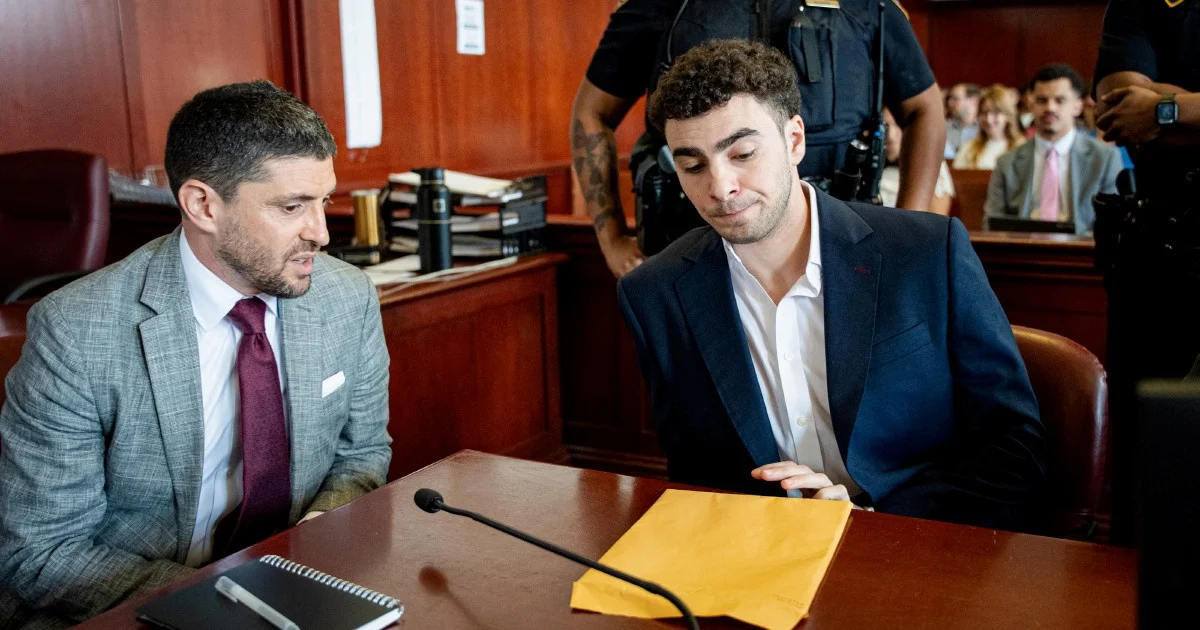
Luigi Mangione, the man facing charges in connection with the fatal shooting of a health insurance executive on a Manhattan street, has decided to postpone introducing evidence related to a severe mental health crisis during the time of the alleged incident. The decision came through a court filing submitted on Friday, signalling a tactical shift in his defence strategy as the case progresses through the judicial system.
The withdrawal of plans to present mental health evidence represents a significant development in the high-profile case that has drawn considerable media attention across North America. Rather than pursuing this line of defence immediately, Mangione's legal team has opted for a more measured approach, suggesting the case may evolve in unexpected directions as proceedings advance. This decision does not necessarily preclude the reintroduction of such evidence at a later stage, indicating the defence remains open to revising its approach should circumstances warrant.
For Malaysian and Southeast Asian observers, the case illustrates how American capital gains insurance practices have become increasingly controversial, particularly when executives in these sectors face public scrutiny. The targeting of a health insurance leader reflects broader tensions in the United States surrounding corporate accountability and healthcare access—issues that resonate with citizens across the region who grapple with similar healthcare affordability challenges. The alleged perpetrator's actions, whether motivated by ideological opposition or personal grievance, have sparked widespread debate about systemic healthcare inequities.
Mangione's legal strategy shift raises questions about his defence priorities going forward. By deferring mental health evidence, his attorneys may be calculating that alternative approaches—such as challenging the prosecution's case on evidentiary grounds or establishing reasonable doubt regarding identity or circumstances—could prove more persuasive to a jury. The timing of such strategic decisions often depends on evolving discovery materials, expert witness availability, and assessments of how judges and jurors in New York typically respond to various types of evidence.
The constitutional right to present a mental health defence has deep roots in American jurisprudence, though courts have increasingly scrutinized how such evidence is presented and what standards must be met. By voluntarily withdrawing rather than being forced to do so, Mangione's team maintains flexibility and potential credibility with the court. This approach avoids the appearance of a desperate defence scrambling to excuse conduct, instead presenting as a calculated legal manoeuvre by counsel managing the case strategically.
The case has drawn parallels globally to discussions about workplace violence, corporate accountability, and the psychological toll of systemic inequality. In Southeast Asia, where public healthcare systems face their own pressures and corporate criticism, the case serves as a cautionary tale about how social tensions can occasionally erupt into violence. Malaysian legal professionals and policymakers have noted how the case demonstrates the importance of robust mental health services, even for individuals who may harbour grievances against institutions.
Mental health defences in American criminal trials typically attempt to establish that the defendant was experiencing a psychotic break, severe depression, or other conditions that impaired their ability to form the requisite criminal intent. The challenge for prosecutors is demonstrating that regardless of mental state, the defendant understood their actions and acted with culpability. By temporarily stepping back from this line of argument, Mangione's defence may believe that other factual disputes offer more fertile ground.
Court filings in high-profile cases often signal broader litigation strategy, and legal observers have noted that withdrawals of particular defence claims sometimes precede guilty pleas or plea negotiations. However, the temporary nature of this withdrawal—indicated by the word "for now" in official documents—suggests active deliberation rather than capitulation. Mangione's legal team continues exploring various avenues, and the case remains in its preliminary phases despite intense public interest.
The implications of this case extend beyond the immediate criminal proceedings. In jurisdictions worldwide, including Malaysia, law enforcement and legal systems grapple with how to balance public safety concerns, individual rights, and mental health considerations. The case underscores how even individuals with documented mental health challenges must navigate a complex legal system where strategic decisions about defence presentations can significantly influence outcomes.
As the case progresses, observers will be watching whether the defence reintroduces mental health evidence as trial approaches or whether it pursues alternative strategies entirely. The Friday court filing represents not a final position but rather a snapshot of tactical thinking at a particular moment. Given the stakes involved and the resources likely devoted to Mangione's defence, multiple scenarios remain plausible. The withdrawal of mental health evidence may ultimately prove temporary, or it may signal a fundamental recalibration of how his legal team intends to contest the charges he faces.

