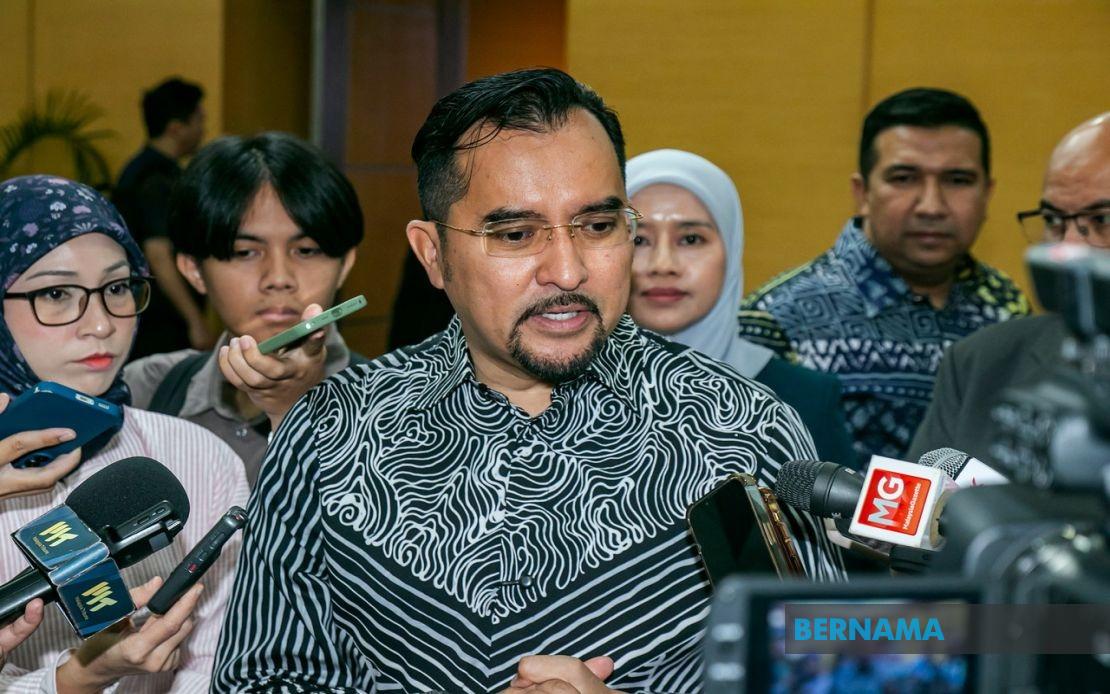
The Malaysian government is moving swiftly toward a significant institutional overhaul as the proposed Majlis Amanah Rakyat (MARA) Bill 2026 enters its concluding stages before anticipated parliamentary submission this November. The comprehensive legislative reform represents a watershed moment for an organisation that has served as a cornerstone of Bumiputera economic empowerment for decades, signalling a deliberate pivot toward contemporary governance standards that reflect international best practices and corporate accountability mechanisms.
Datuk Asyraf Wajdi Dusuki, MARA's chairman, has emphasised that the Bill's architecture rests heavily on institutional strengthening rather than individual leadership consolidation. According to Asyraf Wajdi, approximately eighty percent of the Bill's substantive provisions centre on embedding robust governance protocols modelled on recognised international frameworks. This deliberate weighting reveals the government's assessment that MARA, like many state-linked entities in Southeast Asia, requires structural reforms to insulate itself against governance lapses and financial impropriety that have periodically attracted public scrutiny.
A critical dimension of the proposed legislation involves a substantial curtailment of the chairman's executive authority, fundamentally restructuring the power distribution within the organisation's upper echelons. Under the modernised framework, the chairman's role would be recalibrated to focus on board leadership and strategic policy direction, explicitly excluding involvement in day-to-day administrative operations. This delineation between governance and management reflects lessons drawn from corporate governance failures elsewhere in the region, where concentrated chairmanship powers have occasionally enabled discretionary decision-making detached from institutional checks and balances. The shift mirrors similar reforms undertaken by comparable development agencies across Southeast Asia seeking to strengthen institutional credibility.
Ashraf Wajdi's articulation of his stewardship philosophy reveals the reform impulse driving the Bill's architecture. Rather than framing the changes as personal constraints, he positioned them as legacy-building endeavours transcending individual tenure, emphasising the paramount importance of leaving behind an institution characterised by structural resilience and incorruptibility. This framwork acknowledges that institutional robustness depends fundamentally on systemic safeguards rather than reliance on individual integrity, a recognition increasingly prevalent among Malaysia's governance reformers and institutional leaders confronting public expectations for transparency and accountability.
The Bill explicitly targets the accumulated governance vulnerabilities that prompted its initiation. Asyraf Wajdi identified abuse of power, governance deficiencies, misappropriation of funds, procedural irregularities, and resource leakages as the core pathologies the legislation aims to eliminate. These concerns, articulated on August 12, reflect the Cabinet's assessment that MARA's foundational legislation—the MARA Act 1966—has become progressively misaligned with evolving institutional demands and contemporary corporate governance expectations. The sixty-year vintage of the existing framework underscores how legislative stagnation can gradually erode an institution's capacity to operate according to modern standards.
The temporal dimension of the reform effort is particularly noteworthy. Asyraf Wajdi acknowledged that governance requirements and institutional best practices continuously evolve, rendering legislation drafted for one era inadequate for subsequent ones. His observation that governance approaches effective in the 1960s differ markedly from current requirements, and will necessarily differ further within the next two decades, reflects a sophisticated understanding of institutional dynamism. This perspective suggests MARA's leadership views the 2026 Bill not as a permanent solution but as a contemporary calibration of governance structures requiring periodic reassessment and refinement.
The Cabinet's policy approval, announced earlier in August, represents crucial institutional endorsement positioning the Bill for legislative advancement. This approval signals executive branch alignment on the necessity for comprehensive governance reform, facilitating the parliamentary tabling process scheduled for November. For Malaysian policymakers and MARA stakeholders, Cabinet endorsement substantially improves the likelihood of parliamentary passage, though the actual legislative deliberation may generate policy discussions regarding the precise calibration of oversight mechanisms and institutional autonomy.
For the broader Malaysian institutional landscape, the MARA Bill 2026 exemplifies a discernible governmental orientation toward governance professionalisation across state-linked entities. The emphasis on structural constraints limiting individual executive authority, internationally benchmarked practices, and systematic prevention of financial impropriety reflects lessons absorbed from regional governance challenges and domestic institutional assessments. Similar reform initiatives affecting other statutory bodies suggest a coordinated effort to elevate governance standards across Malaysia's institutional ecosystem.
The implications for MARA's operational efficacy merit careful consideration. Strengthened governance structures, while essential for institutional credibility and public confidence, require corresponding investment in professional management capabilities and institutional capacity. The Bill's success will ultimately depend on whether the structural reforms facilitate more effective institutional performance or inadvertently create bureaucratic impediments to responsive decision-making. Malaysian observers and MARA beneficiaries will scrutinise whether governance enhancement translates into improved service delivery to Bumiputera communities.
Southeast Asia has witnessed increasing governmental attention to institution building and governance professionalisation as regional economies mature and public expectations regarding transparency escalate. Malaysia's MARA reforms align with this broader regional trajectory while addressing specific institutional vulnerabilities. The November parliamentary tabling will represent a pivotal moment determining whether this significant governance modernisation proceeds with legislative approval, potentially establishing a model for similar reforms affecting other development-oriented agencies throughout the region and demonstrating Malaysia's commitment to institutional accountability within its Bumiputera economic architecture.

