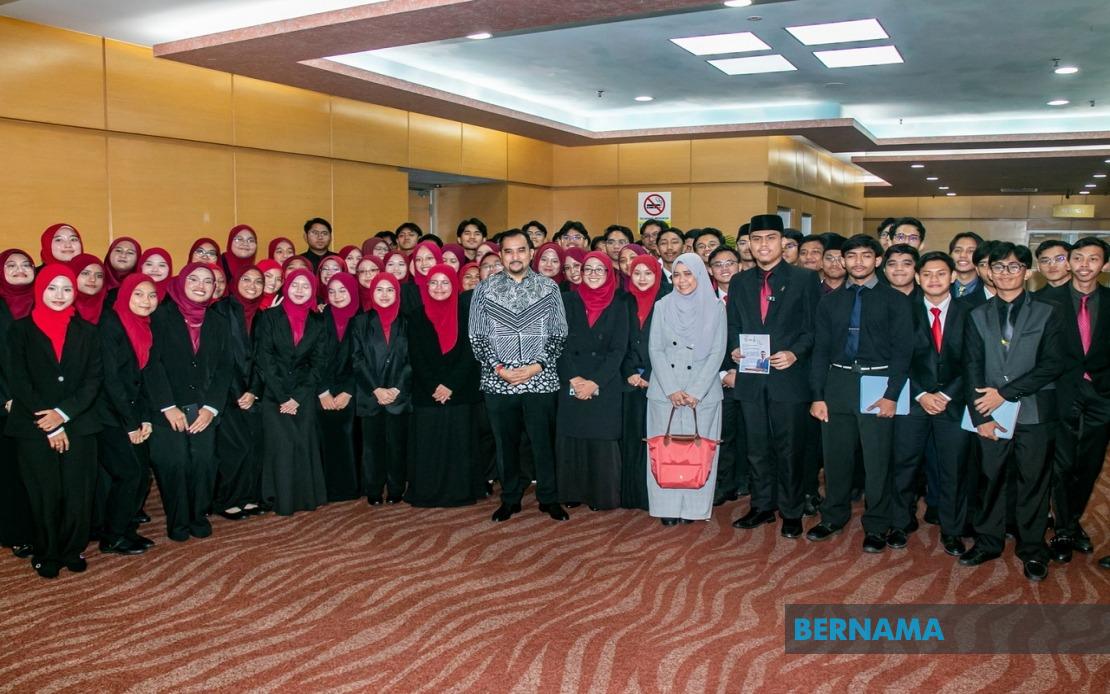
The Majlis Amanah Rakyat (MARA) has reactivated its medical training initiative at Al-Azhar University in Egypt, marking a significant resumption of international scholarship efforts after a prolonged interruption. A cohort of 78 medical students will commence their studies this year, representing the first wave of trainees under the renewed arrangement following a seven-year suspension since 2019. The decision received Cabinet endorsement, signalling government backing for expanding Malaysia's pathways to medical education abroad at a time when domestic medical school places remain highly competitive and costly.
MARA chairman Datuk Dr Asyraf Wajdi Dusuki revealed that the financial architecture of the revived programme makes it substantially more attractive than pursuing medicine within Malaysia. Each student's projected expenses, encompassing full tuition and residential arrangements across the five-year degree course, total approximately RM350,000. This represents a compelling alternative to local medical education, where per-student costs oscillate between RM700,000 and RM800,000—effectively doubling the international option's expense. The dramatic price differential became possible through Al-Azhar University's extension of a 50 percent discount on fees, a concession that fundamentally shifts the economics of overseas medical training for Malaysian families and government-sponsored schemes.
The timing of this resumption carries broader implications for Malaysia's human capital development strategy. Medical education represents one of the nation's most resource-intensive and strategically crucial fields, with healthcare sector demands perpetually outpacing domestic training capacity. By re-engaging with established institutions like Al-Azhar—a centuries-old centre of Islamic learning with recognised medical credentials—MARA addresses a longstanding bottleneck in physician supply while simultaneously reducing the fiscal burden on public coffers. Datuk Seri Anwar Ibrahim's administration explicitly endorsed the arrangement, reflecting government prioritisation of expanding elite educational opportunities for bumiputera and disadvantaged cohorts who constitute MARA's primary beneficiary base.
Beyond the Al-Azhar programme, MARA's broader overseas scholarship portfolio demonstrates substantial momentum heading into the new academic cycle. The organisation will deploy 600 students across multiple international destinations commencing next week, with candidates originating from MARA's three premier preparatory colleges located in Seremban, Banting, and Kuala Nerang. This coordinated wave of departures reflects successful completion of pre-tertiary preparation and highlights MARA's capacity to orchestrate large-scale international placements despite logistical complexities inherent in managing geographically dispersed student cohorts.
The geographic diversification of MARA's scholarship footprint underscores the organisation's strategic approach to accessing world-class tertiary institutions across multiple regions. The outbound contingent targets study destinations spanning the Anglo-Pacific sphere—New Zealand, Canada, and Australia—alongside non-anglophone pathways in South Korea and the United Kingdom. This portfolio approach mitigates concentration risk while positioning Malaysian students within diverse educational ecosystems, allowing them to develop cross-cultural competencies increasingly valued in globalised professional sectors. Egypt's inclusion reflects both historical educational ties and the cost-efficiency advantage that Al-Azhar's discounted arrangement provides, particularly for medical study where programme fees typically constitute the largest expense component.
MARA's achievement in securing premium university placements for its sponsored cohort further validates the organisation's selection and preparation methodologies. The agency reports that 40 of its current scholars have gained admission to institutions ranked among the world's top 10, while 107 have successfully entered top-20 universities according to international rankings. Particularly noteworthy is the placement of 11 MARA-sponsored students at Imperial College London for the current academic session, demonstrating continued access to England's elite scientific institutions. These placements concentrate in research-intensive fields where Malaysian expertise gaps exist, suggesting strategic coordination between MARA's scholarship allocation and national skills priorities.
The reinvigoration of the Al-Azhar medical programme carries specific significance for Southeast Asian tertiary education dynamics. Egypt's positioning as a regional educational hub—offering quality instruction at substantially reduced cost compared to Western alternatives—presents a compelling model for neighbouring countries similarly seeking to expand medical training capacity without proportional budgetary escalation. Malaysia's renewed commitment to this pathway may influence regional approaches to addressing physician shortages and training accessibility, particularly among ASEAN nations confronting similar healthcare workforce development challenges.
Financial accessibility remains central to understanding MARA's institutional mission and the programme's relevance for Malaysian higher education equity. By reducing per-student medical education costs to roughly half the domestic equivalent, the organisation removes a significant barrier for talented bumiputera students from middle and lower-income backgrounds who might otherwise lack access to professional medical training. This accessibility dimension extends beyond individual opportunity, addressing systemic healthcare workforce composition by ensuring that physician cadres reflect Malaysia's demographic diversity and that medical professionals emerge from varied socioeconomic backgrounds—a consideration that impacts healthcare service quality and patient-provider cultural alignment in community settings.
The Cabinet's explicit authorisation of the medical programme resumption reflects broader government recognition that international education partnerships constitute valid policy instruments for capacity-building and skills development. Rather than perceiving overseas study as brain-drain, contemporary Malaysian policymaking increasingly positions international education within comprehensive human capital strategies where returning graduates augment professional sectors. Medical graduates from elite international institutions, particularly those from institutions like Al-Azhar with established reputations in Islamic contexts, can address both clinical expertise gaps and cultural-religious dimensions of healthcare service provision that domestic training sometimes insufficiently addresses.
Looking forward, MARA's expanded scholarship portfolio and the Al-Azhar programme's resurrection signal sustained commitment to structured pathways for bumiputera advancement through tertiary education. The organisation's capacity to execute large-scale international deployments—coordinating 600 students across multiple countries whilst simultaneously launching a new medical track—demonstrates organisational maturity and administrative capability. As Malaysia navigates demographic transitions, skills-intensive economic repositioning, and healthcare sector modernisation, such structured international education initiatives will likely expand, potentially including additional programmes in specialised fields where domestic provision remains constrained.

