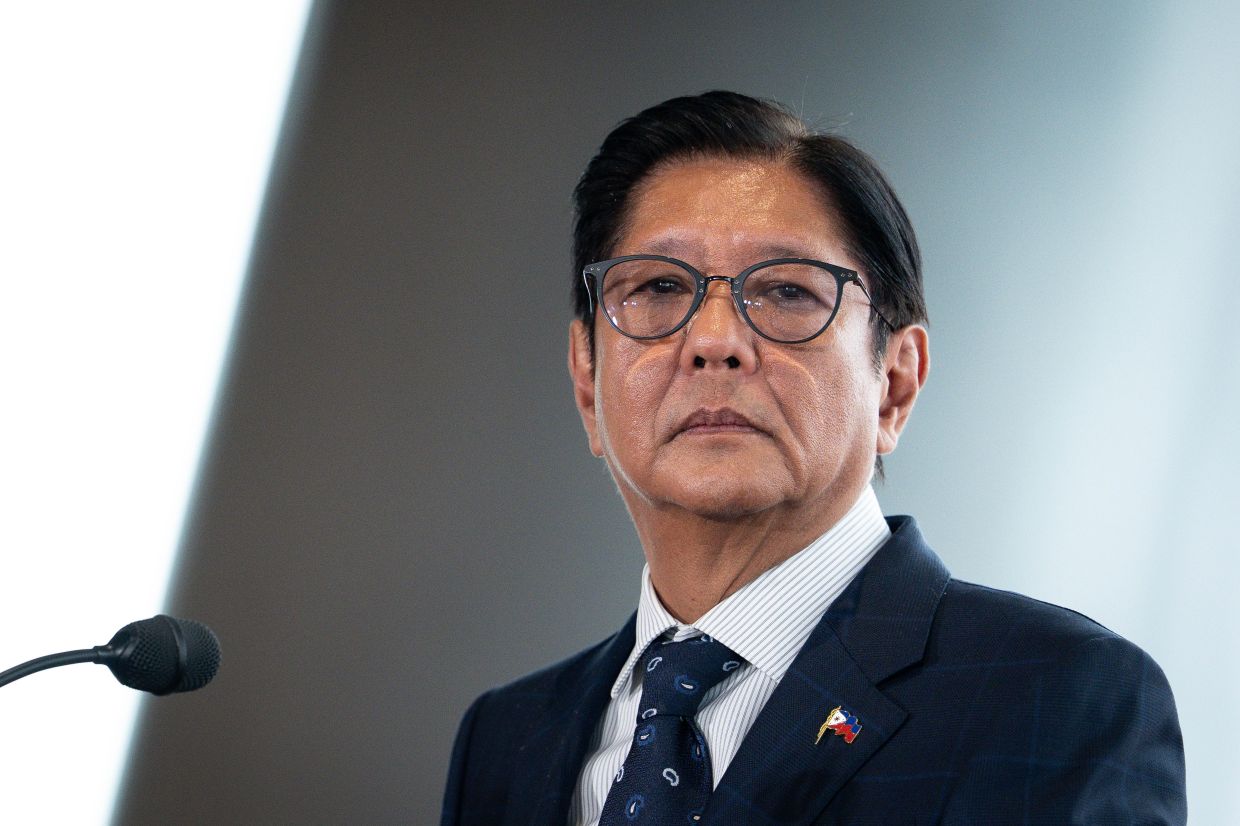
Philippine President Ferdinand Marcos Jr faces mounting pressure to arrest an economic slowdown and restore public confidence as he prepares to address Congress on Monday, exactly one year after shocking revelations of multi-billion-dollar corruption in flood-control schemes dominated his 2025 State of the Nation speech. The government's disclosure of the graft operation triggered a sharp economic contraction, prompting analysts to question whether the self-styled anti-corruption crusader can recover his political momentum with just two years remaining in his presidency.
The cascading impact of last year's corruption revelations has proven far more damaging than initial projections. Growth forecasts for 2026 have been slashed dramatically to between 3.5% and 4.5%, down from earlier expectations approaching 6% before Middle East geopolitical tensions exacerbated inflationary pressures. The economic weakness extends beyond headline figures: the benchmark Philippine stock index has declined 1.5% since last July's address, whilst the peso has depreciated nearly 8% against the US dollar, reflecting diminished investor appetite for Philippine assets. First-quarter 2026 expansion of merely 2.8% places the Philippines among Southeast Asia's poorest performers, trailing regional peers including Malaysia and Singapore.
The credibility crisis confronting Marcos carries particular historical weight. As the son of former dictator Ferdinand Marcos—infamous for accumulating vast ill-gotten wealth during his authoritarian regime—the current president positioned himself as a reformer committed to dismantling corrupt systems. Yet public perception has shifted markedly. According to Hansley Juliano, a political science instructor at Ateneo de Manila University, Marcos remains haunted by the apparent lack of meaningful progress and accountability regarding the flood-control scandal. Citizens and observers increasingly view his anti-corruption messaging as hollow rhetoric unsupported by decisive administrative action or visible results. The administration requires substantially more explicit, forceful intervention and heightened public visibility to demonstrate genuine commitment to reform.
Infrastructure projects critical to disaster resilience have stalled as a consequence of the scandal's political fallout. In Calumpit, approximately 50 kilometres north of Manila, a broken dike remains unrepaired whilst flood-mitigation sheet pile installation has barely commenced. Local official Sergio Miranda expressed bitter frustration at the glacial pace, suggesting that communities most vulnerable to typhoons would adapt to floodwaters before completion. This visible failure directly contradicts the administration's claims of effective governance and underscores why vulnerable populations feel abandoned despite presidential pledges of protection and development.
Marcos finds himself simultaneously embroiled in internal political conflicts that have fractured the governing coalition. His relationship with Vice President Sara Duterte has deteriorated into open hostility, with Duterte currently facing Senate trial on graft allegations and charges of threatening the president's life—accusations she strenuously denies. Should Duterte achieve acquittal, analysts anticipate she would emerge as the frontrunner for the 2028 presidential election, potentially positioning herself as an opposition standard-bearer. Additionally, even Marcos's own sister, Senator Imee Marcos, has frequently distanced herself from his administration's policies, signalling deepening fissures within the family political apparatus that once dominated national politics.
Rodel Taton, dean of the San Sebastian College-Recoletos Graduate School of Law, characterised the administration as mired in multiple simultaneous political battles. These internal fractures have severely strained ruling coalition cohesion, undermining the unified governance apparatus necessary for effective policymaking and economic recovery. The political infighting diverts attention and resources from addressing substantive economic challenges, sending negative signals to domestic and international investors evaluating the stability and predictability of the Philippine operating environment.
Oil price pressures compound economic difficulties. The Philippines sources over 90% of crude oil requirements from the Middle East, rendering the nation particularly vulnerable to supply disruptions and price volatility stemming from regional geopolitical tensions. Energy cost inflation cascades through the economy, raising transportation and production expenses that ultimately burden consumers already struggling with stagnant real wages and diminished purchasing power. This external vulnerability has reinforced public frustration with inflation, which the administration has struggled to control despite various policy interventions.
Investor confidence indicators suggest substantial anxiety regarding policy direction and execution capacity. Radhika Rao, senior economist at DBS Bank Singapore, emphasises that the Philippines must strategically boost domestic industries and integrate more effectively into regional and global supply chains. The nation's share of Southeast Asian investment flows remained below 5% last year, a figure that reflects both governance concerns and inadequate project execution. Addressing domestic governance priorities and demonstrating reliable project implementation would materially improve the investment climate and unlock capital flows currently directed toward more stable regional competitors.
Markets are demanding concrete evidence of reform rather than rhetorical commitment. Cristina Ulang, head of research at First Metro Investment Corp, notes that investors remain highly sensitive to fiscal stimulus deployment and administration credibility. Growth generation requires decisive policy action, strategic resource allocation, and demonstrated follow-through on announced initiatives. April Lynn Tan, chief equity strategist at COL Financial Group, specifically wants to hear presidential plans addressing high oil price impacts, permanent inflation control mechanisms, and concrete investment attraction strategies. Without articulating credible responses to these concerns, Monday's address risks disappointing market expectations and reinforcing perceptions of a rudderless administration.
The Management Association of the Philippines has articulated a nuanced but pointed critique: whilst corruption must be fought decisively, the anti-graft campaign cannot become an impediment to economic growth and development. This balance represents the central challenge confronting Marcos—demonstrating accountability and reform without paralyzing the administration's capacity for economic policymaking and project implementation. The nation is fatigued by political turbulence; ordinary Filipinos experience the concrete pressure of elevated living costs and business uncertainty.
Monday's address occurs amid significant logistical and security complexity. The date coincides with the founding anniversary of Iglesia ni Cristo, the influential religious organisation whose recent anti-Marcos protests disrupted the capital. Organisers anticipate hundreds of thousands of church members will assemble in the capital, with the denomination's headquarters located just kilometres from Congress. Over 21,000 police personnel will be deployed to manage security and crowd control. Simultaneously, organised protest groups including Sanlakas, representing marginalised constituencies, plan demonstrations outside Congress, with organisers asserting that the masses—workers, farmers, and basic sectors—experience deepening impoverishment and disempowerment contrary to government narratives of effective stewardship.
The stakes for Marcos could scarcely be higher. A successful address might begin restoring investor confidence, stabilise the currency, and provide political momentum for the remainder of his presidency. Conversely, failure to articulate credible reform plans and growth strategies risks further economic deterioration and continued political fragmentation. As Southeast Asian governments increasingly compete for foreign investment and regional influence, Philippine economic underperformance carries implications extending beyond national borders, potentially reshaping regional economic hierarchies and investment patterns across the bloc.

