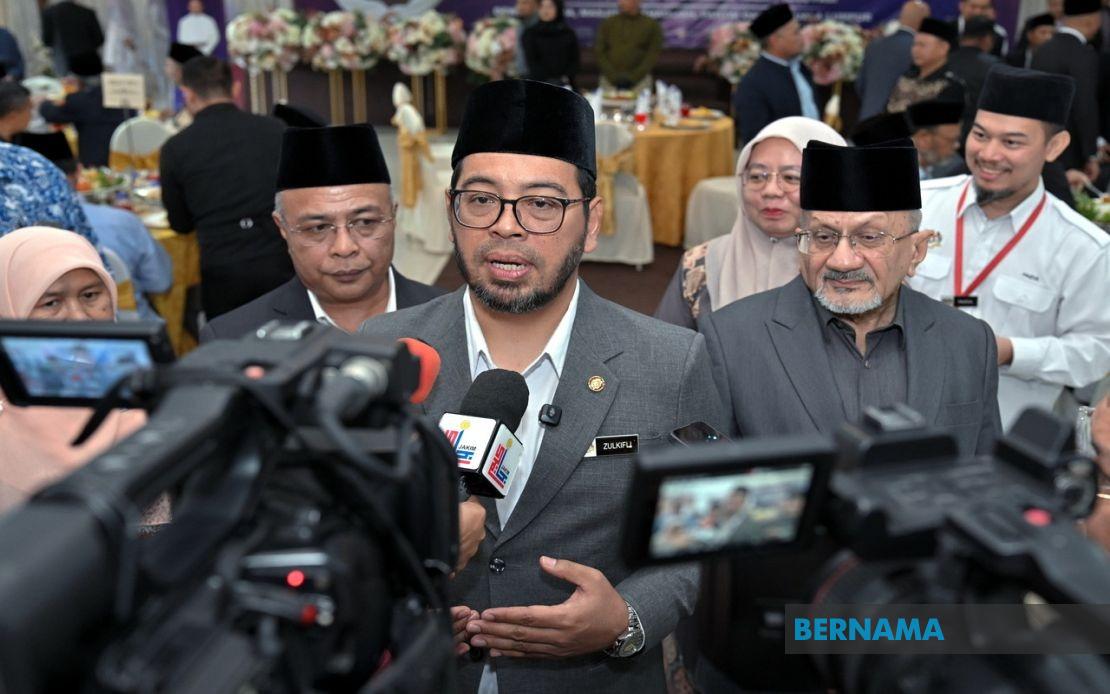
Construction of Masjid Warisan, set to rise prominently in front of the Tun Razak Exchange tower in Kuala Lumpur's financial district, will move forward as scheduled, according to Minister in the Prime Minister's Department (Religious Affairs) Dr Zulkifli Hasan. The project represents a longstanding commitment from the government to strengthen mosques as anchors of community cohesion and social wellbeing across the capital.
Dr Zulkifli's announcement comes amid recent reports suggesting opposition to the mosque construction from certain quarters, who have contended that the development could trigger social tension and public dissatisfaction. Despite these objections, the minister has made clear that the initiative will proceed with implementation, emphasizing its standing as a carefully planned undertaking designed to reinforce religious infrastructure in one of Malaysia's most visible urban settings.
The location of Masjid Warisan, immediately adjacent to the gleaming TRX tower that symbolizes Malaysia's modern financial ambitions, carries considerable symbolic weight. The project underscores the government's philosophy that religious institutions remain integral to urban development and that spiritual spaces should occupy prominent positions alongside commercial and economic hubs. This approach reflects a broader vision of balanced city planning that does not compartmentalize faith from economic activity.
For those harbouring reservations or seeking clarification about the mosque's construction, Dr Zulkifli directed stakeholders to engage with the Federal Territories Islamic Religious Council (MAIWP). This institutional pathway signals the government's confidence in its planning process and willingness to address legitimate concerns through formal channels rather than suspending the project based on unsubstantiated claims. The MAIWP, as the regulatory body overseeing Islamic religious affairs in Kuala Lumpur, Labuan, and Putrajaya, remains positioned to provide comprehensive details about the mosque's design, facilities, and integration with surrounding infrastructure.
Drawing comparisons with global metropolitan centres, Dr Zulkifli highlighted that mosques operate successfully in many of the world's major cities, contributing to their cultural fabric and spiritual identity. The call to prayer, he noted, often functions as a calming influence within urban environments rather than a source of disruption. This international perspective counters localized anxieties by demonstrating that religious institutions and modern city life coexist productively elsewhere, suggesting that similar harmony can be achieved in Kuala Lumpur through thoughtful planning and community understanding.
The timing of Dr Zulkifli's confirmation coincided with his formal presentation of appointment letters to members of the Federal Territories Mosque and Friday prayer surau committee for the 2026-2029 term at Masjid Al-Khadijah in Kampung Pantai Dalam. This administrative transition underscores the government's ongoing investment in mosque governance structures and community religious leadership during a period when religious infrastructure development is entering an active phase.
The appointment process itself reflects institutional rigour and transparency. From 3,010 nominations submitted across 91 mosques and 124 Friday prayer surau in the Federal Territories, 2,914 candidates were selected following comprehensive integrity vetting by the Royal Malaysia Police, the Malaysian Anti-Corruption Commission, and the Insolvency Department. This multi-agency screening demonstrates the seriousness with which religious institutions are managed and the emphasis placed on ethical leadership within mosque administration.
For Malaysian Muslims and residents of the Federal Territories, the Masjid Warisan project represents tangible investment in religious infrastructure within one of Asia's most dynamic business districts. The mosque will provide prayer facilities, community gathering space, and educational opportunities for the growing population working and living in the TRX area. As Kuala Lumpur continues its evolution as a regional financial centre, the inclusion of spiritual amenities reflects recognition that workers and residents require more than commercial facilities to build a sense of belonging and community.
The project also carries implications for Malaysia's positioning as an Islamic financial hub and cosmopolitan Muslim-majority nation. The visibility of Masjid Warisan in an international business district sends a message about Islam's integration into modern Malaysian economic life and demonstrates that commercial progress and religious practice are complementary rather than contradictory. International investors and business professionals working in the TRX will encounter a functioning mosque, normalizing the presence of Islamic institutions within contemporary commercial spaces.
Regional observers may view the project through the lens of Malaysia's continued efforts to balance rapid urbanization with religious and cultural continuity. Unlike some Southeast Asian nations where religious tensions occasionally emerge around mosque construction, Malaysia's government-led approach to integrating mosques into planned developments suggests institutional confidence in managing pluralistic urban growth. The Masjid Warisan project becomes a case study in deliberate religious infrastructure planning rather than ad hoc development.
Moving forward, successful implementation of Masjid Warisan will likely depend on transparent communication with nearby residents, workers, and businesses about operational details, traffic management, parking arrangements, and acoustic considerations. The government's direction to funnel concerns through MAIWP creates an accountability mechanism while emphasizing that opposition must be addressed through dialogue rather than obstruction. This approach distinguishes the project from other infrastructure controversies that have occasionally paralyzed Malaysian development initiatives.

