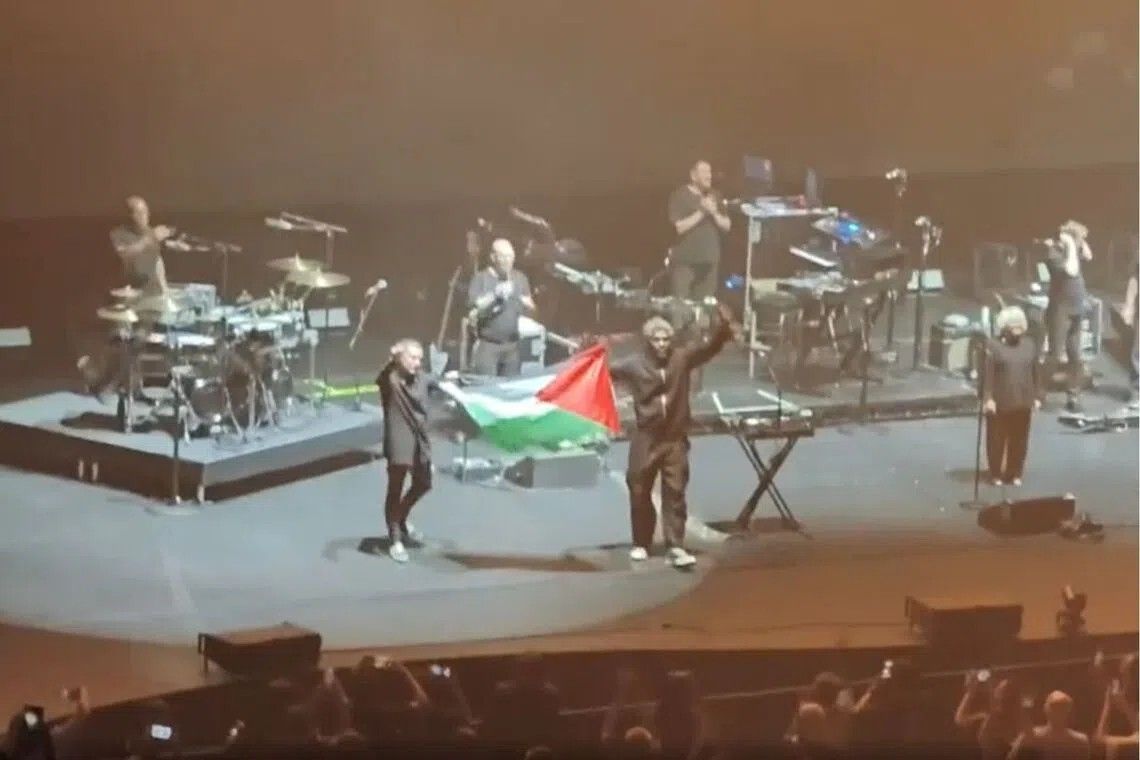
Singapore's authorities have moved to prevent British trip-hop ensemble Massive Attack from ever performing in the city-state again, following an incident during a Wednesday concert where band members publicly displayed a Palestinian flag. The decision, announced by police late Friday, underscores how strictly the island nation enforces regulations governing political expression and foreign symbols at public events, even when perpetrated by international artists performing to enthusiastic audiences.
According to official statements, two unnamed band members unfurled the Palestinian flag during their performance, an act captured on video and shared widely online, where it drew immediate and vociferous applause from concertgoers. Alongside the flag display, at least one performer shouted "Free Palestine" from the stage, further amplifying the political message. The incident triggered a police investigation that examined whether the concert organisers and performers had breached the terms of their performance licence.
Singapore maintains one of the world's most stringent legal frameworks governing public political speech and symbol display. The regulations categorically prohibit the unfurling or exhibition of any foreign flag, national emblem, or political banner without prior government authorisation. This restriction applies universally—to citizens, residents, and visiting performers alike—regardless of the context or the size of the audience witnessing the display. The law reflects Singapore's broader emphasis on maintaining what authorities describe as social harmony and political neutrality in shared public spaces.
Following their investigation and consultation with state prosecutors, police administered formal stern warnings to both individuals involved in displaying the flag. Beyond verbal reprimands, both men received orders banning them from re-entering Singapore. While police did not publicly identify the band members involved, the coordinated nature of the action suggests deliberate planning rather than spontaneous audience reaction. The severity of the response—permanent entry bans for visiting performers—demonstrates how seriously Singaporean authorities treat such violations, even when committed by acclaimed international artists.
The city-state's media regulator has separately launched its own investigation into whether the concert organisers breached the conditions attached to their performance licence. Officials noted that despite the event promoter's stated prior acknowledgement of licence requirements during the application process, the actual performance fundamentally violated those agreed terms. This dual accountability—holding both individual performers and event organisers responsible—reflects Singapore's systematic approach to enforcing compliance with regulations governing public events.
Police issued a particularly pointed statement directly to the public, warning both residents and international visitors to "refrain from importing foreign politics" into Singapore, contending that such actions threaten social cohesion and undermine the rule of law. This phrasing reveals official concern that permitting such displays could establish precedents, encourage copycat actions, or create divisions along political or religious lines within Singapore's multicultural society. The warning effectively signals that no performer, regardless of international stature, receives exemptions from these rules.
Massive Attack has long been identified with activist causes and vocally critical of Israeli military operations in Gaza. The band's profile extends well beyond music into political advocacy, making their Singapore performance backdrop to deeper tensions between artistic expression and state regulation. Frontman Robert Del Naja has personally participated in pro-Palestine demonstrations, including an April arrest at a London protest organised by Palestine Action, a group the British government has proscribed. This documented history of activism provides context for understanding the band's deliberate choice to incorporate Palestinian symbols into their Singapore performance.
The regulatory prohibition on future Massive Attack performances represents a particularly significant consequence in the context of Singapore's emergence as a premier concert destination throughout Southeast Asia. The island has successfully positioned itself as a top-tier touring hub, attracting multi-night residencies from global superstars including Taylor Swift, Coldplay, Ed Sheeran, and Bruno Mars. For bands and promoters seeking to maximise touring revenue across the region, exclusion from Singapore represents a substantial commercial loss, given the city's affluent population and high ticket prices.
The incident highlights the competing pressures facing international touring artists in an increasingly politically polarised world. Musicians operating across different jurisdictions must navigate vastly different regulatory environments regarding political expression. While Western democracies generally protect flag displays and political speech as protected expression, Singapore's framework prioritises state-defined social order over individual political expression rights. For artists with strong activist commitments, this creates genuine dilemmas about whether to modify performances for specific markets or maintain consistent messaging globally, accepting potential consequences.
The concert promoter has declined to comment publicly on the incident or its aftermath, suggesting either legal advice against public statement or negotiation with authorities regarding potential penalties. Their silence stands in contrast to the band's historical willingness to court controversy through political messaging. This dynamic—between artists eager to convert their global platform into activism and venues and promoters focused on regulatory compliance and commercial viability—will likely shape how international performances unfold across the region going forward.
The episode also carries broader implications for Southeast Asia's cultural landscape. As the region continues developing world-class performance venues and attracting international talent, questions about political speech and artistic freedom will become increasingly salient. Whether other Southeast Asian nations adopt similar restrictions, or whether Singapore's strict approach becomes a model or cautionary tale, remains to be seen. For now, the decision firmly establishes that Singaporean authorities will enforce their regulations against political symbol display regardless of an artist's international prominence or the magnitude of their fanbase.

