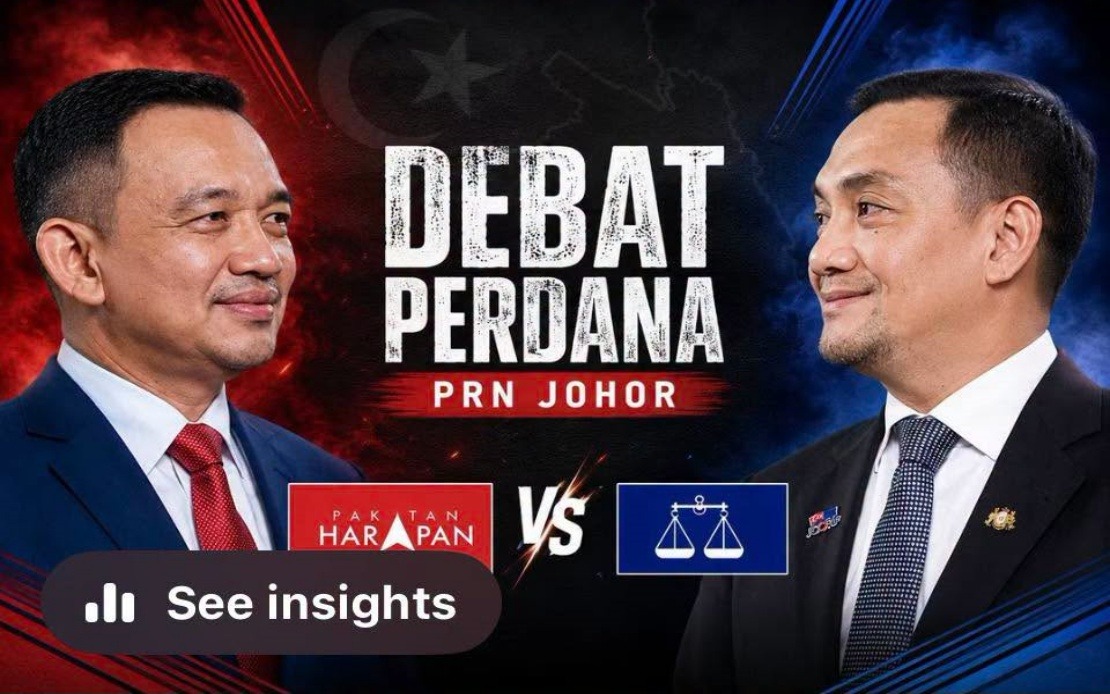
Former Education Minister Maszlee Malik has publicly committed to debating Johor Menteri Besar Onn Hafiz Ghazi in what could become a defining moment of the upcoming Johor state election campaign. Announced as Pakatan Harapan's (PH) contender for the Puteri Wangsa constituency, Maszlee framed his acceptance as rooted in his conviction that dialogue represents a cornerstone of democratic engagement and can help cultivate a more politically sophisticated electorate.
The proposal for what organisers are calling a "Johor State Election Grand Debate" emerged from social media influencer Muhamad Harris Nasril and gained traction after gaining visibility through the Redaksi.com Facebook platform. Maszlee's decision to accept the invitation came after receiving multiple inquiries from various stakeholders seeking confirmation of his involvement, underscoring the considerable public intrigue surrounding the prospective confrontation between the two senior political figures.
In his announcement via Facebook, Maszlee emphasised that accepting the challenge reflected his commitment to democratic principles rather than a simple political manoeuvre. He articulated a vision of the debate functioning as an educational forum capable of elevating the overall standard of political discourse in the state, moving beyond the partisan rhetoric that frequently characterises electoral contests. His framing suggests an attempt to position the encounter as transcending conventional campaign mechanics.
The timing of this development follows Pakatan Harapan's recent unveiling of its full slate of candidates for the Johor election. The coalition is contesting all 56 available seats, with PKR fielding 20 candidates, Amanah contributing 19, and DAP presenting 17. This comprehensive participation signals PH's confidence in the state as a significant battleground in Malaysia's evolving political landscape, particularly given its status as a traditionally BN-leaning territory.
The electoral timeline has been formally established by the Election Commission, with nomination day set for this Saturday, early voting scheduled for July 7, and the actual polling day fixed for July 11. This compressed schedule means that any debate would need to be conducted within a relatively narrow window, placing time pressure on organisers to finalise arrangements while campaigns are actively underway.
For Malaysian observers, the debate assumes particular significance given the state's historical voting patterns and its importance to any federal government seeking a strong parliamentary majority. Johor's 56 seats represent a meaningful proportion of parliament's lower house, making the state election a microcosm of broader national political tensions between the incumbent federal coalition and its challengers.
Maszlee's public acceptance carries additional weight given his previous role as Education Minister in the PH government that took office in 2018. His ministerial tenure ended after internal coalition disagreements, lending him credibility as a figure with administrative experience while potentially complicating his campaign narrative regarding internal party dynamics and governance challenges.
The debate format, should it proceed as envisioned, would represent an evolution in Malaysian electoral practice, where such structured confrontations between senior political figures remain relatively uncommon compared to established democracies. The involvement of social media influencers in initiating and promoting the concept reflects the increasingly digital nature of campaign organisation and voter engagement in the contemporary Malaysian context.
Onn Hafiz, as the incumbent Menteri Besar, brings the advantage of executive experience in managing Johor's state apparatus, while Maszlee carries the credibility of having served in federal cabinet. The prospective debate could illuminate contrasting approaches to governance, with Maszlee potentially emphasising PH's reform agenda and vision for democratic renewal against Onn Hafiz's record of proven administrative competence at the state level.
The broader implications extend beyond Johor itself. A substantive, well-conducted debate between these two figures could establish a template for more rigorous electoral engagement in Malaysian politics, potentially influencing expectations for transparency and public discourse in future campaigns. It may also signal a maturing of the electorate's appetite for policy-focused discourse rather than purely personality-driven politics.
With the electoral calendar now activated and both major blocs mobilising their resources, the debate becomes a focal point around which campaign narratives will crystallise. Whether organisers can deliver the proposed format while maintaining the high standards Maszlee has articulated remains an open question, but his acceptance has already succeeded in elevating expectations for the conduct of the Johor campaign.
The development underscores the competitive intensity of Johor politics and PH's determination to make inroads in a state that will substantially influence the composition of the next parliament. As Maszlee and his coalition teammates campaign across the state's constituencies, the proposed debate with Onn Hafiz stands as a potential inflection point that could shape voter perceptions and the broader trajectory of the election campaign.

