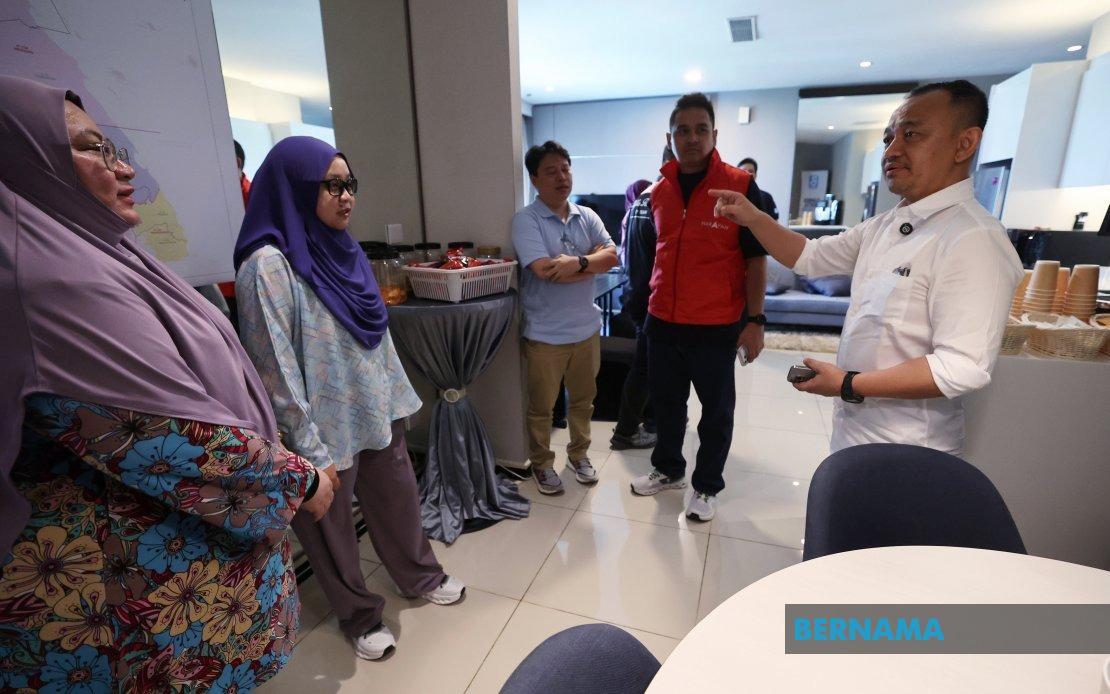
Dr Maszlee Malik, the Pakatan Harapan candidate contesting the Puteri Wangsa seat in Johor's 16th state election, is banking on digital innovation to bridge service gaps in a geographically sprawling constituency marked by stark socio-economic contrasts. His campaign blueprint centres on launching a bespoke mobile application that would enable residents to lodge complaints and report community concerns with greater ease and transparency, should he secure victory on July 11. The former education minister argues that such a technology-enabled model has become indispensable given the seat's complex demographics, which encompass well-heeled enclaves like Austin Heights alongside more rural areas such as Felda Ulu Tebrau, each with distinct infrastructure and service delivery challenges.
The underlying rationale reveals a pragmatic assessment of modern constituency management. By deploying a mobile platform, Maszlee contends, his office would gain systematic visibility into recurring grievances, from road maintenance to municipal services, whilst simultaneously building a data-driven record of constituent priorities. This approach also promises efficiency gains for residents tired of navigating multiple bureaucratic channels or waiting for traditional ward meetings. Beyond complaint management, the proposed application would serve an equally important humanitarian function: identifying marginalised groups including single mothers and persons with disabilities who qualify for state assistance but remain uncovered due to information gaps or administrative friction. This targeting mechanism acknowledges a persistent challenge in Malaysian governance—that vulnerable populations often fall through institutional cracks not from policy design but from lack of systematic outreach.
Maszlee has cited the constituent engagement strategies employed by New York City official Zohran Mamdani as an inspirational model, specifically Mamdani's integration of dedicated applications with broader social media ecosystems to solicit direct feedback from residents. This cross-reference signals his campaign's ambition to import tested international best practices into a local Malaysian context, though the applicability and scalability of urban American models to a mid-tier Malaysian state constituency remains an open question. His broader engagement strategy extends beyond technological infrastructure to encompass sustained collaboration with non-governmental organisations, residents' associations and public agencies, complemented by regular town hall forums where constituent grievances receive in-person attention. This multi-channel approach attempts to mitigate risks that purely digital platforms might inadvertently exclude older voters or those with limited technology access.
The digital campaign component itself reflects sophisticated recognition of voter fragmentation and accessibility constraints. Maszlee's team acknowledges that conventional street campaigning—walkabouts and physical rallies—increasingly fails to reach significant voter cohorts, particularly younger generations, professionals absorbed in demanding careers, and Malaysians whose work takes them across the border to Singapore. These groups operate in different information ecosystems, consuming political content primarily through social media channels rather than traditional broadcast or community meetings. Accordingly, his campaign has designed targeted content strategies calibrated to reach these segments through platforms and messaging frequencies that align with their consumption habits. The acknowledgment of algorithmic filtering and information echo chambers demonstrates campaign awareness that social media platforms inherently fracture the electorate into micro-audiences, a challenge his team attempts to counter through demographic and socio-economic segmentation of messaging.
Content differentiation represents a key pillar of this strategy. Rather than deploying uniform messaging across demographics, Maszlee's campaign tailors its narratives to reflect the particular concerns of distinct voter communities. Gen Z audiences, for instance, receive framing around climate sustainability and digital economy participation, whilst Malaysians working in Singapore—particularly from Chinese-speaking communities—receive messaging emphasising cross-border economic integration and remittance security. Urban professionals encounter content addressing workplace flexibility and career development policy, whilst constituencies outside metropolitan cores receive attention to agricultural subsidy frameworks, rural infrastructure investment and small-business credit access. This segmented approach implicitly acknowledges that Malaysian voters are not a homogeneous bloc but rather overlapping communities with divergent material interests, cultural priorities and information consumption patterns.
The competitive landscape in Puteri Wangsa will test whether such sophisticated digital and community engagement strategies translate into electoral advantage. The seat is contested by five candidates: beyond Maszlee, the field includes Rashifa Aljunied representing MUDA, Teow Chia Ling from Barisan Nasional, Nicholas Paul Vincent of Parti Bersama Malaysia, and independent Wang Wee Siong. This five-cornered contest introduces unpredictability, as vote fragmentation could reward candidates with effective organisation even without majority support. The July 11 polling date, with early voting scheduled for July 7, provides a compressed timeline in which to execute constituent outreach and digital mobilisation. For observers tracking electoral innovation in Malaysian politics, the Puteri Wangsa contest exemplifies how candidates increasingly import technological and marketing frameworks from commercial and international political contexts to address longstanding governance accessibility issues. Whether Maszlee's mobile application and segmented social media strategy prove efficacious remains contingent not only on campaign execution but on voter appetite for such digitally-mediated constituent relations in a state election context where traditional community politics and family networks retain considerable influence.

