Dr Maszlee Malik, the Pakatan Harapan candidate contesting the Puteri Wangsa state seat in Johor, undertook a grassroots engagement exercise by accepting a public challenge to drive a Perodua Myvi from Kampung Melayu Tebrau to Ulu Tiram. The initiative aimed to provide the former education minister with direct, tangible experience of infrastructure complaints that have long troubled constituents in the constituency, transforming abstract grievances raised on social media into lived reality.
The symbolic choice of the Perodua Myvi—colloquially known as the "King of the Road" despite its modest stature—proved apt for demonstrating the severity of road conditions in the area. By experiencing the vehicle's suspension being tested across deteriorating asphalt, Maszlee could viscerally understand what residents endure during their daily commutes. His route encompassed multiple problematic stretches, beginning at Petron Kampung Melayu and proceeding through Pandan and Kangkar Tebrau before terminating in Ulu Tiram, with a return journey toward the city allowing observation of varying traffic patterns.
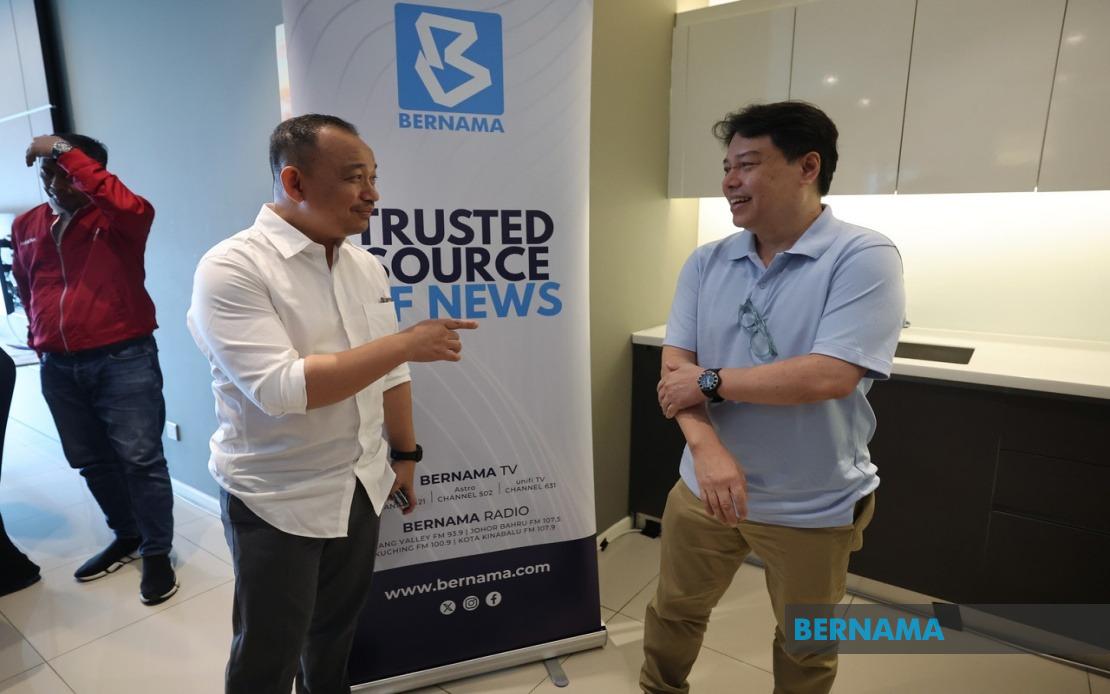
During remarks made at the Bernama Operations Room, Maszlee provided candid commentary on his findings, confirming that constituent complaints about road conditions were factually grounded. He employed a vivid maritime analogy to convey the intensity of the experience, describing the journey as resembling passage in a traditional wooden boat navigating Tanjung Surat—characterised by continuous swaying and jolting caused by the uneven road surface. This visceral account validated the long-standing frustrations residents had articulated through digital channels, lending credibility to their concerns rather than dismissing them as exaggeration.
Beyond surface deterioration, the route exposed Maszlee to the compounding challenge of severe traffic congestion, particularly during peak commuting hours. This dual infrastructure crisis—simultaneous degradation of road quality coupled with capacity constraints—reflects a broader pattern afflicting rapidly developing Malaysian urban peripheries. The congestion phenomenon particularly affects precincts including Taman Daya and Taman Pelangi Indah, along with multiple locations proximate to Tebrau itself, creating cumulative delays that cascade through the transport network.
The former Simpang Renggam Member of Parliament attributed these cascading problems to uncontrolled urban expansion that had fundamentally outpaced corresponding investment in transport infrastructure. Residential and commercial development had proceeded with insufficient attention to whether existing road networks possessed adequate capacity or condition to serve expanding populations. This pattern reflects planning failures at both state and federal levels, where development approvals did not mandate commensurate infrastructure upgrades, leaving communities to absorb the consequences of congestion and deterioration.
Maszlee identified the necessary institutional machinery for remediation, emphasising that resolution demanded collaboration spanning the Public Works Department (JKR), urban planning specialists, and multiple stakeholder agencies. This multi-institutional requirement underscores the administrative complexity underlying what appear to constituents as straightforward infrastructure problems. Coordinating across bureaucratic silos, securing budget allocations, and implementing long-term planning frameworks requires sustained political commitment beyond campaign season rhetoric, presenting a substantive test of any politician's governing capacity.
Drawing upon his prior experience as a federal-level minister, Maszlee positioned himself as someone versed in the procedural machinery governing infrastructure delivery. This claim to insider knowledge of how government mechanisms function offered implicit assurance that his understanding transcended surface-level criticism. However, such assertions require validation through concrete commitments regarding timelines, resource allocation, and accountability mechanisms—commitments that campaign pronouncements often lack specificity about implementing.
The candidate articulated a prospective governance philosophy prioritising constituent listening before problem identification, acknowledging that solutions must emerge from understanding resident perspectives rather than imposition of bureaucratic preferences. This emphasis on consultation-first approaches reflects broader democratic discourse valuing grassroots input, though implementation frequently encounters resistance from technical establishments convinced of their superior expertise. The tension between democratic responsiveness and technocratic efficiency frequently determines whether infrastructure planning genuinely serves community interests or merely accommodates them peripherally.
The Puteri Wangsa state seat contest assumes heightened significance given the five-way competition structure, featuring Maszlee alongside Rashifa Aljunied representing MUDA, Teow Chia Ling from Barisan Nasional, Nicholas Paul Vincent from Parti Bersama Malaysia, and independent contender Wang Wee Siong. This fragmented field creates strategic voting dynamics where plurality victories become possible despite substantial voter support being distributed across multiple candidates. The 128,723 registered voters—comprising 128,525 ordinary voters and 198 police personnel and spouses—will determine the outcome on July 11, with early voting commencing on July 7.
For constituencies like Puteri Wangsa experiencing rapid urbanisation alongside infrastructure deficits, the election outcome carries implications extending beyond personality politics. Infrastructure competence and commitment to authentic constituent engagement emerge as defining electoral factors when commute experiences directly impact daily quality of life. Maszlee's Myvi journey represented an unconventional yet effective campaign tactic acknowledging that modern political legitimacy increasingly derives from demonstrated understanding of constituent realities rather than technocratic credentials alone.
The road conditions challenge also reflects evolving campaign methodologies in Malaysian politics, where social media interaction increasingly drives political engagement. The candidate's willingness to accept netizen-generated challenges signals responsiveness to digital-native constituents who expect politicians to engage on platforms where grievances naturally surface. This integration of online criticism into offline campaign activity bridges persistent divides between virtual activism and tangible political change.

