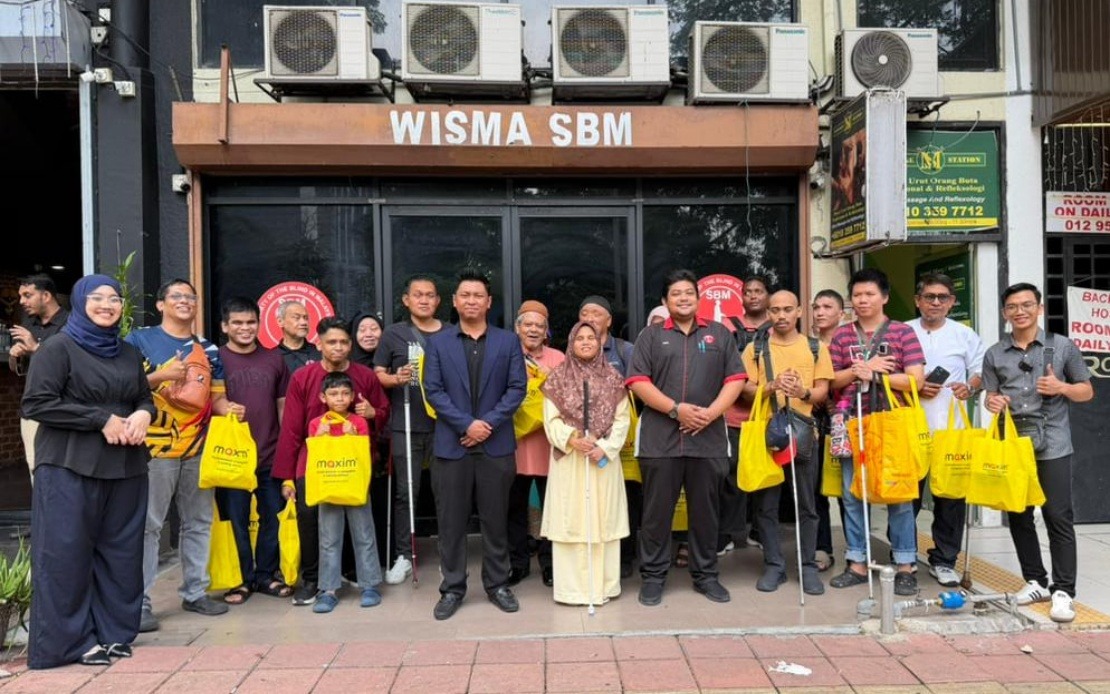
Maxim, the e-hailing platform operating across Southeast Asia, is significantly expanding its commitment to providing equitable mobility solutions for marginalised segments of Malaysian society. According to Syed Abdul Syarif Syed Peiaru, the company's Kuala Lumpur Head, the platform recognises that accessible transportation extends far beyond the basic function of moving between locations—it serves as a fundamental enabler of social and economic participation. This philosophy underpins Maxim's multi-faceted approach to ensuring that persons with disabilities, elderly citizens, students, and economically disadvantaged families can access safe and reliable transport services at prices they can afford.
The philosophical foundation of Maxim's inclusion strategy centres on the transformative power of mobility. When individuals gain dependable access to transportation, they unlock opportunities previously constrained by physical or financial barriers. A person with disabilities can attend university or maintain employment; an elderly resident can access medical facilities independently; a low-income family can explore employment opportunities beyond walking distance. By positioning mobility as a gateway rather than a luxury, Maxim aligns itself with broader Southeast Asian development imperatives that emphasise inclusive growth and social cohesion. This positioning carries particular resonance in Malaysia, where demographic ageing and persistent spatial inequalities mean that transportation gaps directly correlate with social exclusion and reduced economic productivity.
Maxim's practical arsenal of accessibility measures demonstrates a layered approach combining technology, human support, and financial accommodation. The company has developed the Mesra OKU service, a specialised offering designed specifically for persons with disabilities. This service incorporates extended waiting periods at pickup locations, enabling passengers to board without time pressure; trained driver assistance to help with mobility challenges; dedicated support for mobility aids such as wheelchairs; and voice-recognition booking capabilities that bypass traditional touchscreen interfaces. By allowing passengers to flag their specific assistance requirements directly through the mobile application, Maxim ensures that drivers can prepare appropriately and deliver personalised support throughout each journey. This granular approach reflects understanding that disability encompasses diverse physical and sensory needs requiring customised responses rather than one-size-fits-all solutions.
Technology adoption represents a cornerstone of Maxim's accessibility strategy. The platform's digital interface incorporates transparent pricing mechanisms that eliminate surprise charges, real-time driver connectivity that reduces uncertainty, and streamlined booking procedures minimising friction for users with varied technical proficiency levels. Beyond these foundational features, Maxim has integrated voice-recognition functionality, particularly valuable for visually impaired users. The company's collaboration with the Society of the Blind in Malaysia demonstrates commitment to tailoring accessibility specifically for this community. Through partnerships promoting awareness of TalkBack voice features, Maxim extends digital mobility solutions to individuals whose visual impairment would otherwise render conventional app interfaces inaccessible. Such technological refinement represents ongoing evolution rather than static implementation, with management signalling intention to introduce additional user-centric features as technology advances.
Financial accessibility remains critically important in a market where price sensitivity directly impacts service utilisation among lower-income households. Beyond maintaining generally competitive fares, Maxim has implemented specially calibrated pricing tiers targeting persons with disabilities and individuals with special needs. These subsidised rates acknowledge that transportation costs consume disproportionate shares of disabled individuals' household budgets, particularly when medical appointments, rehabilitation services, or specialist facilities require travel. By ringfencing special pricing programmes, Maxim removes economic gatekeeping that would otherwise exclude vulnerable populations from mobility benefits. This pricing strategy reflects recognition that true accessibility requires attending to financial dimensions alongside physical and technological infrastructure.
Strategic partnerships amplify Maxim's reach into underserved populations that might otherwise remain outside the company's commercial orbit. By establishing formal relationships with hospitals, educational institutions, non-governmental organisations, and community groups serving vulnerable communities, Maxim embeds itself within existing support ecosystems. Such partnerships facilitate targeted outreach to populations that might lack awareness of accessible services or encounter barriers to service discovery. A person with disabilities connected to a disability-focused NGO learns about Mesra OKU services through organisational channels; a student with mobility challenges discovers subsidised fares through university accessibility offices; elderly patients attending community health clinics receive information about reliable transport options. These networks transform abstract service offerings into concrete solutions integrated within communities' lived experiences.
Maxim's engagement with para-athletes and adaptive sports communities represents an understudied dimension of inclusive mobility. By providing transportation support for Sarawak para swimmers travelling to training sessions and competitive events, the company enables participation in elite sport—an arena where disabled athletes historically faced severe logistical barriers. Transportation support for para-athletes carries symbolic weight beyond its immediate practical benefit; it signals that society invests in disabled people's aspirations and potential, not merely their survival. This positioning helps reframe disability from a welfare concern requiring charity into a matter of equal opportunity and social justice. For Southeast Asian markets where para-sport development remains nascent, platforms like Maxim that actively support athlete mobility contribute to broader ecosystem development.
The broader Malaysian context amplifies significance of Maxim's accessibility initiatives. Malaysia's ageing population will intensify transportation demands from elderly citizens, many of whom experience mobility limitations that render conventional ride-hailing challenging. Simultaneously, persistent urban-rural divides mean that rural populations often lack reliable public transport alternatives, making private ride-hailing services potentially crucial for access to urban-based employment, healthcare, and education. Rural and elderly populations rarely constitute profitable market segments for conventional transportation providers, creating market failure gaps that Maxim's inclusive positioning addresses. By demonstrating commercial viability of serving underserved populations through innovative service design and strategic partnership, Maxim potentially reshapes industry expectations regarding inclusive business models.
Management's articulation of a long-term vision emphasises sustained engagement with government bodies, healthcare providers, educational institutions, and community organisations. This multi-stakeholder approach acknowledges that mobility solutions alone cannot overcome all barriers to opportunity; they function most effectively within comprehensive ecosystems addressing education, employment, healthcare, and social participation simultaneously. For Malaysian policymakers concerned with improving social inclusion and reducing spatial disadvantage, Maxim's partnership model offers potential collaboration frameworks. Rather than viewing inclusive mobility as purely corporate social responsibility—a peripheral activity distinct from core business—Maxim integrates accessibility into commercial strategy. This mainstreaming of inclusion within business models creates stronger incentives for sustained commitment than externally-mandated corporate social responsibility programmes.
The implications of Maxim's initiatives extend across Southeast Asia, where rapid urbanisation, demographic ageing, and economic inequality generate intensifying mobility challenges for vulnerable populations. Malaysia's relatively developed e-hailing market and sophisticated digital infrastructure position it as a testing ground for inclusive mobility innovation that neighbouring countries might subsequently adapt. If Maxim successfully demonstrates that accessible services can be commercially sustainable whilst genuinely improving underserved communities' quality of life, the company establishes replicable models with potential regional application. Conversely, if accessibility initiatives require continuous subsidisation or fail to maintain service quality, market imperatives may ultimately constrain inclusive ambitions. Maxim's success in balancing commercial viability with genuine inclusion will therefore carry lessons extending well beyond Malaysia's borders.
Moving forward, the critical test of Maxim's inclusion commitment involves translating stated principles into sustained operational reality. Accessibility initiatives occasionally constitute temporary marketing efforts that dissipate once media attention fades. Genuine inclusion, by contrast, requires persistent investment in driver training, system refinement, community engagement, and service subsidisation even when such measures reduce short-term profitability. Whether Maxim maintains commitment to expensive accessibility features during inevitable market downturns, competitive pressures, or management transitions remains unanswered. Nevertheless, the company's current articulation of an explicit inclusion philosophy, backed by concrete service offerings and institutional partnerships, positions Maxim as a significant actor in Malaysia's evolving approach to transportation equity. For millions of Malaysians for whom transport barriers currently constrain opportunity, Maxim's expansion of accessible services offers genuine possibility of greater independence and social participation.

