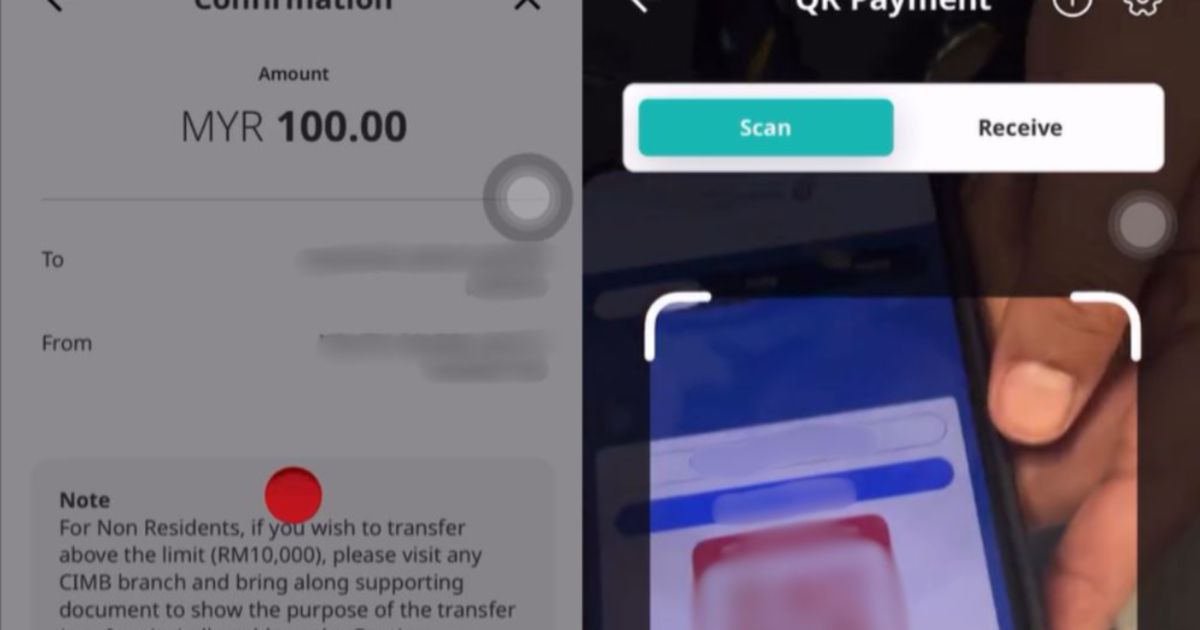
The Malaysian Border Control and Protection Agency (MCBA) is conducting a formal internal inquiry following accusations that one of its personnel stationed at Kuala Lumpur International Airport Terminal 2 received an unauthorised RM100 payment via a personal quick response code transaction. The allegation has triggered the agency's disciplinary procedures and raises fresh concerns about payment integrity at Malaysia's largest international gateway.
The incident highlights a growing vulnerability in how frontier enforcement can be compromised through digital payment methods. Unlike traditional cash transactions that leave physical traces, QR code payments—increasingly commonplace across Malaysia's transport and service sectors—create a more opaque payment trail that can obscure illicit financial transfers. The allegation suggests an officer may have leveraged this modern payment mechanism to solicit or accept money from a passenger, circumventing official channels entirely.
KLIA Terminal 2, which handles the majority of the airport's passenger traffic and serves as the primary hub for budget carriers, processes millions of travellers annually. The scale of daily operations means that enforcement officers face constant interaction with passengers at critical checkpoints. This environment creates both opportunity and temptation for misconduct, particularly when standard supervisory controls may not adequately monitor informal transactions occurring in high-traffic areas.
The use of personal QR codes by officials to collect payments represents a particularly insidious form of institutional corruption. Rather than demanding cash directly, which would be immediately suspicious, an officer can provide a personal payment code under the guise of an official fee or fine, allowing the transaction to appear legitimate to the payer while bypassing all agency accounting systems. This method leaves minimal institutional evidence and can easily be dismissed as a personal financial dispute if discovered, complicating investigation and prosecution efforts.
For travellers navigating border control procedures, distinguishing between legitimate and fraudulent payment demands presents a significant practical challenge. Many passengers are unfamiliar with official fee structures and payment procedures, particularly international visitors or those crossing borders infrequently. An officer presenting a QR code and citing regulatory requirements can easily deceive someone unfamiliar with proper MCBA protocols, creating a power imbalance that facilitates financial exploitation.
The MCBA's decision to launch a formal investigation signals institutional acknowledgment that the allegation warrants serious scrutiny. The agency's response will likely include reviewing the circumstances surrounding the transaction, interviewing relevant personnel, examining any available surveillance footage from Terminal 2, and tracing the digital payment records to determine the recipient. The investigation's thoroughness will be crucial in establishing whether this represents an isolated incident or part of a broader pattern of misconduct.
This case arrives amid broader regional concerns about corruption at border facilities across Southeast Asia. Regulatory agencies and transport authorities throughout the region have implemented enhanced monitoring systems and diversified payment channels specifically to reduce opportunities for unauthorised collections. Malaysia's implementation of standardised digital payment infrastructure at KLIA, while generally improving efficiency, paradoxically creates new avenues for misconduct when individual officers circumvent official systems through personal accounts.
The implications extend beyond the individual officer and agency involved. Passenger confidence in Malaysia's border facilities and overall tourism competitiveness depend partly on the perception that transactions at entry points are transparent and accountable. Allegations of financial impropriety, even involving modest sums, can undermine trust and discourage visitors from choosing Malaysia as a destination. Airlines and travel agents also factor in the reliability of border processes when advising clients, making institutional integrity a competitive consideration.
Effective remediation will require the MCBA to strengthen multiple layers of oversight. Enhanced supervision at critical checkpoint areas, mandatory use of official payment channels with digital audit trails, periodic integrity testing by undercover personnel, and clear whistleblower mechanisms can all reduce misconduct opportunities. Training programs that emphasise ethical conduct and consequences for violations must complement structural safeguards.
The QR code payment method itself may warrant policy review. While digital transactions offer efficiency advantages, restricting personal QR codes at border facilities in favour of agency-controlled payment systems could eliminate this particular corruption vector. Other airports and border agencies globally have implemented similar restrictions to protect institutional integrity.
Looking forward, this investigation outcome will likely shape MCBA's internal control frameworks. A finding of misconduct will demand disciplinary action proportionate to the breach, sending a clear message about institutional expectations. Conversely, a thorough investigation that clears the officer would equally serve important institutional purposes by validating the integrity of MCBA personnel when allegations prove unfounded.
The incident ultimately underscores a universal challenge facing border and enforcement agencies: maintaining ethical standards and institutional integrity when officers exercise substantial discretionary power over individual travellers during brief, often high-pressure interactions. How the MCBA investigates and resolves this matter will influence both institutional accountability and the broader travel experience for millions who pass through Malaysia's international gateways annually.

